
In Focus: Thailand reveals a Cambodian scam center
Nikkei Asia visits abandoned organized crime base
DOMINIC FAULDER and KEN KOBAYASHI

The Thai military and Foreign Ministry recently flew 40 journalists to Buriram in the country’s northeast. They were taken through a dense forest to O Smach, a border crossing and casino town in Cambodia with a cluster of scam centers. Until December, it was a base for online gambling and scamming run by mostly Chinese, in cahoots with members of Cambodia’s elite.
“It is quite clear that Thailand has instrumentalized Cambodia's reputational issues related to the scam industry to help garner international support for the extraterritorial aggression they were involved in late [last year],” Jacob Sims, a visiting fellow at Harvard University’s Asia Center, told Nikkei Asia.
“Given the fact that Cambodia has emerged reputationally as this sort of next-generation, digitally-mediated mafia state – for very good justification – I think Thailand was able to sort of get away with one here,” he said. “Media and law enforcement tours of these conquered compounds are part of that continuing narrative.”



(Photo by Ken Kobayashi)
(Photo by Ken Kobayashi)
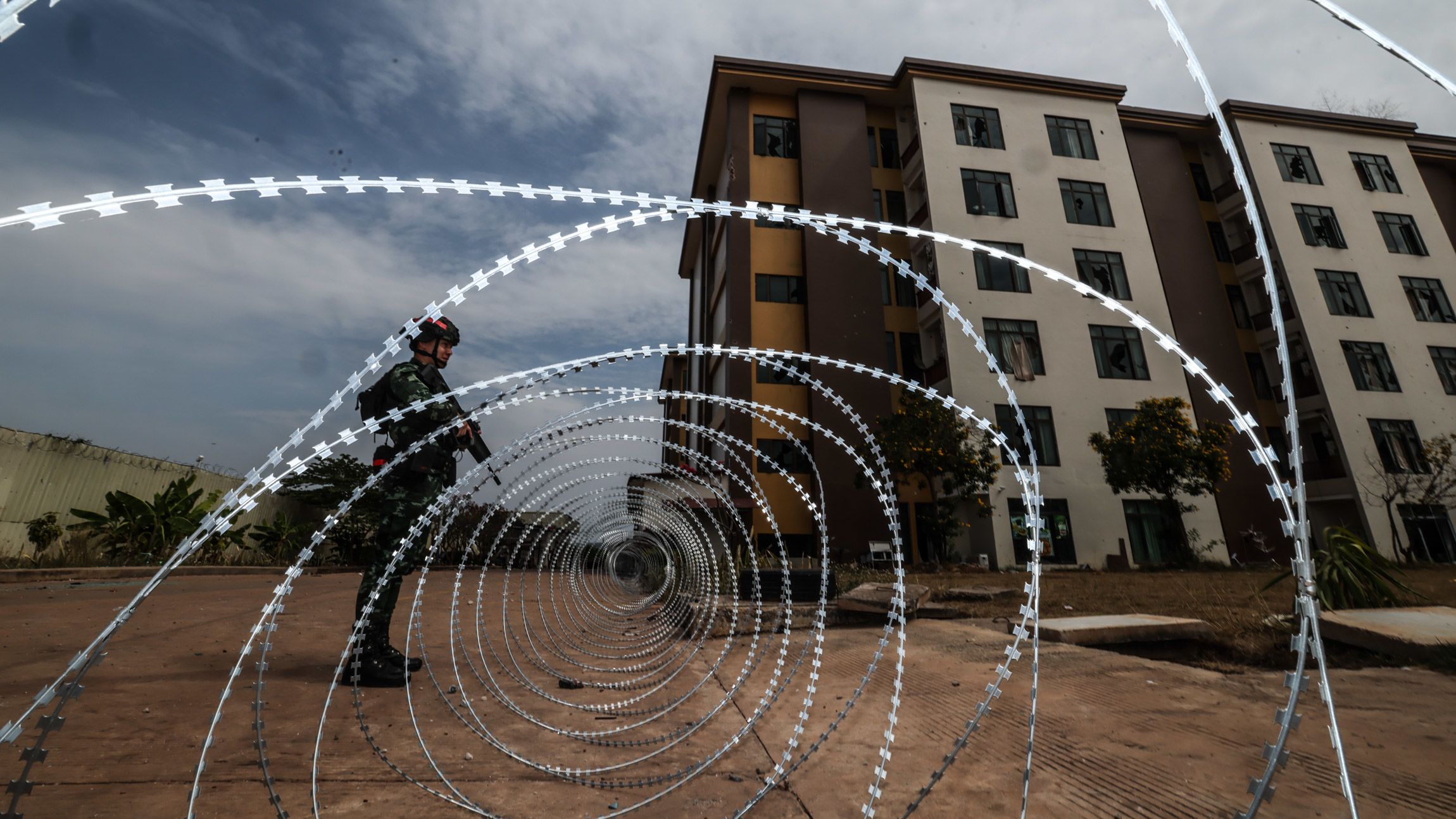
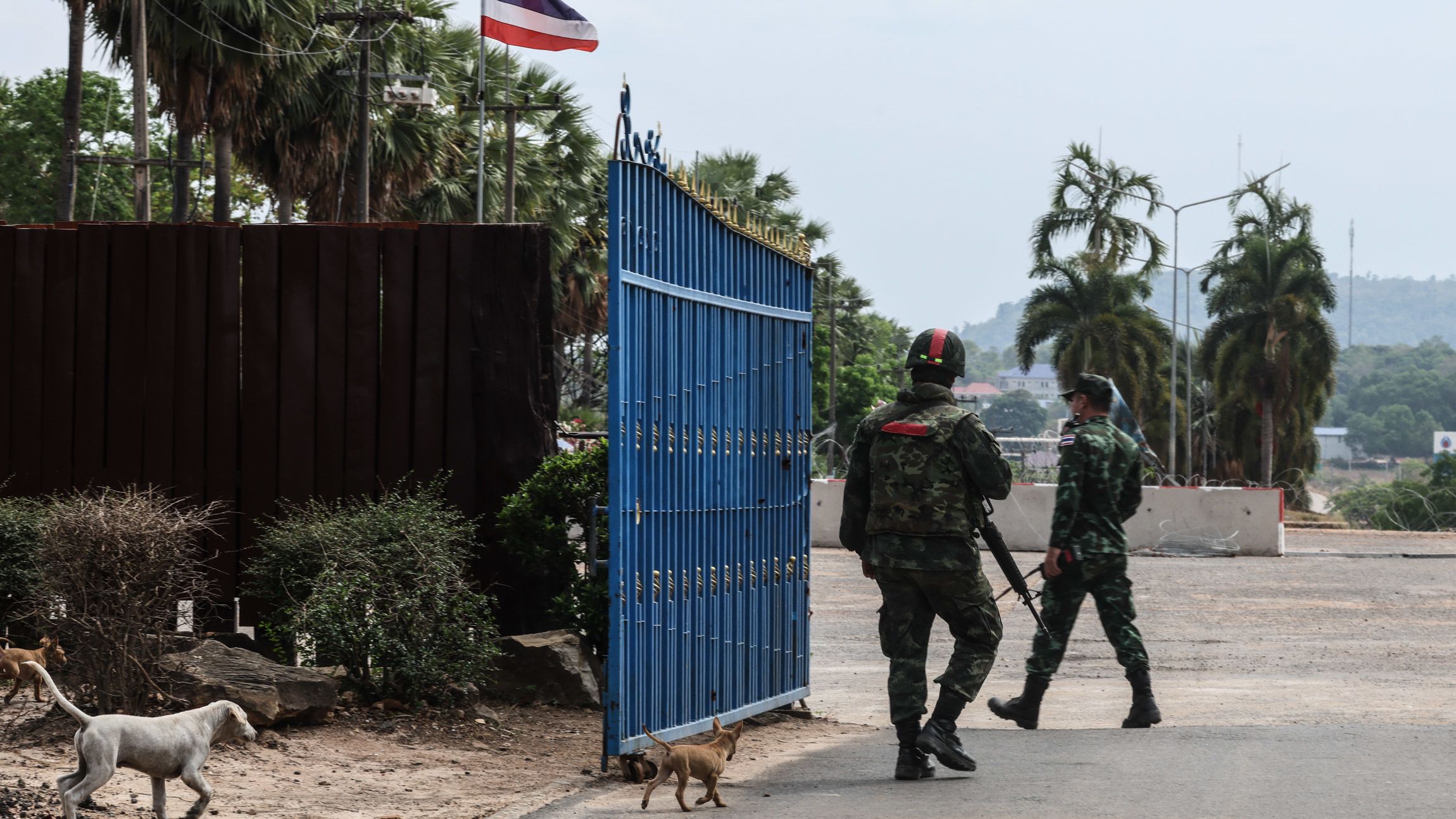
The Thai military rolled out coiled razor wire and erected a 4-meter high steel fence around the Royal Hill Resort and Casino, a scam center in Cambodia’s O Smach that they seized in early December.
The original casino was built around 2013. Behind it are three six-story blocks with lifts. These went up in 2018 and 2019 with 24 rooms per floor and were clearly used for scamming. A low-rise VIP block alongside was added much more recently.
(Photo by Ken Kobayashi)
(Photo by Ken Kobayashi)
The new management block and old casino are the most battle-scarred structures in the Royal Hill compound.
“Cambodia's claims that Thailand's extraterritorial aggression around O Smach disrupted their own scam crackdown is risible -- absolutely ridiculous," said Sims, who last year produced the report “Policies and Patterns: State-Abetted Crime in Cambodia as a Global Security Threat.”
Drawing on United Nations and U.S. government figures, Sims estimated that Cambodia’s scamming industry could be worth $12.5 to 19 billion annually. “That’s the range my report used and it remains the most commonly cited,” he said. In December the International Monetary Fund estimated that Cambodia's gross domestic product in 2025 would be $49.2 billion.

(Photo by Dominic Faulder)
(Photo by Dominic Faulder)
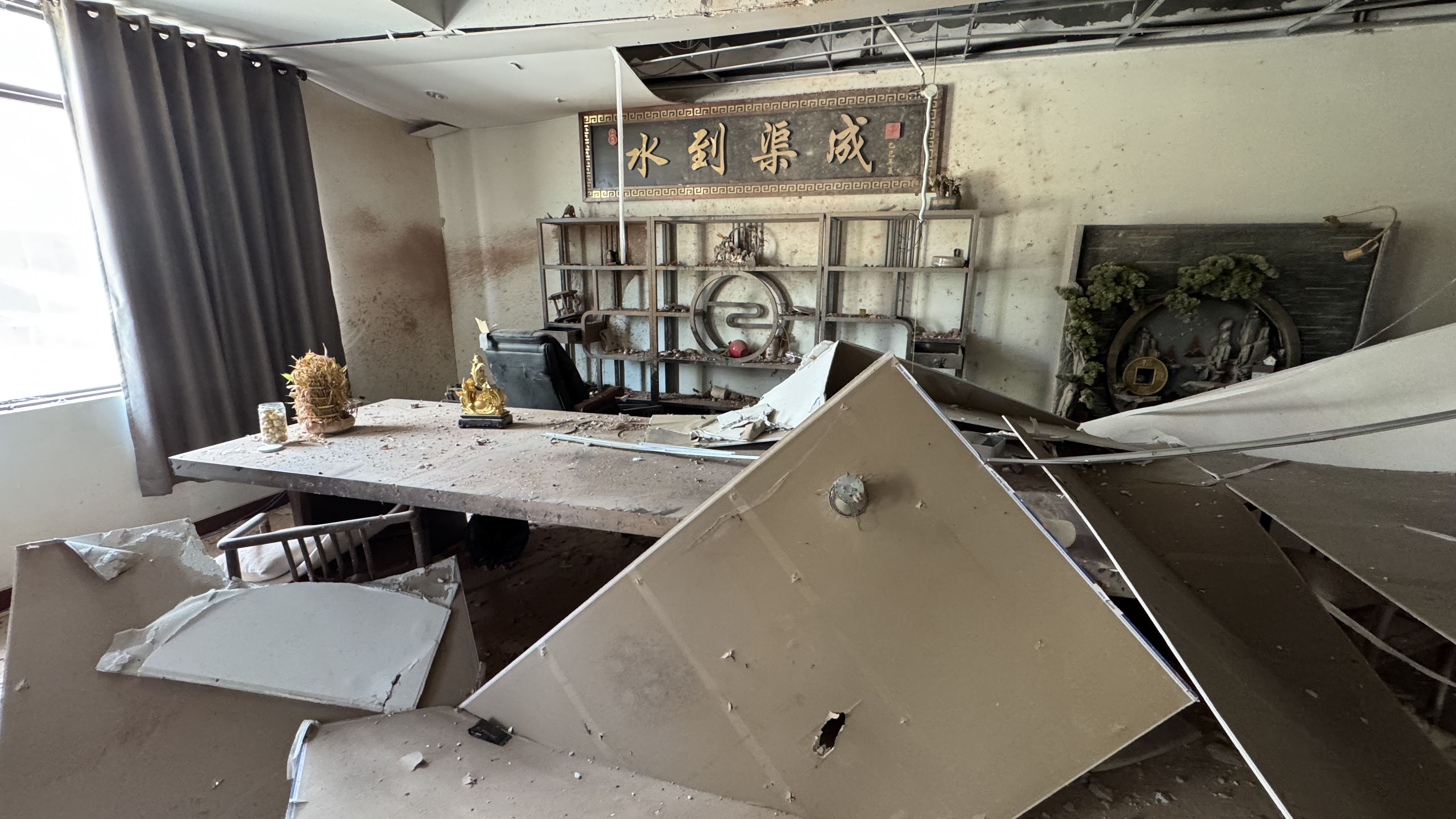
A manager's wrecked office. The Chinese proverb on the wall says literally, "When water flows, a channel is formed," and means: "Success is assured when conditions are ripe."
(Photo by Dominic Faulder)
(Photo by Dominic Faulder)
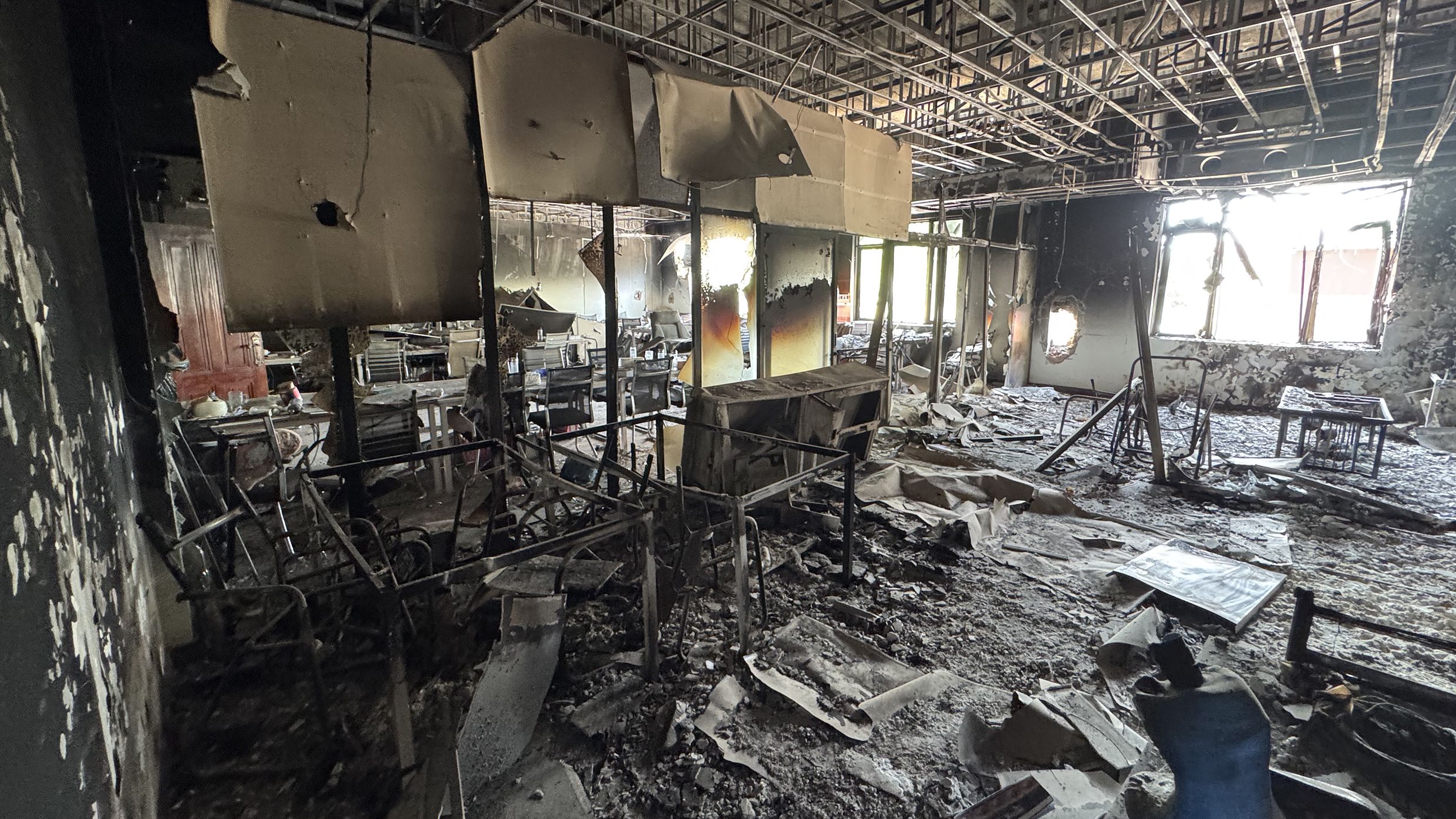
A destroyed area in the management building where Chinese bosses, who like to style themselves as “investors,” once worked.
(Photo by Ken Kobayashi)
(Photo by Ken Kobayashi)
The border around O Smach is relatively well marked and undisputed. A crossing point from Thailand’s Highway 214 comes through a dense forest in Surin province to meet Cambodia’s Highway 68 in Oddar Meanchay province. Satellite imagery appears to show that the Thai forest contains one – possibly two – 5G cell towers near the border.
The Thai military says the incursion into Cambodian territory came after drones and sniper fire originated from the area. The Thais are in control of O Smach for now, but both the military and foreign ministry spokespeople are circumspect about what comes next.
(Photo by Ken Kobayashi)
(Photo by Ken Kobayashi)
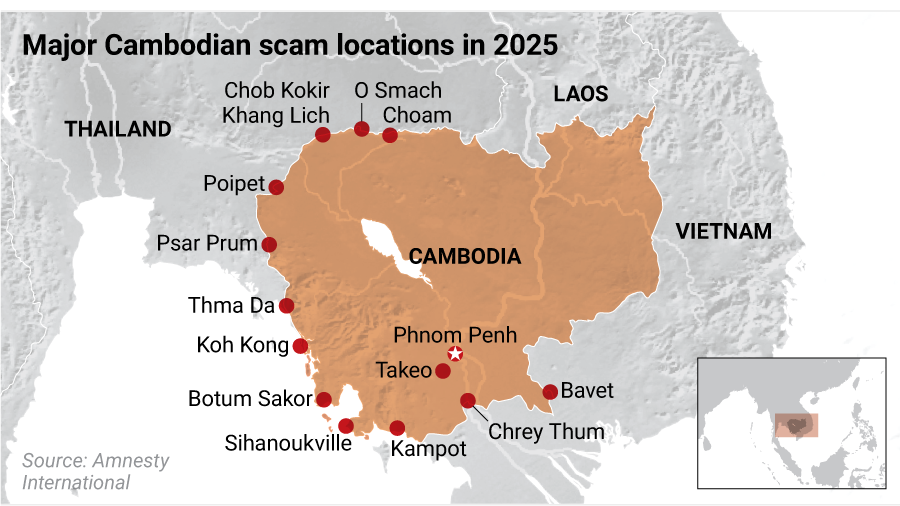
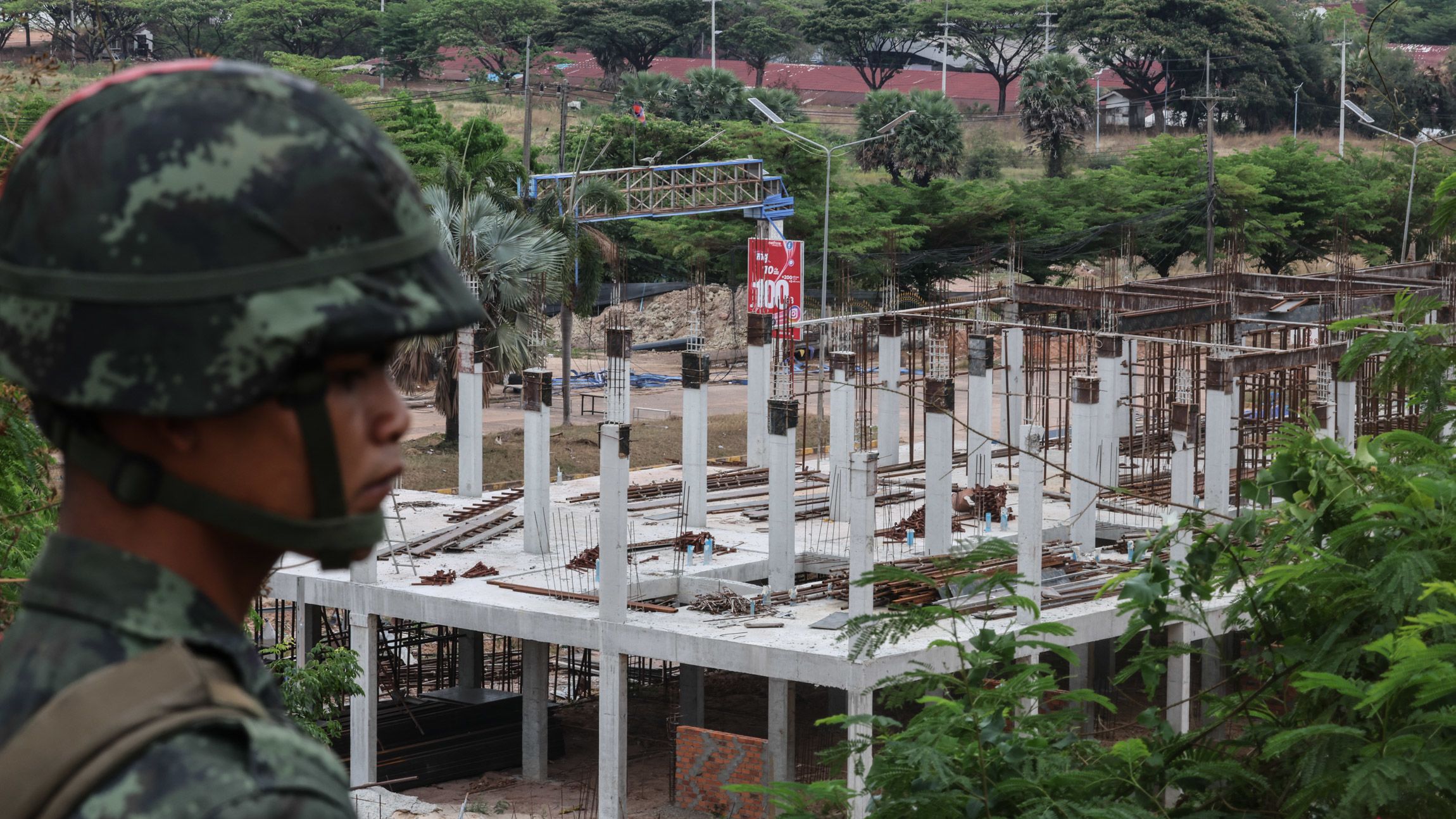
Thai military spokespeople were quick to point out a suspected scam center under construction nearby. O Smach has been transformed since an official international border crossing opened there in 2003. It was closed at various times between 2008 and 2013 during the last crisis between the Southeast Asian neighbors. There are at least two more casinos nearby, but it is by no means among the largest Cambodian scam “nodes,” as casino-scam center clusters are known.
These are the port of Sihanoukville, the capital Phnom Penh, Poipet on the Thai border and Bavet on the Vietnamese border. Thai observers have identified at least eight distinct districts and 155 buildings in O Samach on either side of Highway 68 with a gas station, shops and hotels.
(Photo by Ken Kobayashi)
(Photo by Ken Kobayashi)
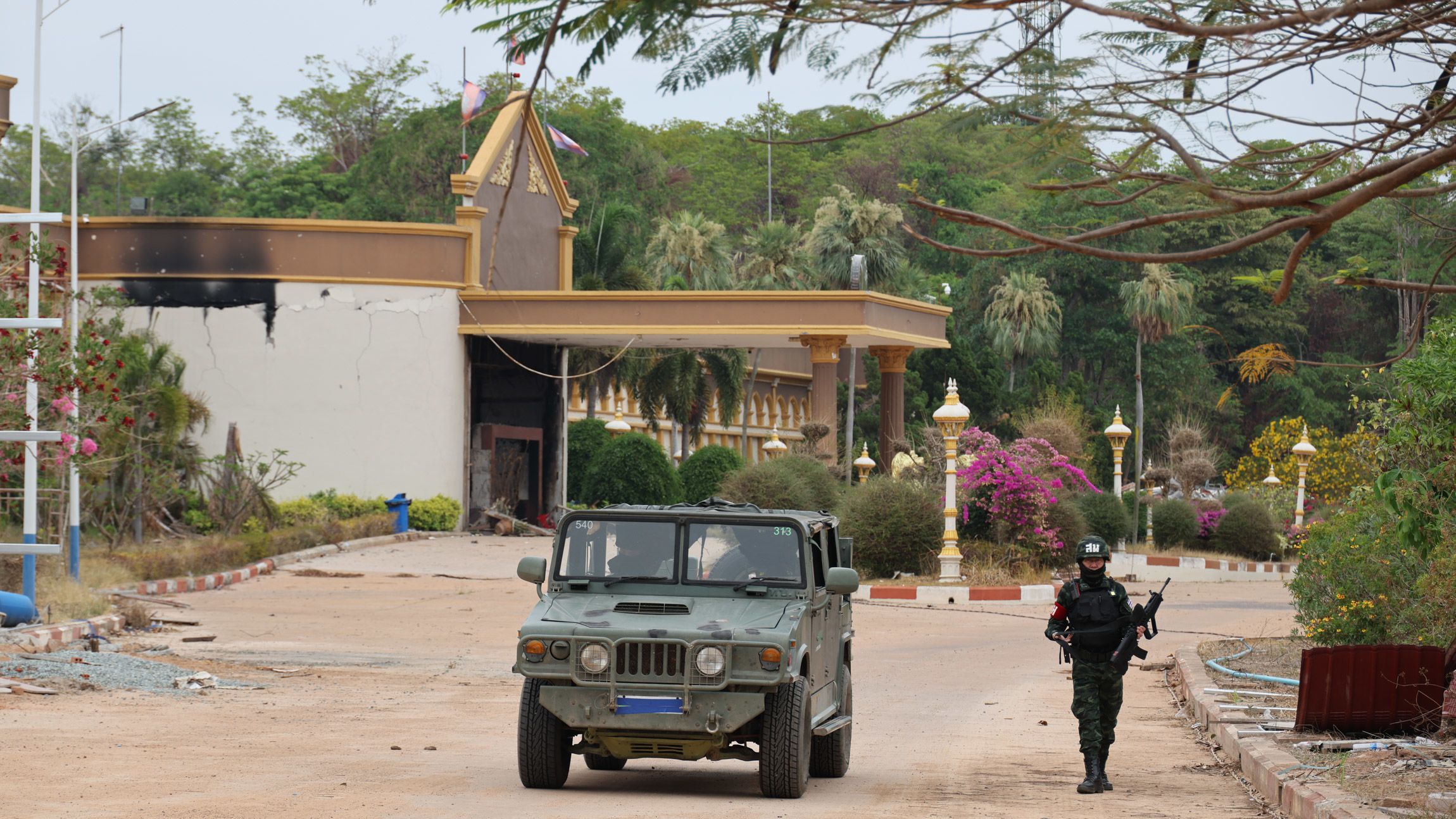
A Thai Humvee outside the devastated Royal Hill casino. Explaining their presence on Cambodian soil, senior Thai officers point to the second clause in the de-escalation measures in the ceasefire that came into effect on Dec. 27: “Both sides agree to maintain current troop deployments without further movement.” Those deployments and other arrangements remain in place “without prejudice” until further negotiations are possible.
Bilateral committees will not meet until after Thailand’s new elected government takes office – and probably not before mid-April. But when and if the Thais choose to leave is another question.
(Photo by Ken Kobayashi)
(Photo by Ken Kobayashi)
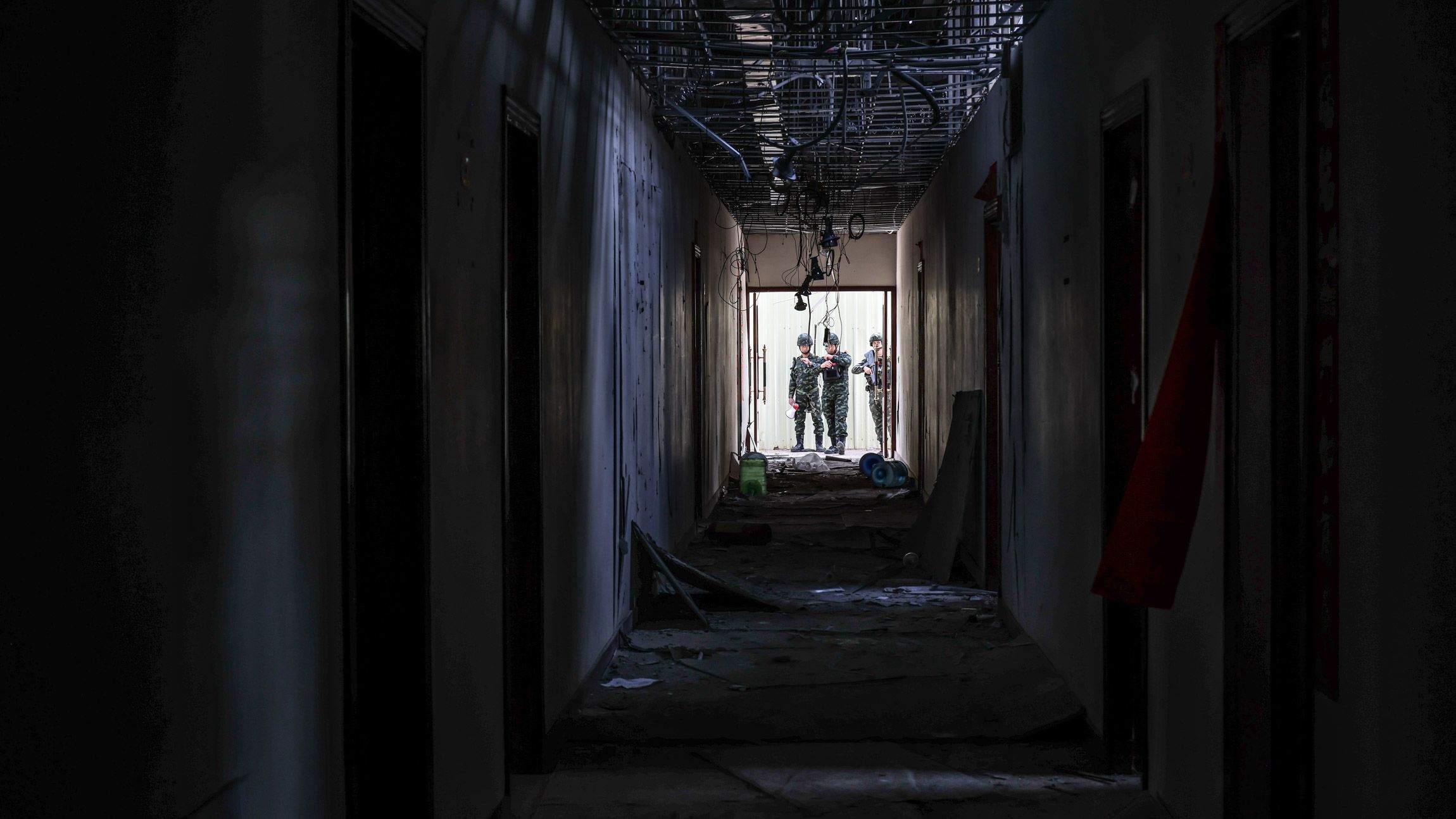
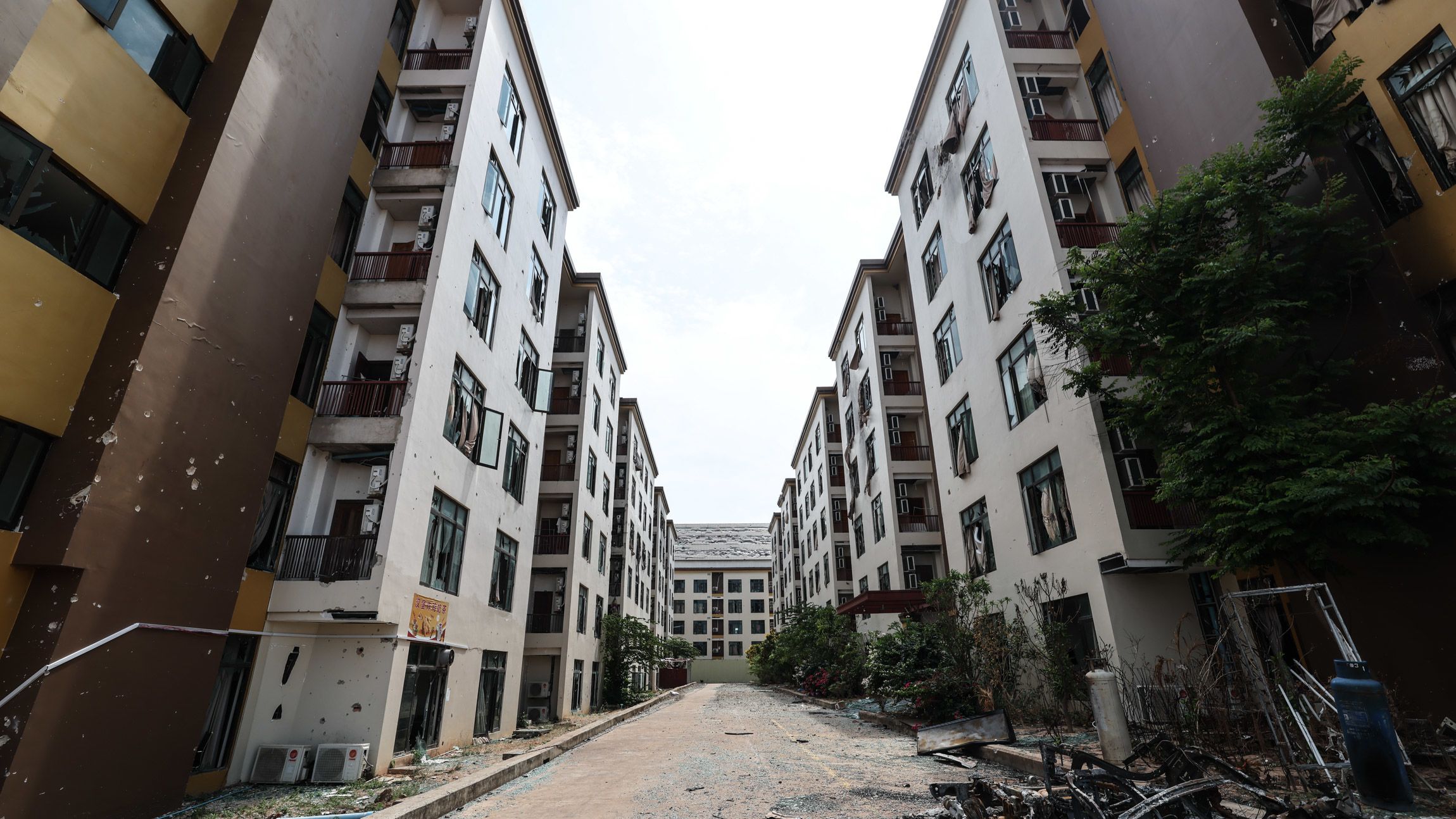
The three main buildings used for scamming were abandoned during the December fighting. It is uncertain where the multinational residents of more than 430 rooms sought refuge.
Corridors on different floors appear to have been organized by nationality and target country with training rooms and soundproof scamming booths. Hollywood-style sets aim to create a realistic setting designed to fool scam targets. Sets include mock-ups of police stations, banks and other buildings, all in close proximity to overcrowded accommodation.

(Photo by Dominic Faulder)
(Photo by Dominic Faulder)
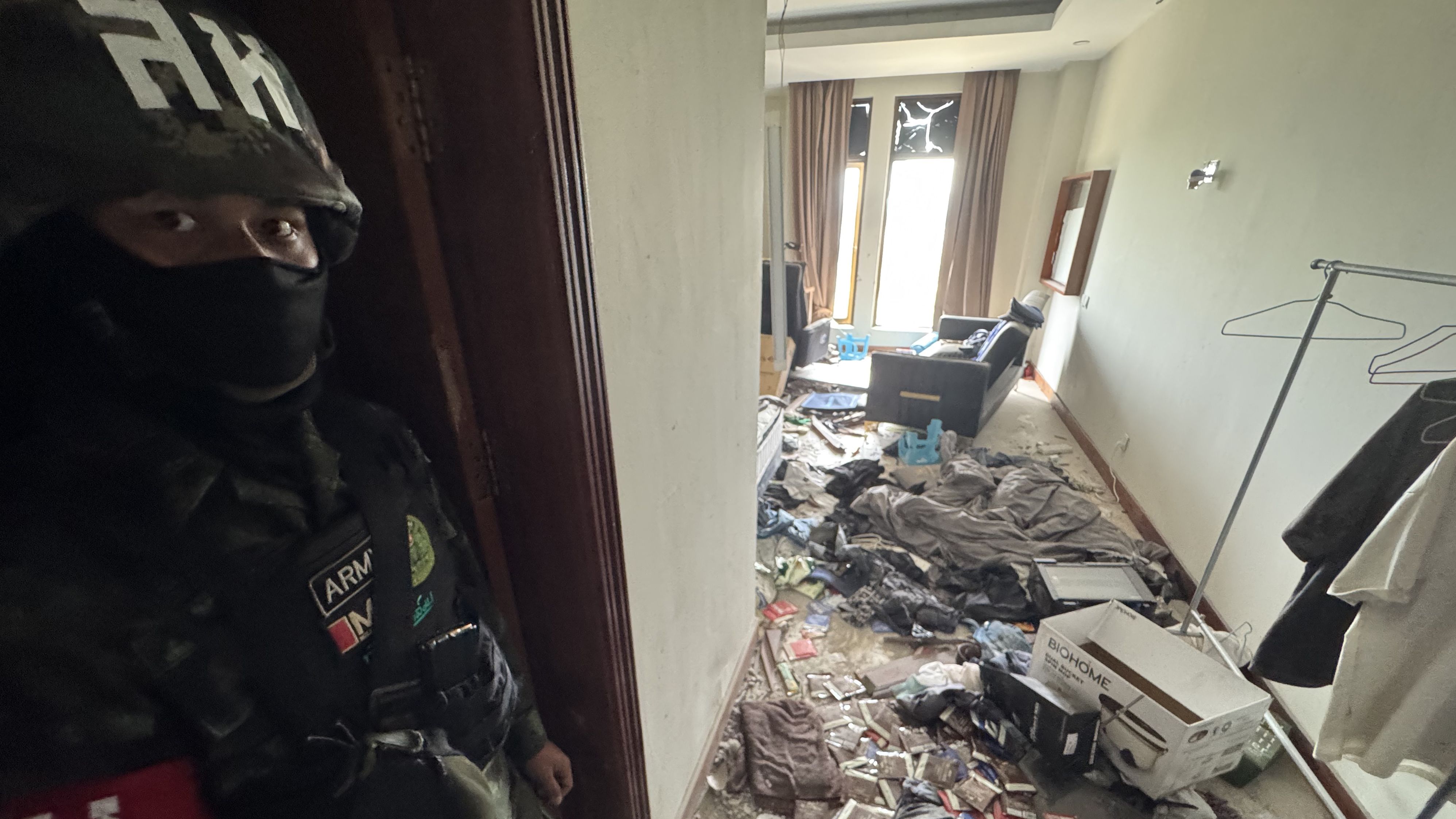
Thai officials say thousands of scammers fled the fighting in O Smach in early December, often abandoning their belongings in the pandemonium. Observers say no obvious effort has been made to arrest them.
(Photo by Dominic Faulder)
(Photo by Dominic Faulder)
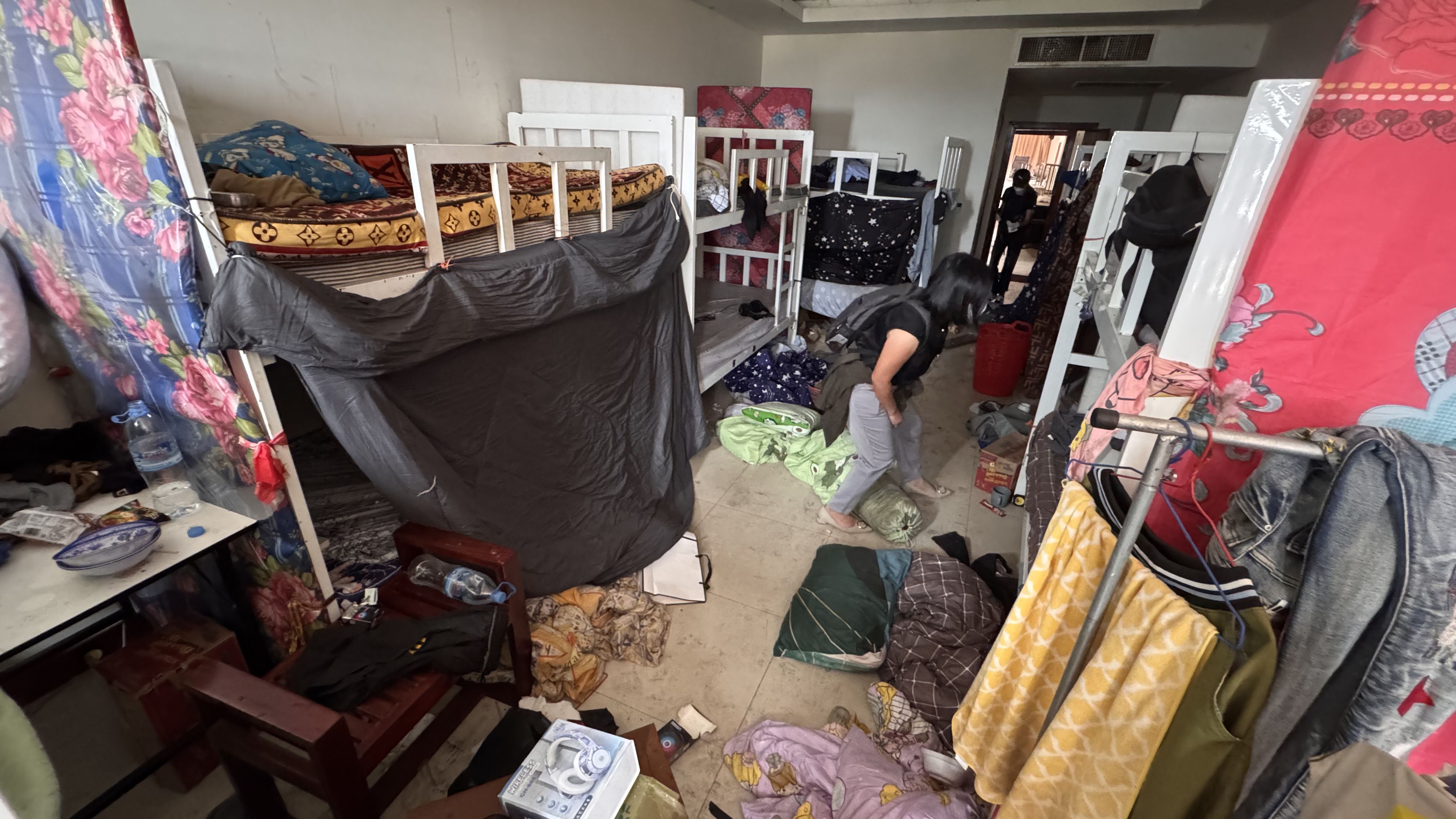
A Thai official inspects the squalid living conditions inside the scam compound. One room in the Indonesian section contained 14 bunks and a shared bathroom.
(Photo by Dominic Faulder)
(Photo by Dominic Faulder)
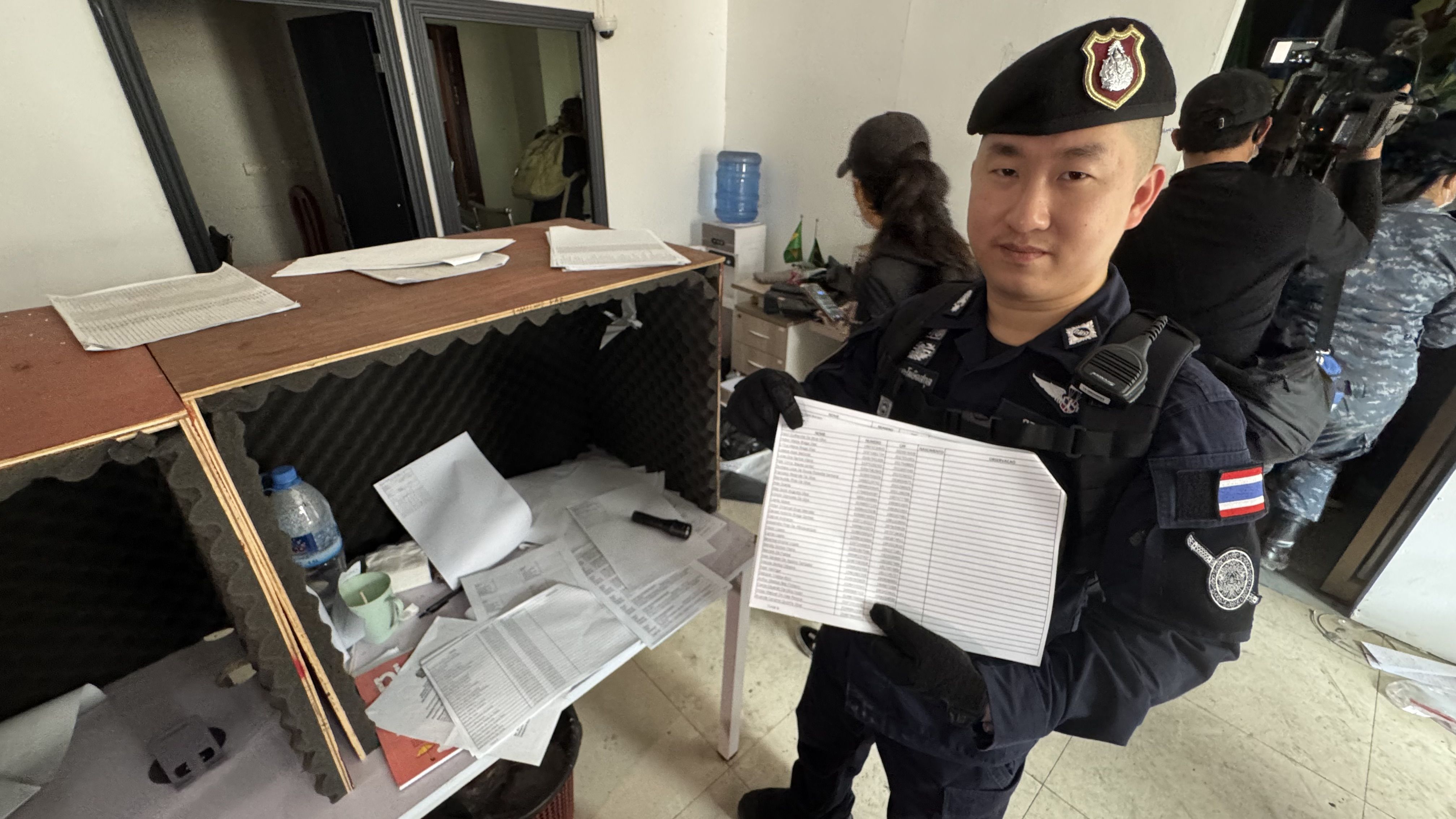
Brazil was particularly well represented at O Smach with a scam operations room housing crude soundproofed hutches still brimming with scam scripts and lists of names and contact information for Portuguese-speaking targets.
(Photo by Ken Kobayashi)
(Photo by Ken Kobayashi)
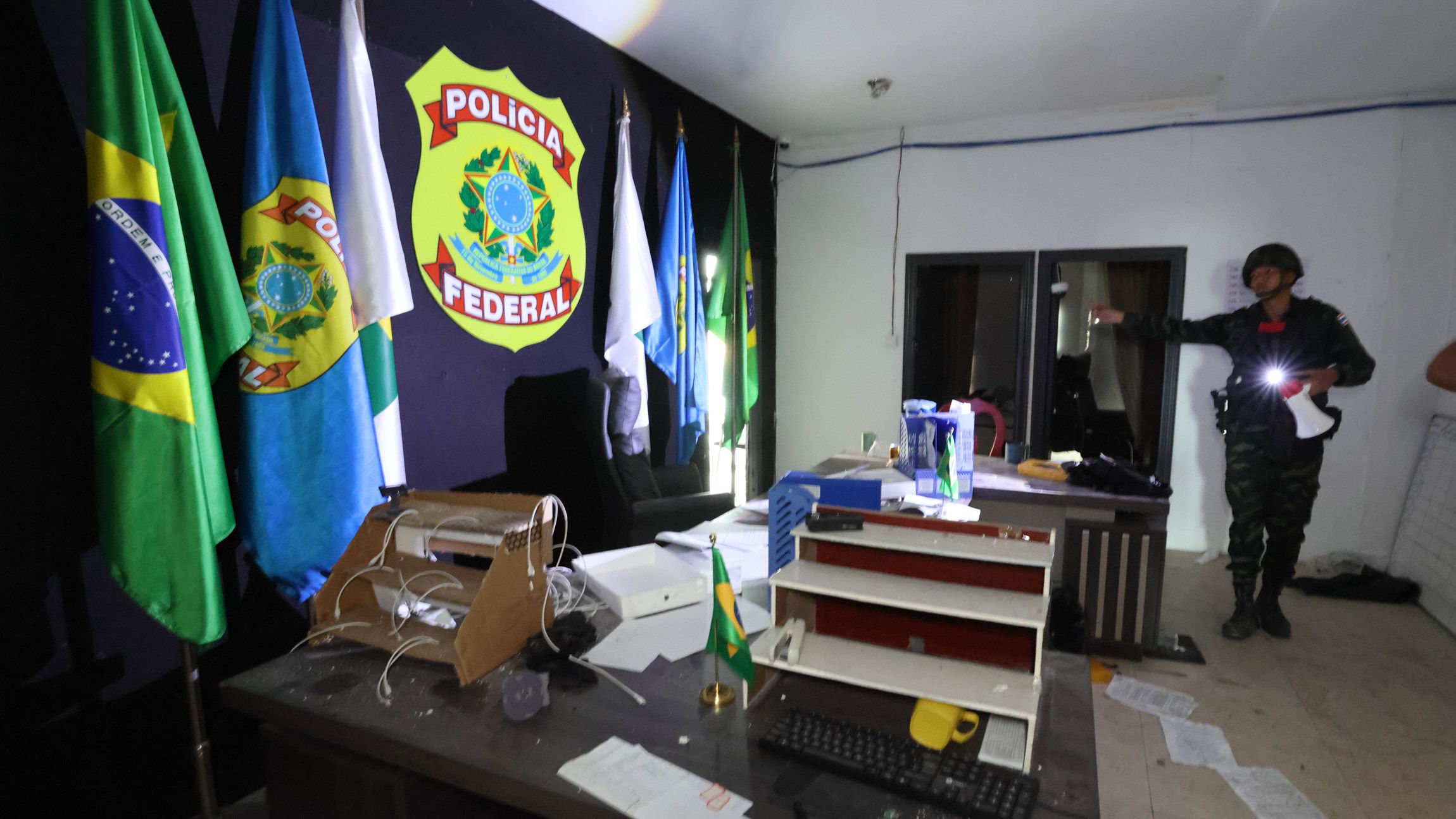
Nearby was a mocked up Brazilian federal police station. The sets are rather old school. Cutting-edge scammers use green backdrops and Hollywood-style computer-generated CGI technology to create settings at a fraction of the cost and effort. “It's certainly dated,” Benedikt Hofmann, deputy representative of the U.N Office for Drugs and Crime in Bangkok, told Nikkei. “In newer compounds, you often don't have these elaborate sets.”
(Photo by Ken Kobayashi)
(Photo by Ken Kobayashi)
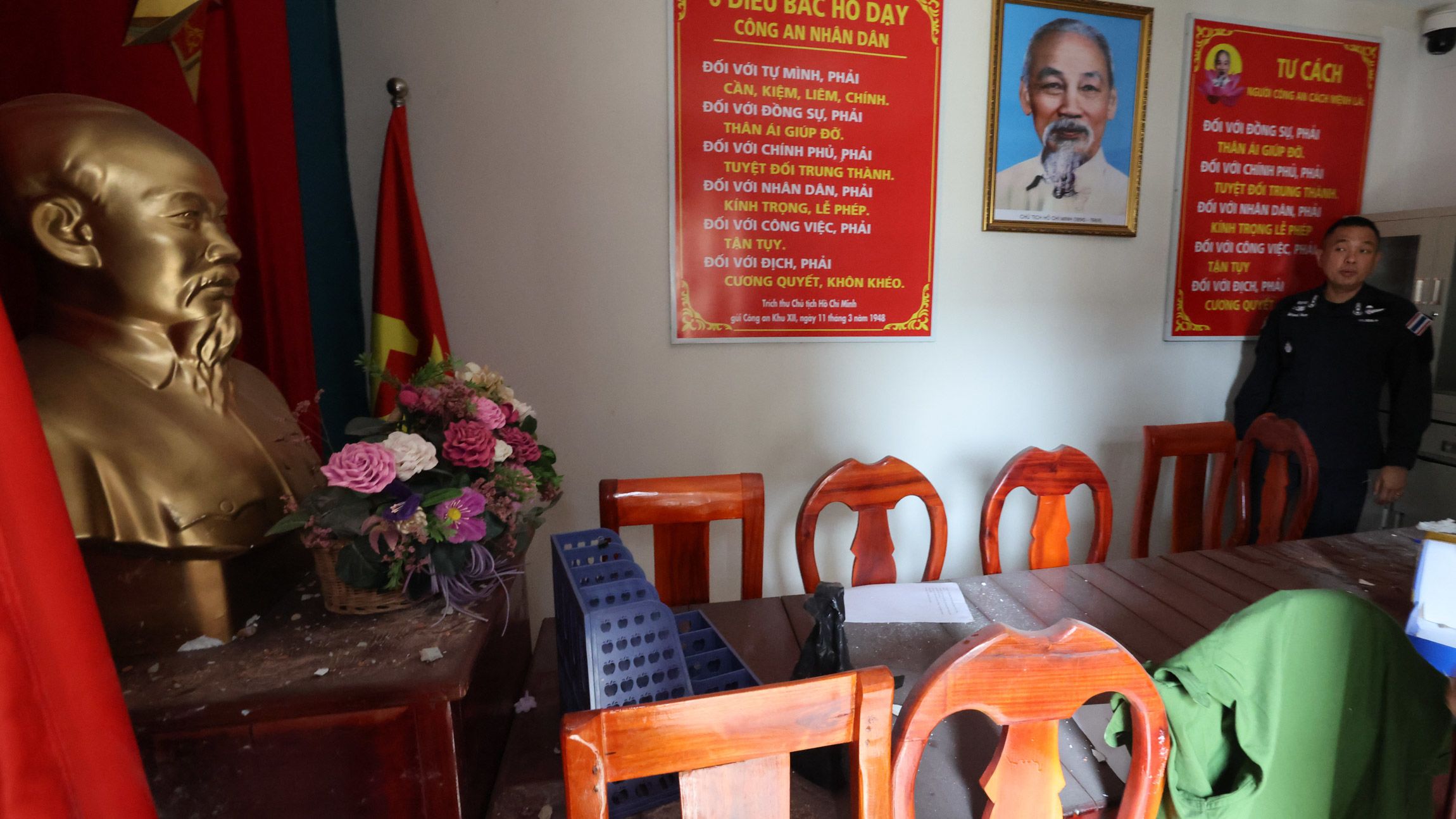
A bust of Ho Chi Minh overlooks a room once used to scam the unwary in neighboring Vietnam. Victims are drawn in by video links and led to believe they are interacting with real officials. These imposters then demand that the targets make them pay fines or transfer money to scammers' accounts for concocted offenses.
(Photo by Ken Kobayashi)
(Photo by Ken Kobayashi)
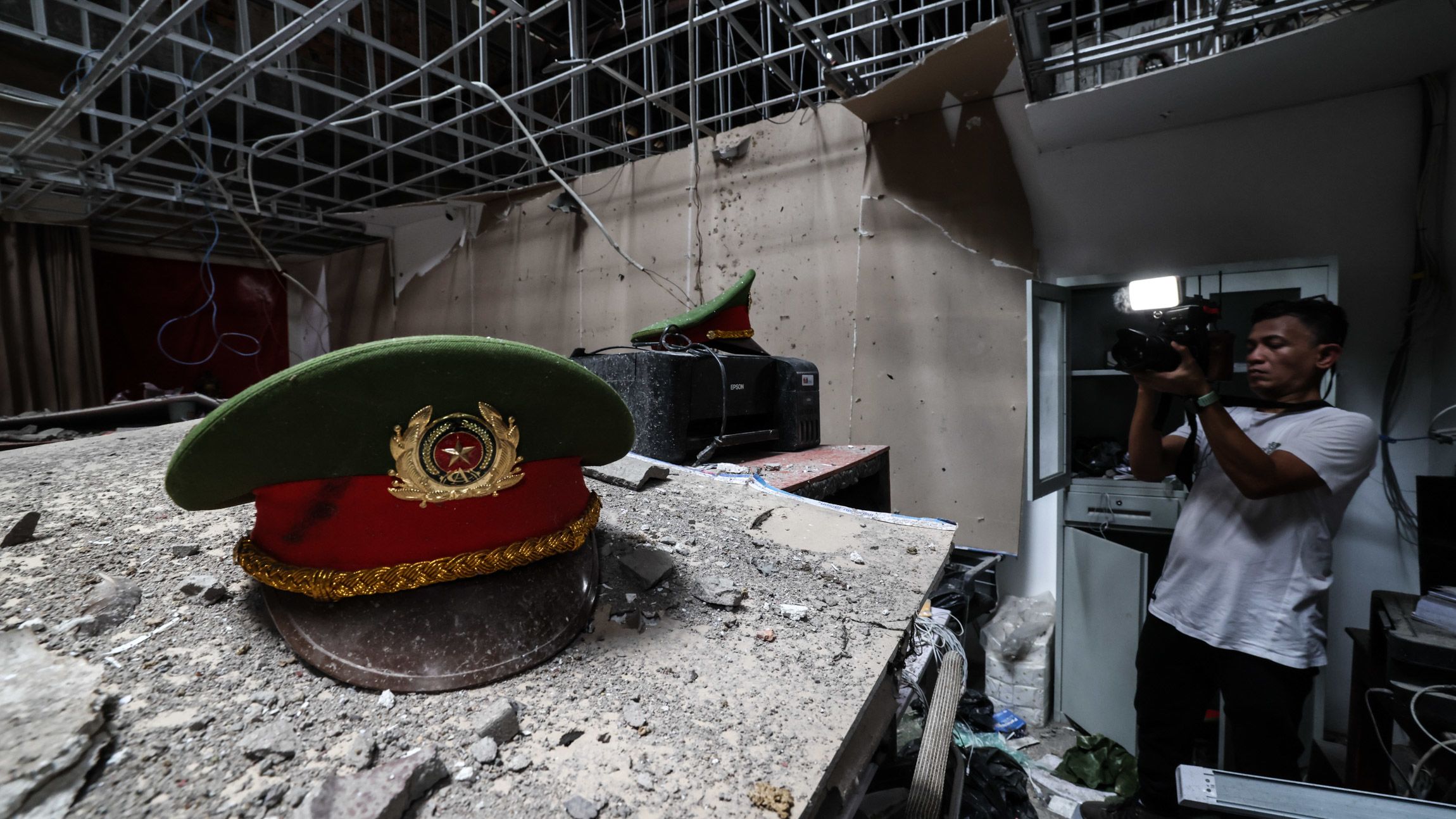
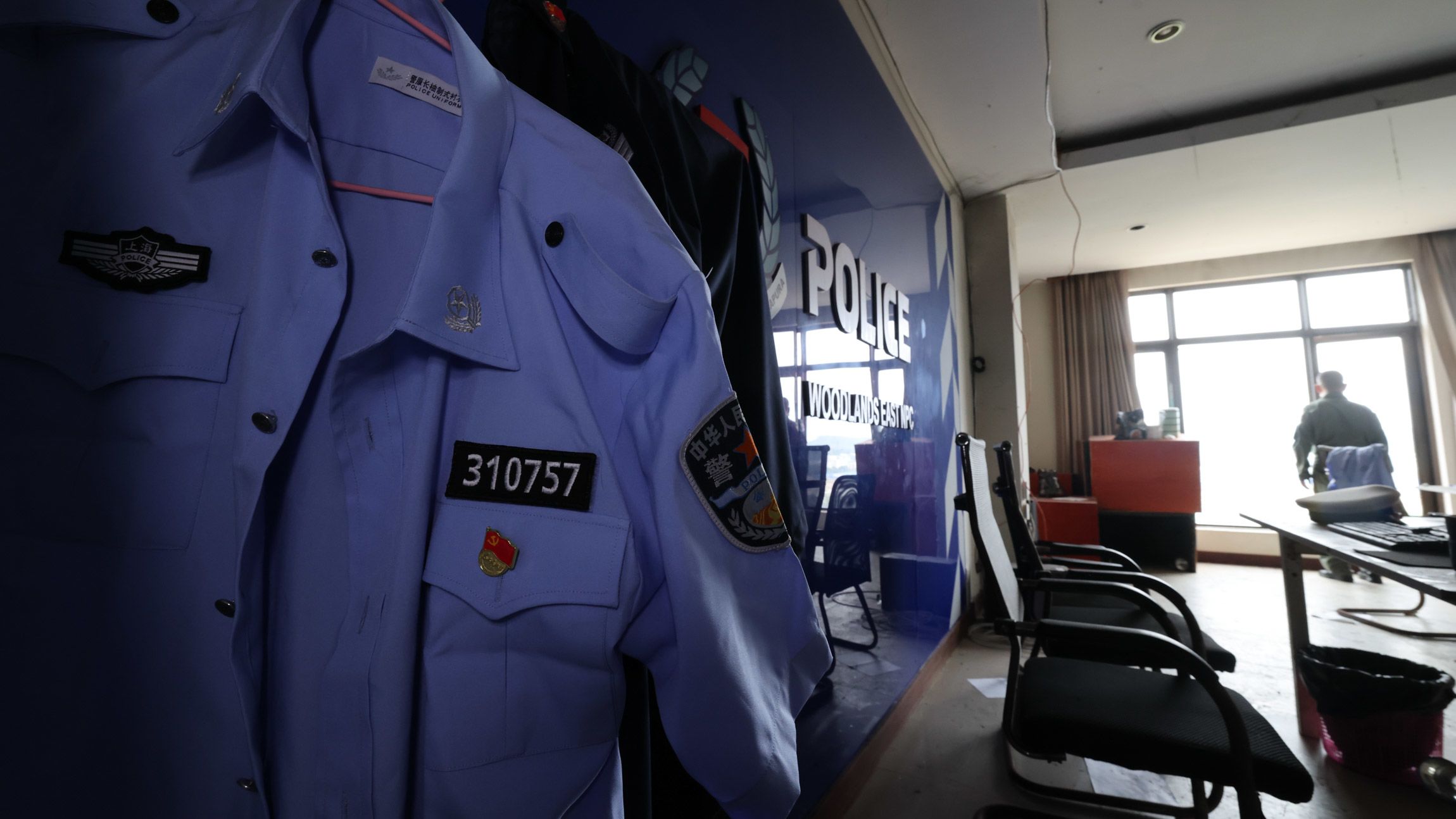
An authentic mainland Chinese policeman’s tunic in a mock-up of a Singapore police station.
(Photo by Dominic Faulder)
(Photo by Dominic Faulder)
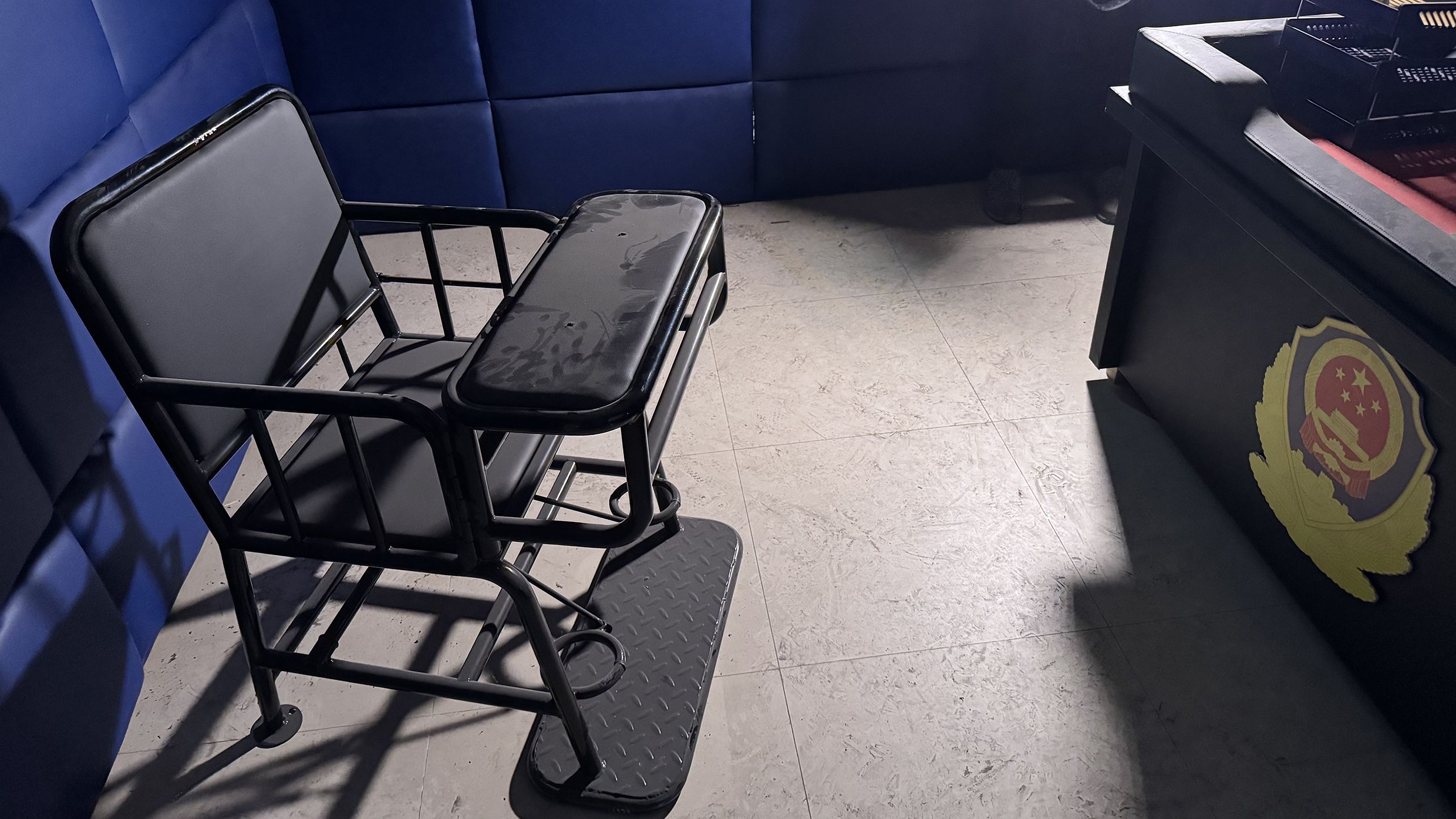
A so-called “tiger chair” designed for interrogation in a fake Shanghai police station. Posters on the wall exhort trapped victims to make confessions.
(Photo by Ken Kobayashi)
(Photo by Ken Kobayashi)
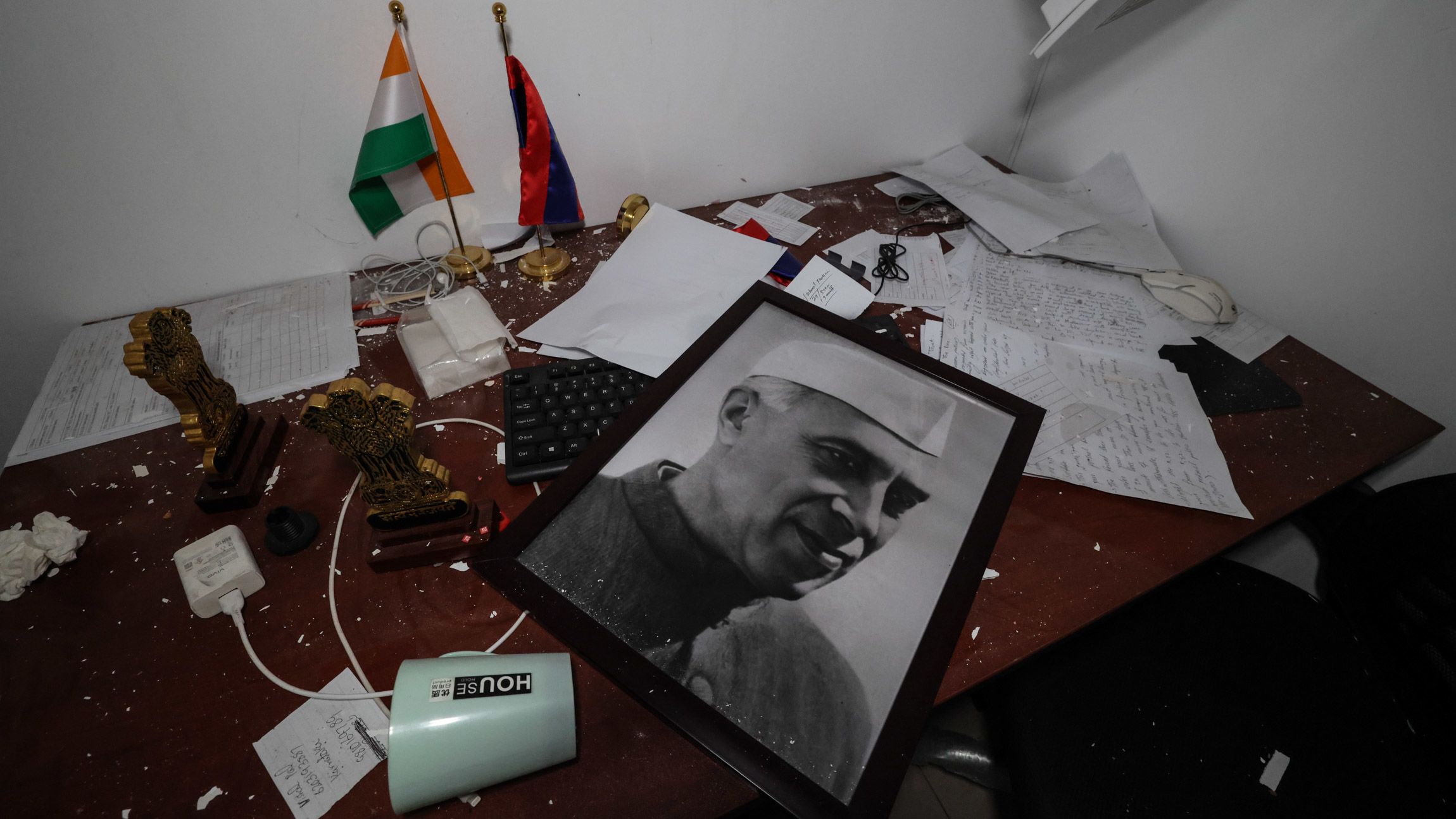
A portrait of Jawaharlal Nehru, India's first prime minister after independence, sits amid the debris of the Indian section, testimony to the scammers' creativity.
(Photo by Ken Kobayashi)
(Photo by Ken Kobayashi)
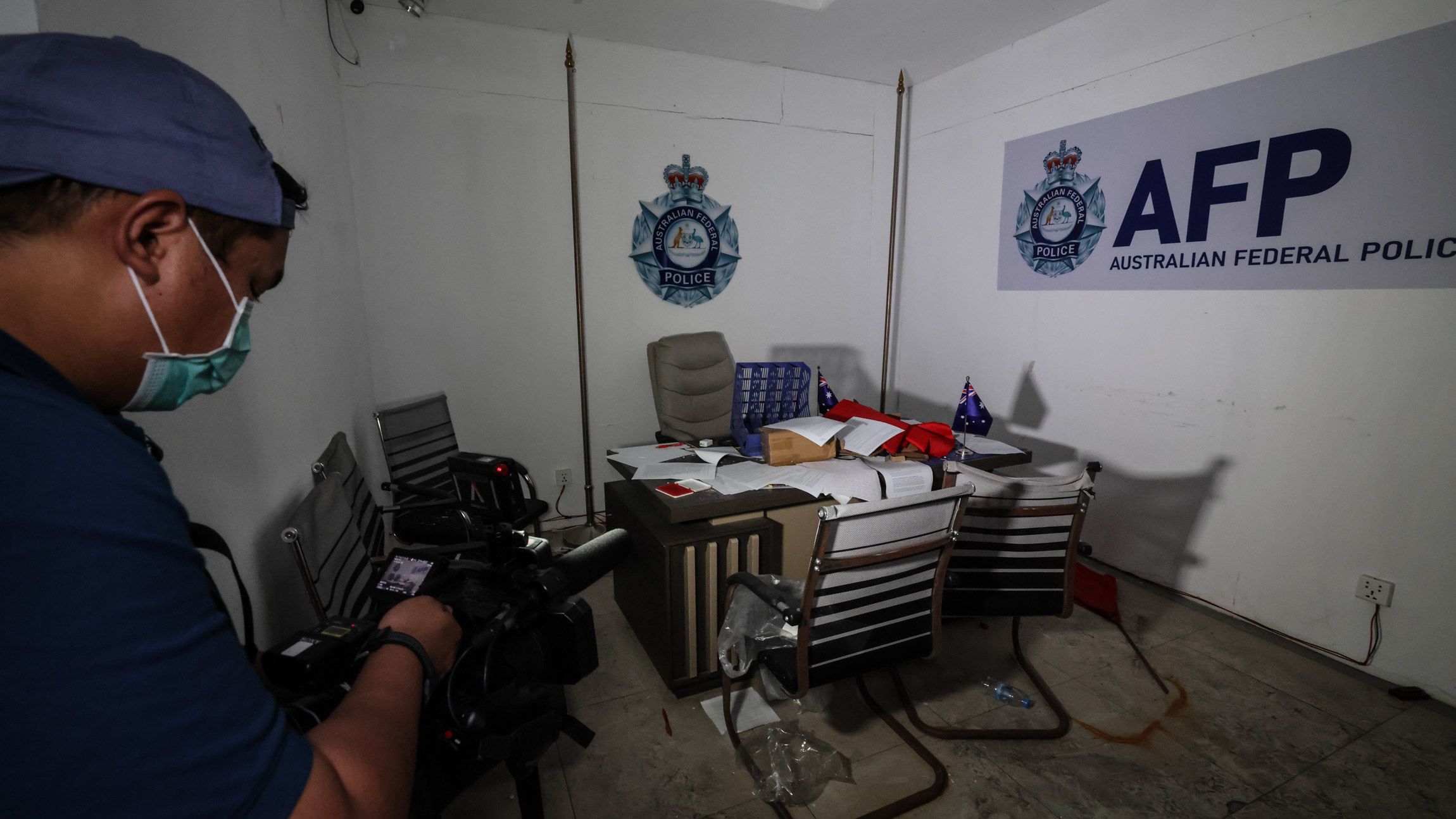
A mock-up of an Australian Federal Police station.

(Photo by Ken Kobayashi)
(Photo by Ken Kobayashi)
A fake Vietnamese bank with a good supply of counterfeit dollars on hand.
(Photo by Ken Kobayashi)
(Photo by Ken Kobayashi)
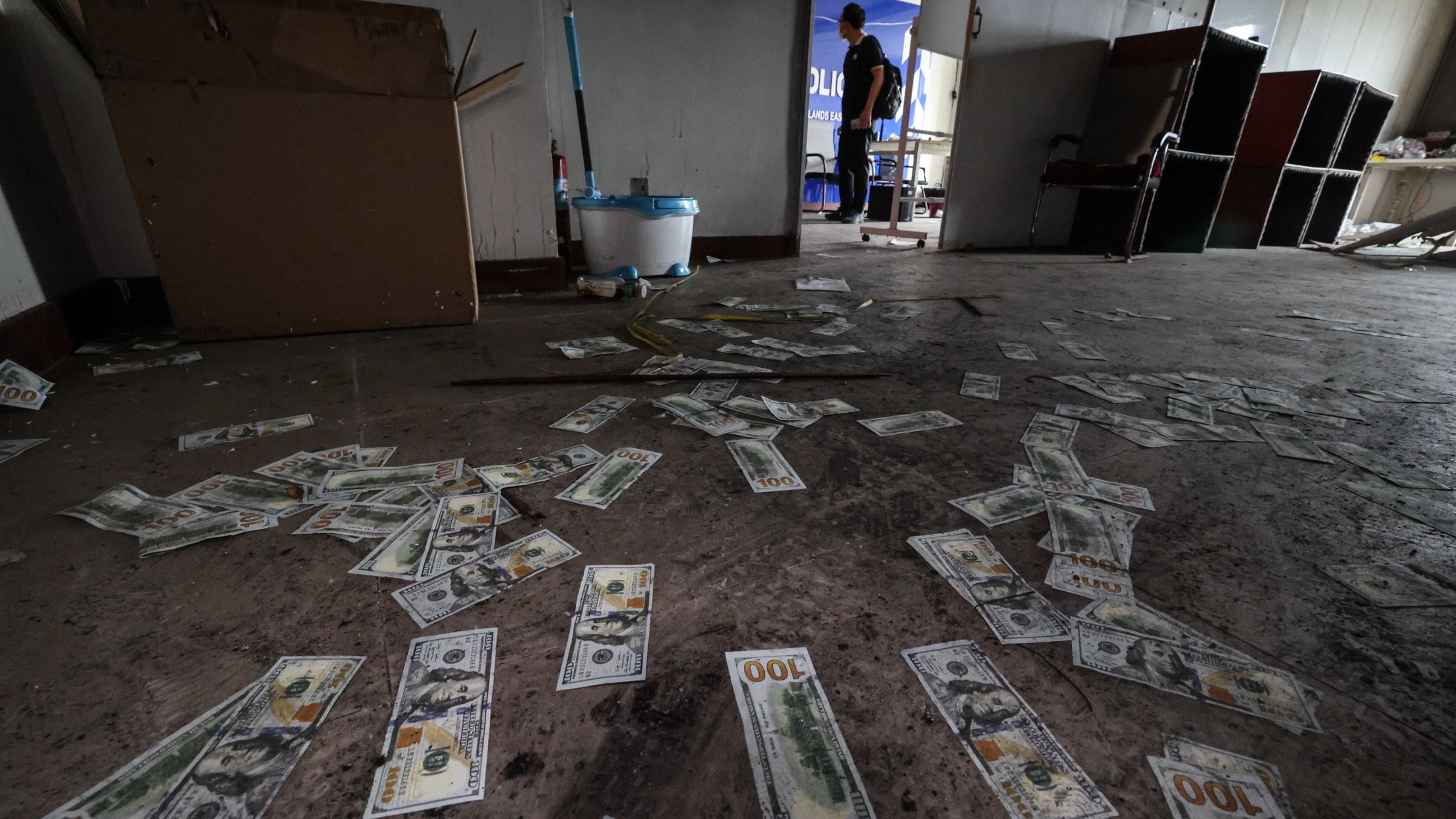
Counterfeit U.S. $100 bills are strewn around the floors and piled in bundles on shelves.
(Photo by Ken Kobayashi)
(Photo by Ken Kobayashi)
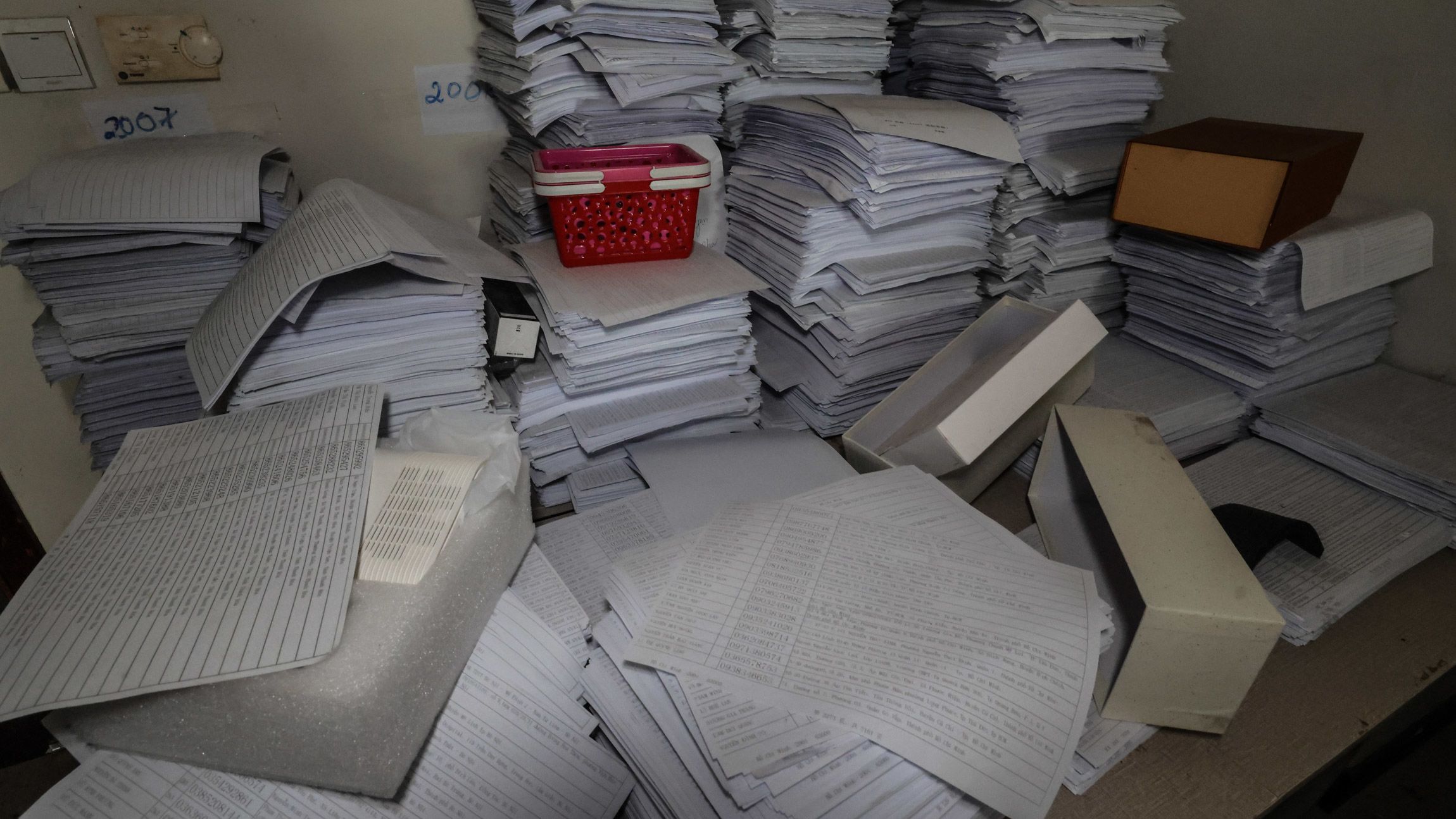
Each national section contained endless lists of foreign scamming targets, some dating back decades.
(Photo by Ken Kobayashi)
(Photo by Ken Kobayashi)
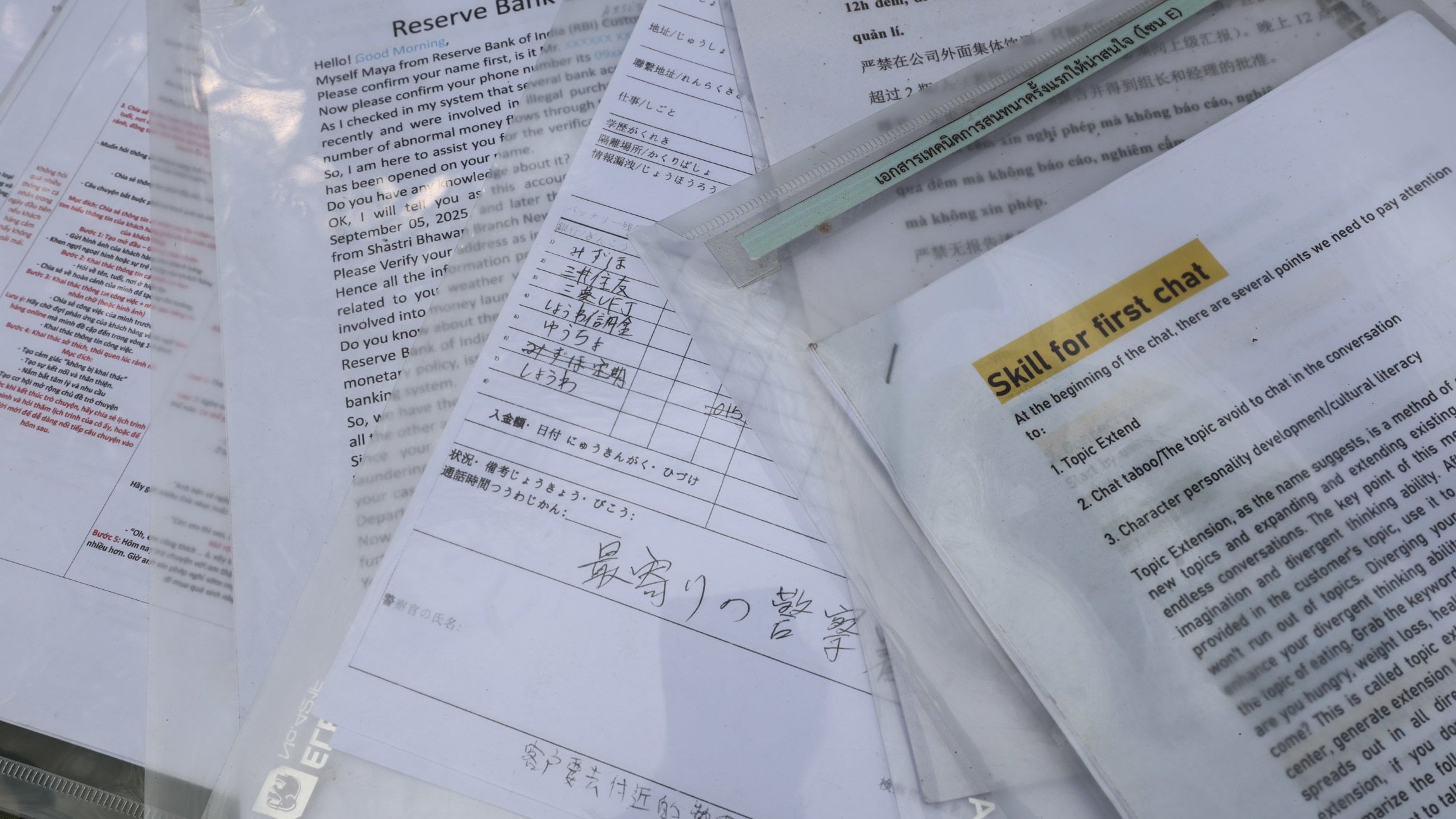
Scammers have developed detailed scripts that include topics to avoid and effective ways to elicit an appropriate response from “clients” – as scam targets are sometimes called.
(Photo by Dominic Faulder)
(Photo by Dominic Faulder)
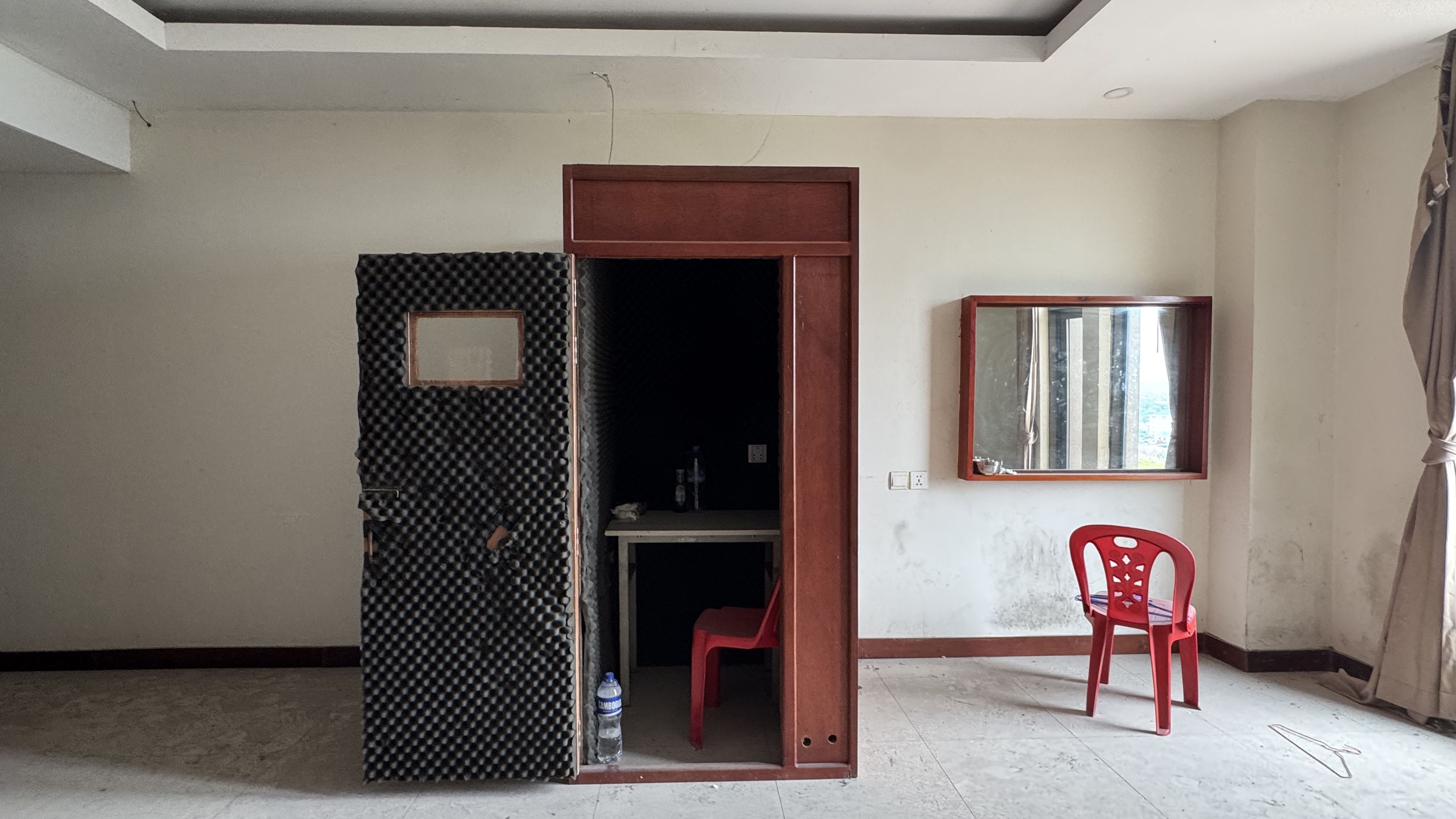
A scammer's soundproofed booth in a corridor. Most scamming requires little more than a computer or smartphone and an internet connection. The trend is toward smaller, specialty scam setups that involve less human trafficking along with large fortified compounds that attract attention.
“In other parts of the region, where the threshold is higher and where large-scale compounds would be quickly identified and dismantled -- think Thailand or post-POGO Philippines [Philippine Offshore Gaming Operators] -- you have these smaller, decentralized 'boutique' operations running out of office buildings or suburban houses,” said the UNODC’s Hofmann.
“These are much harder to find -- you can't go looking at them across the border, or map them on satellite images. It takes much more focused and intelligence-led law enforcement to detect them, and once you close part of an operation, the other cells simply continue to operate.”
(Photo by Dominic Faulder)
(Photo by Dominic Faulder)
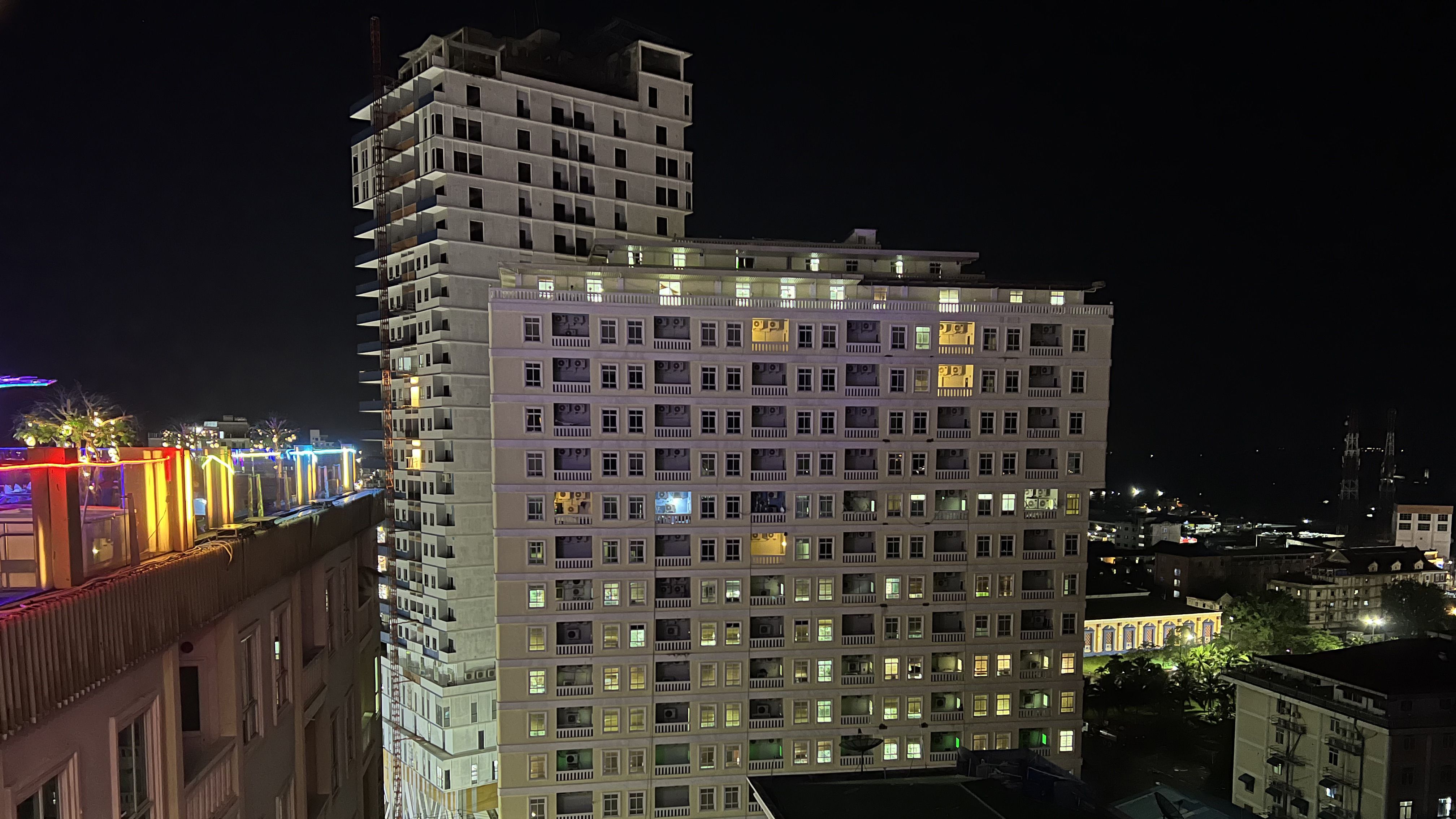
Poipet, some 160 kilometers southwest of O Smach, which faces Thailand’s Aranyaprathet, is the main crossing point along the Thai-Cambodian border. It remains closed, and is one of the kingdom’s top four scamming hubs. This photo, taken in 2022, shows a tower containing a scamming center where operations are continuing at 9pm on a Saturday evening.
“Based on some of the open source monitoring I have done since early February, there are estimates that as many as 100,000 [scammers] are now in Poipet,” Jason Tower, a senior expert with the Global Initiative against Transnational Organized Crime, told Nikkei.
“There have been some raids targeting Poipet scam centers, but once again arrest numbers are low. From what I can see, Poipet-based scam syndicates are now starting to relocate once again. At the moment, massive numbers are moving around Cambodia, as well as going across borders, especially to destinations like Sri Lanka,” said Tower. “Cambodia could have prevented this displacement from happening, but it has opted not to take such an approach.”
Photos: Ken Kobayashi and Dominic Faulder
Text: Dominic Faulder
Editor: John Aglionby