
All fired up
Malaysia’s Hungry Ghost Festival
delivers both drama and symbolism
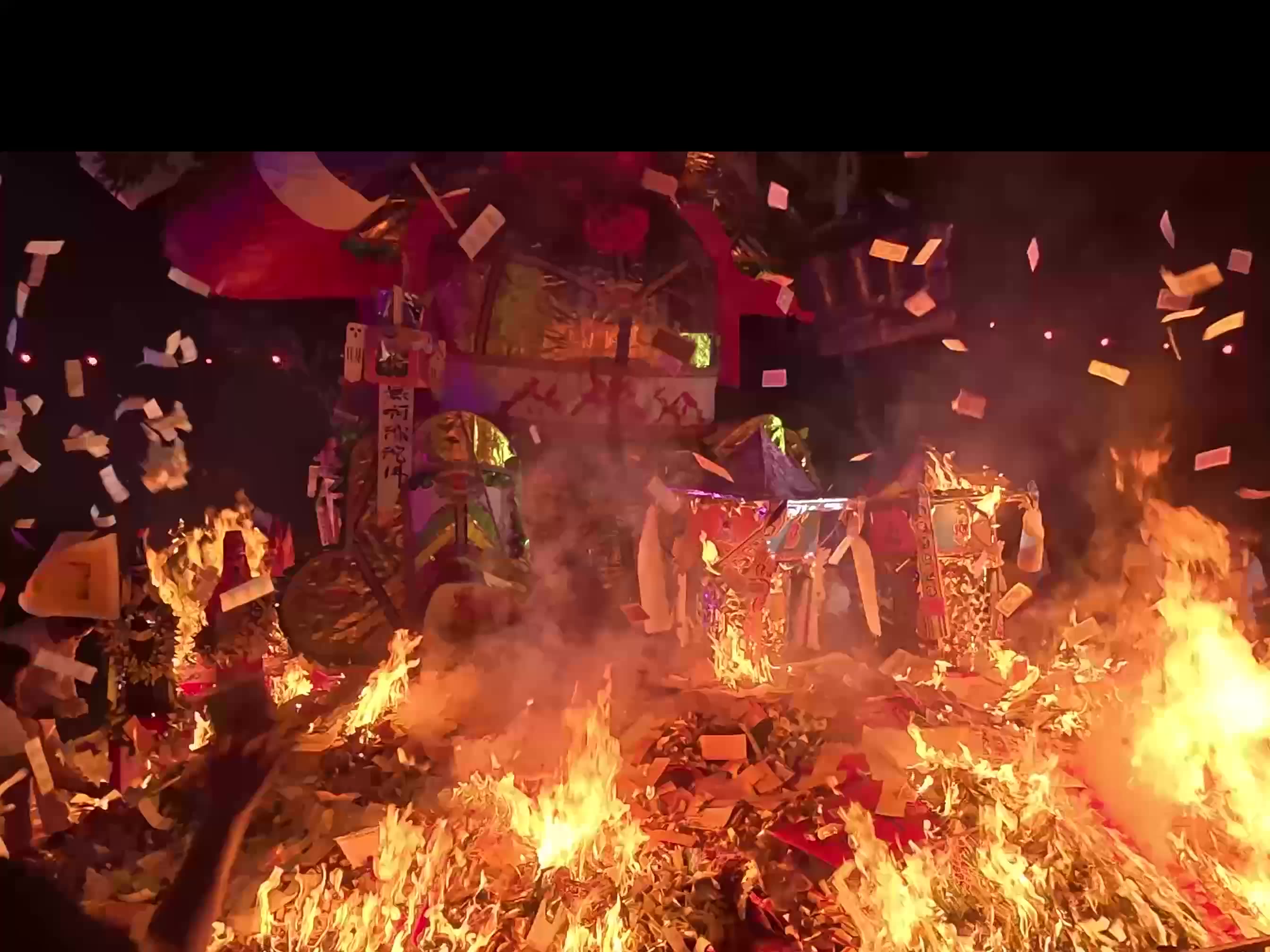

The air is thick with smoke from dozens of joss sticks wedged into prayer urns. Around a large wooden table in the middle of a makeshift temple, Malaysian Chinese devotees move in slow circles. Behind them, a paper-and-bamboo deity grins with carnivalesque delight.
The deity’s name in China’s Hokkien language is Tai Su Yeah (Da Shi Ye in Mandarin), and his title is King of Hell. Each year during the seventh month of the Chinese lunar calendar, the gates of the underworld swing open and this guardian of ghosts -- an avatar of Kwan Yin, the Goddess of Mercy -- returns to earth.
With him come countless restless souls seeking release from the Diyu, a Taoist and Buddhist purgatory where spirits must cleanse themselves before reincarnation. The ceremony to appease them is called Phor Thor in Hokkien and Yu Lan in Mandarin. The living must help with prayers and offerings: good food, cold beer and plenty of spectacle.
The Hungry Ghost Festival, which shares its roots with Japan’s midsummer Bon festival (when spirits return to earth for family reunions), is observed by Chinese communities across East and Southeast Asia. Families throughout these regions mark the occasion by burning “hell money” and paper ingots for the dead.
But in Singapore and Malaysia the festival is especially vibrant, with community-funded celebrations featuring life-size paper effigies, mediums possessed by deities, and street burnings of enormous paper statues of Tai Su Yeah.
The monthlong celebration this year runs from Aug. 23 to Sept. 21. During this period, temporary shrines appear on street corners to keep the joss sticks burning and the roaming ghosts entertained.
Stages come alive with thumping disco beats and the wailing voices of kotai singers -- a glitzy, modern alternative to traditional puppetry and Chinese opera, which not every neighborhood can afford. These traditional shows are expensive to stage, and are becoming rarer, with some performances costing up to 10,000 Malaysian ringgit ($2,370).
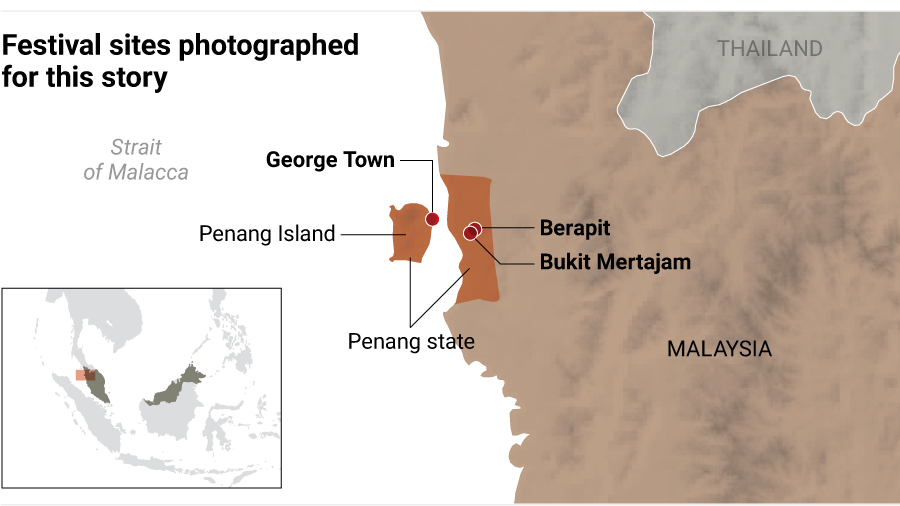
The festival is especially popular in Penang state, the only state where the number of ethnic Chinese people roughly equals the Malay population. Franco Tan, of the Penang Teong Guan Association, is overseeing a shrine on Queen Street, in the Little India district of George Town, on Penang Island. He says there are about 400 such locations across the state.
The biggest Tai Su Yeah effigy ever made was a 10-meter statue created in the northern city of Alor Setar, in Kedah state, in 2022. But in most years the biggest is to be found in Bukit Mertajam in Seberang Perai, a part of Penang state that lies opposite Penang Island on the mainland of Peninsular Malaysia.
Each year since 1984, master craftsman Ng Chi Wang has built a statue in his workshop in the Bukit Mertajam suburb of Berapit. With each festival, the god grows a little taller; this year it reached 9 meters.
The effigy, made in sections and hauled by truck to a covered alley beside the town’s Tua Pek Kong Temple, was carried on Sept. 8 to Jalan Pasar, a busy road in the heart of Bukit Mertajam, where it was set alight.
Firefighters stood by, ready to douse the flames after a ritual that was terrifying, exhilarating and symbolic in equal parts. In the end, the King of Hell crumbled to ash. But he will rise again next year, still grinning.
Video by Marco Ferrarese; photographs by Kit Yeng Chan.



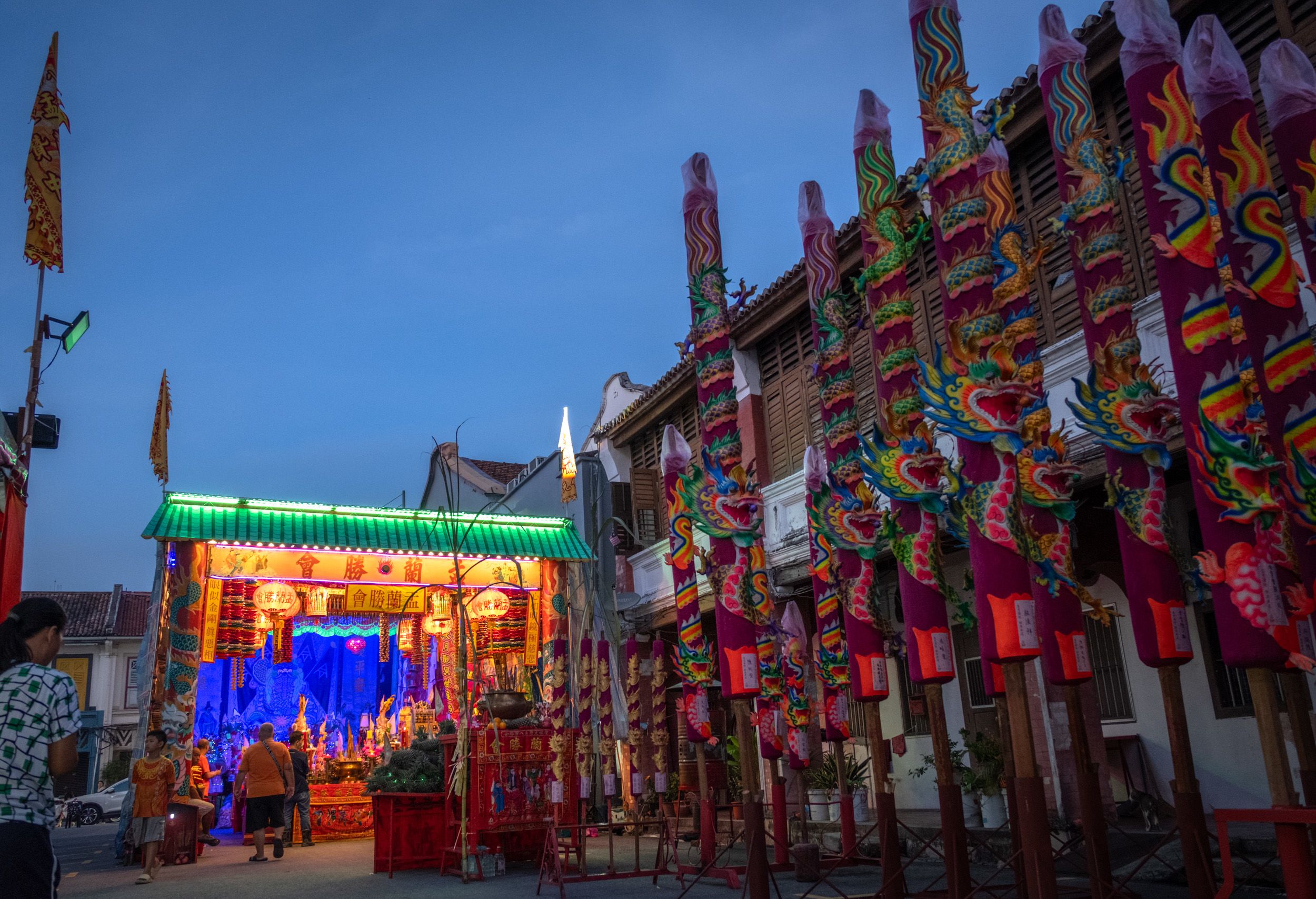
As the sun sets, a shrine at the end of George Town’s Queen Street readies for another night of Hungry Ghost Festival celebrations, which peaked on Aug. 29. Instead of a paper statue of Tai Su Yeah, a haunting 40-year-old canvas drawing presides over the festivities, with rows of tall dragon joss sticks standing outside ready to be lit.
As the sun sets, a shrine at the end of George Town’s Queen Street readies for another night of Hungry Ghost Festival celebrations, which peaked on Aug. 29. Instead of a paper statue of Tai Su Yeah, a haunting 40-year-old canvas drawing presides over the festivities, with rows of tall dragon joss sticks standing outside ready to be lit.

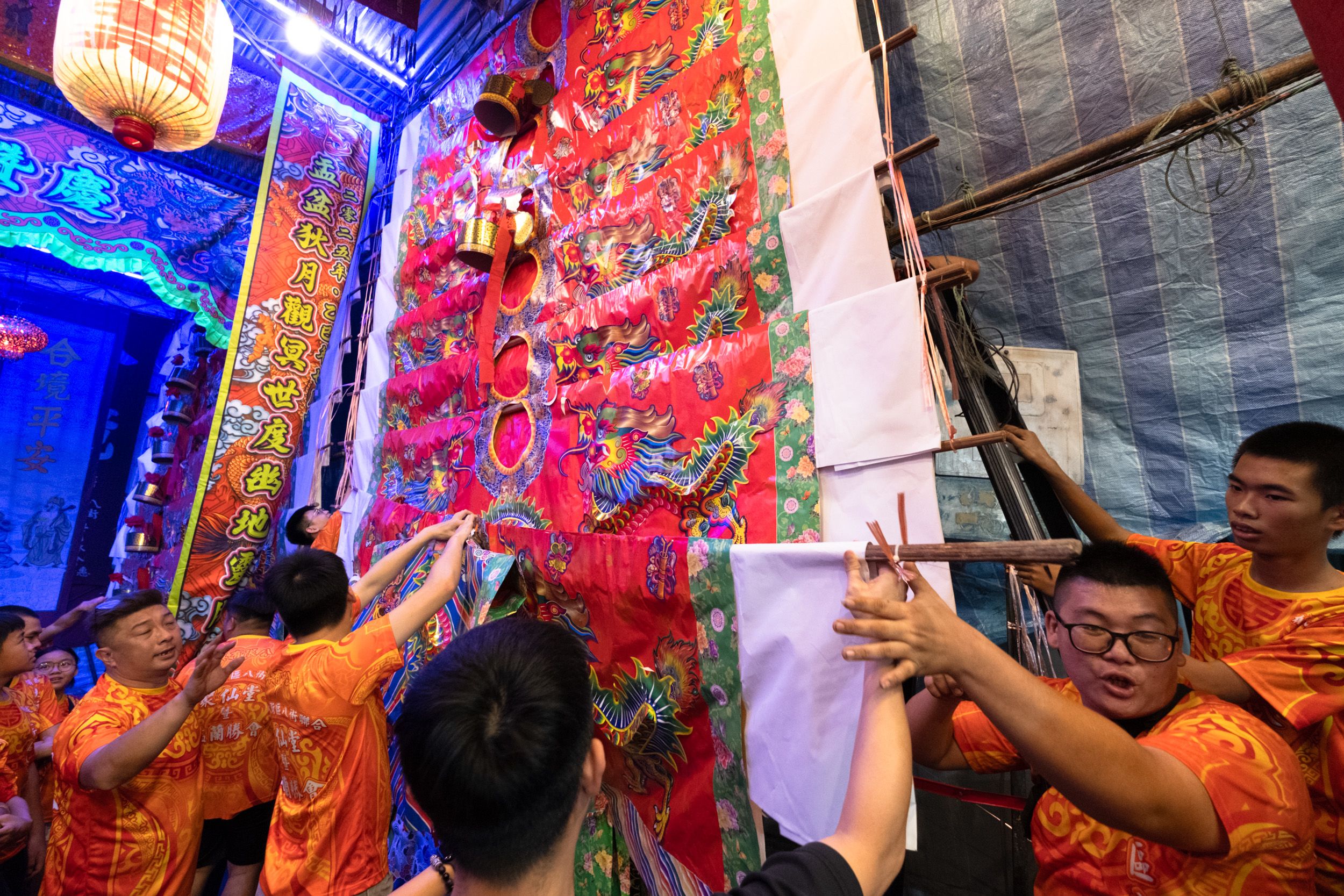
On the final night of Phor Thor, a ceremony held to appease the spirits, members of the Queen Street shrine committee take down paper clothes from the shrine’s makeshift walls and carry them to the ritual pyre, where they are burned as offerings to the ancestors.
On the final night of Phor Thor, a ceremony held to appease the spirits, members of the Queen Street shrine committee take down paper clothes from the shrine’s makeshift walls and carry them to the ritual pyre, where they are burned as offerings to the ancestors.

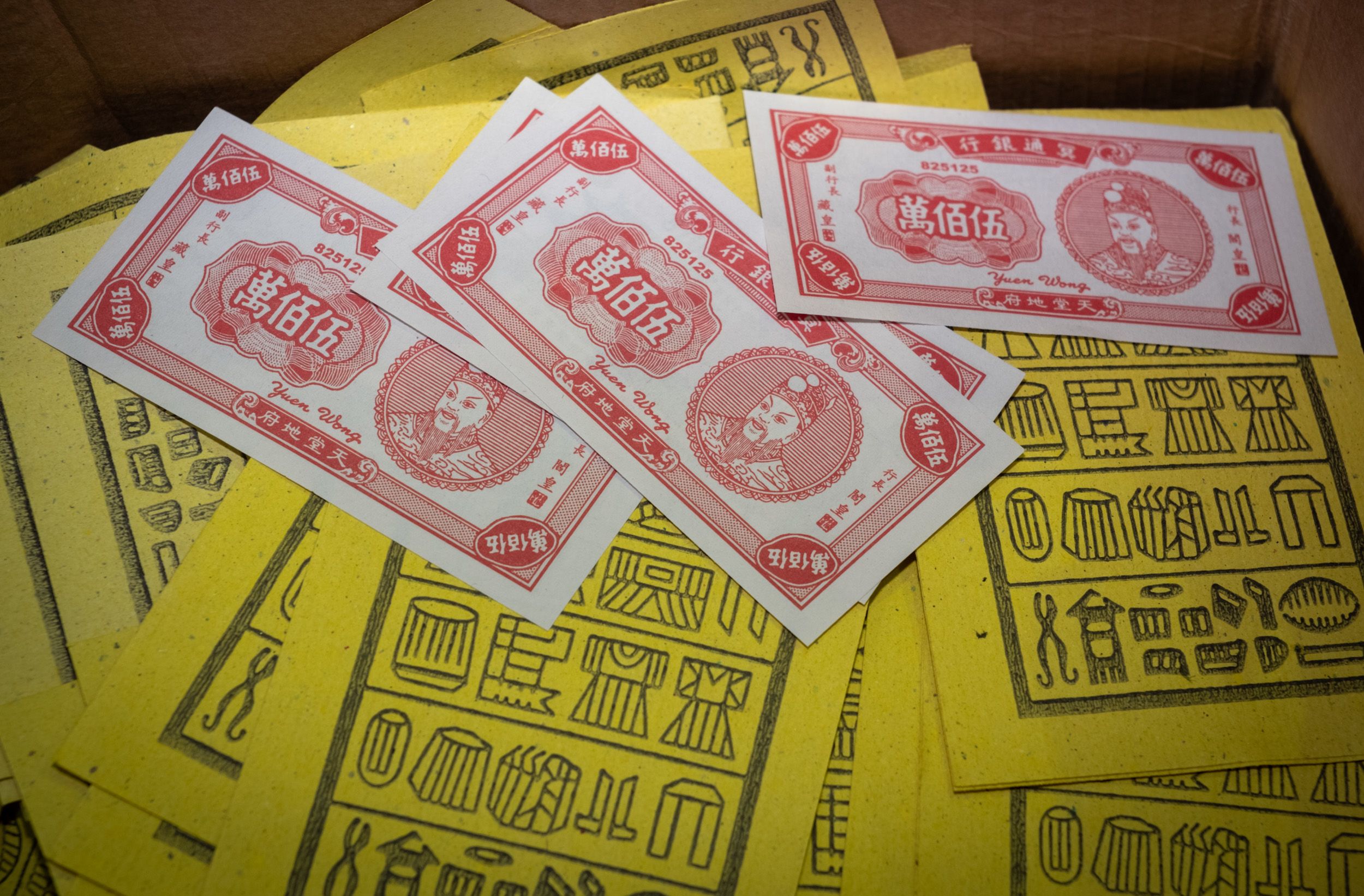
Burning paper money, or “hell notes,” is a central ritual. Relatives believe these offerings reach the afterlife, where ancestors can use them to bribe Yanluo Wang, the supreme judge of the underworld, to shorten their stay or to purchase luxuries.
Burning paper money, or “hell notes,” is a central ritual. Relatives believe these offerings reach the afterlife, where ancestors can use them to bribe Yanluo Wang, the supreme judge of the underworld, to shorten their stay or to purchase luxuries.

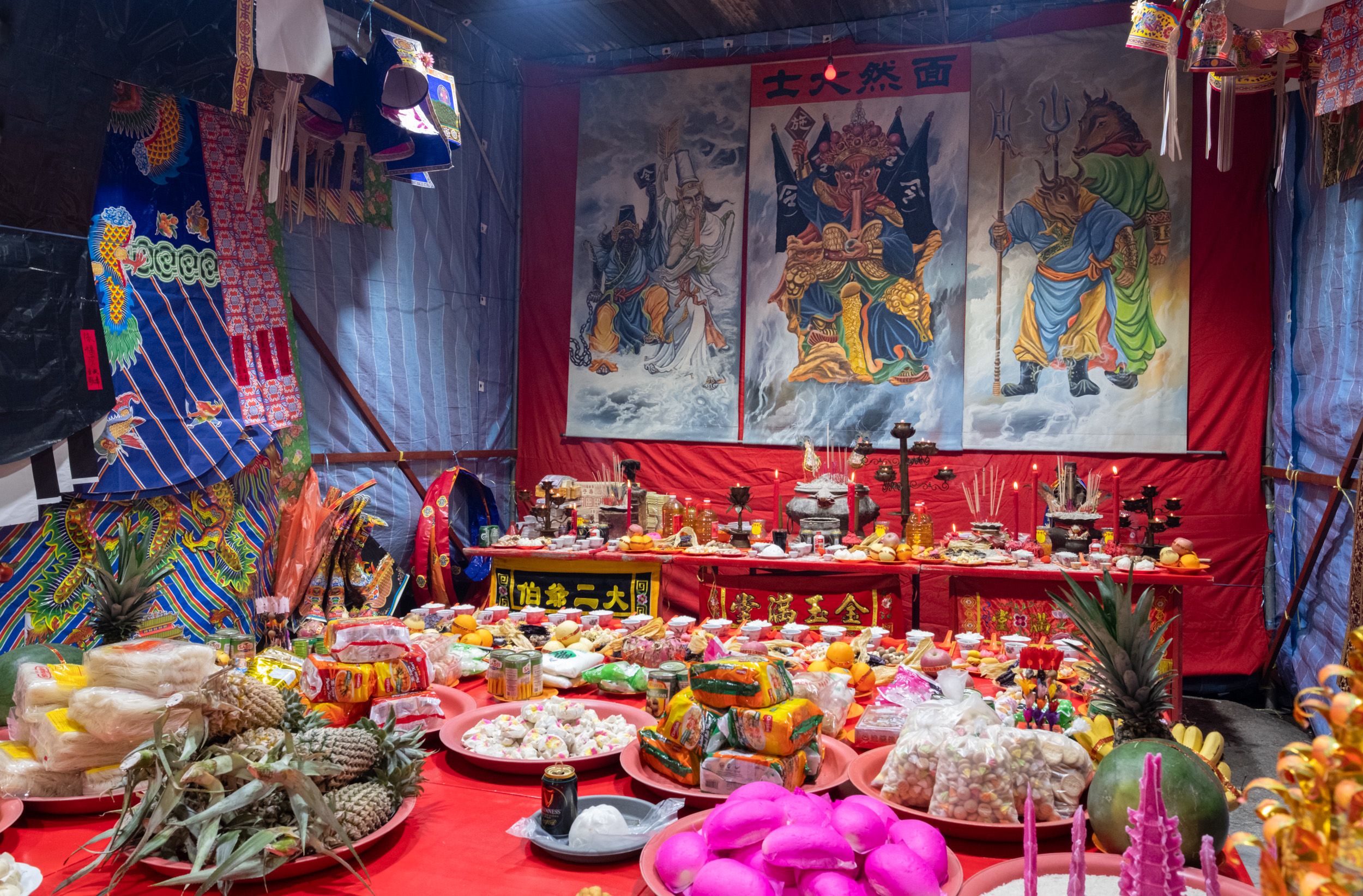
Plates laden with food offerings for ancestors line the tables of a makeshift shrine at the end of Carnarvon Street in central George Town. The paintings on the back wall depict deities and guardians from Chinese folk religion associated with guiding and protecting spirits in the afterlife.
Plates laden with food offerings for ancestors line the tables of a makeshift shrine at the end of Carnarvon Street in central George Town. The paintings on the back wall depict deities and guardians from Chinese folk religion associated with guiding and protecting spirits in the afterlife.

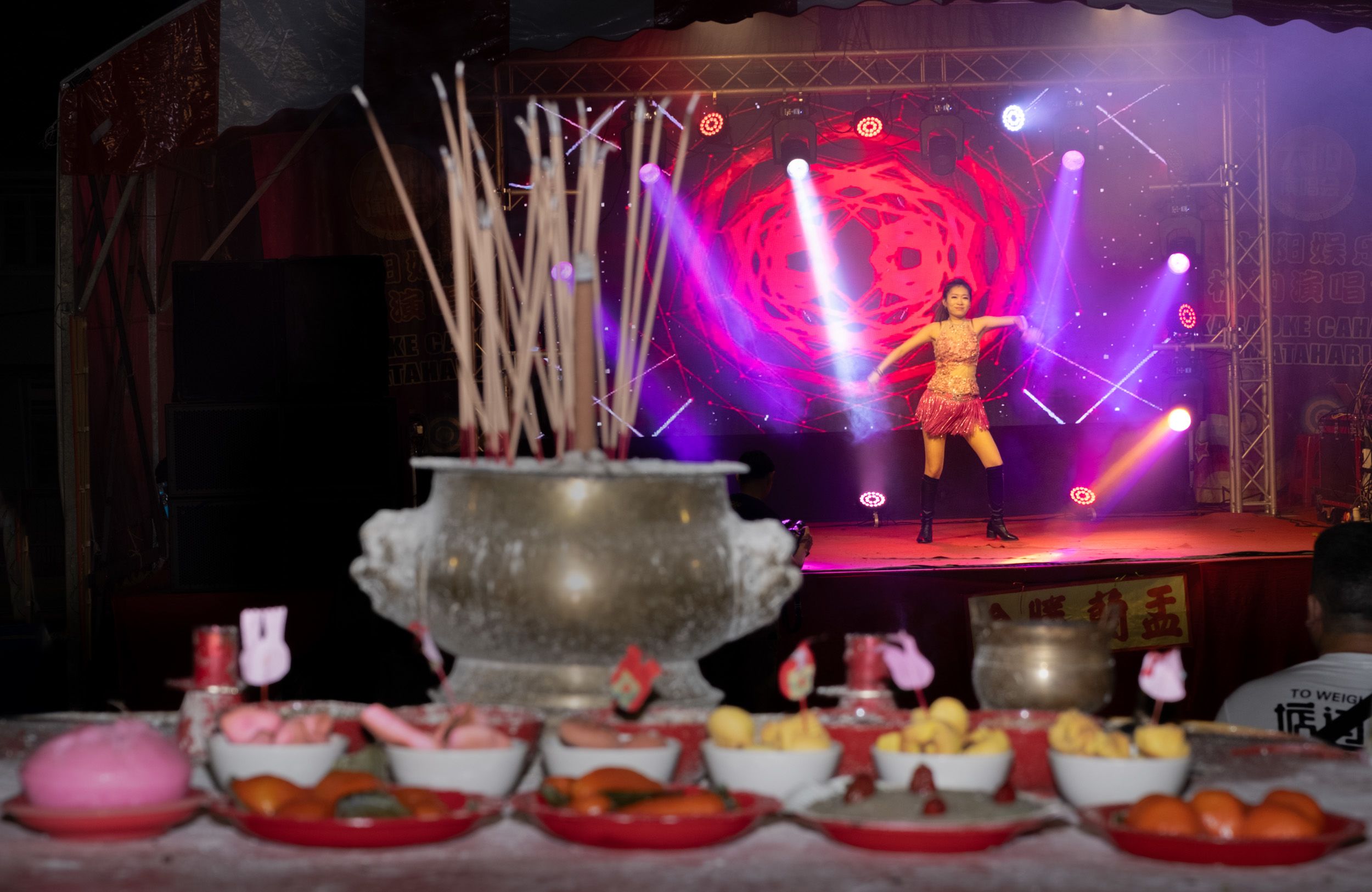
A scantily clad kotai singer dances to pounding techno beats before an altar of offerings. These shows add a modern touch to the Hungry Ghost Festival and cost less than hiring traditional Chinese opera troupes.
A scantily clad kotai singer dances to pounding techno beats before an altar of offerings. These shows add a modern touch to the Hungry Ghost Festival and cost less than hiring traditional Chinese opera troupes.

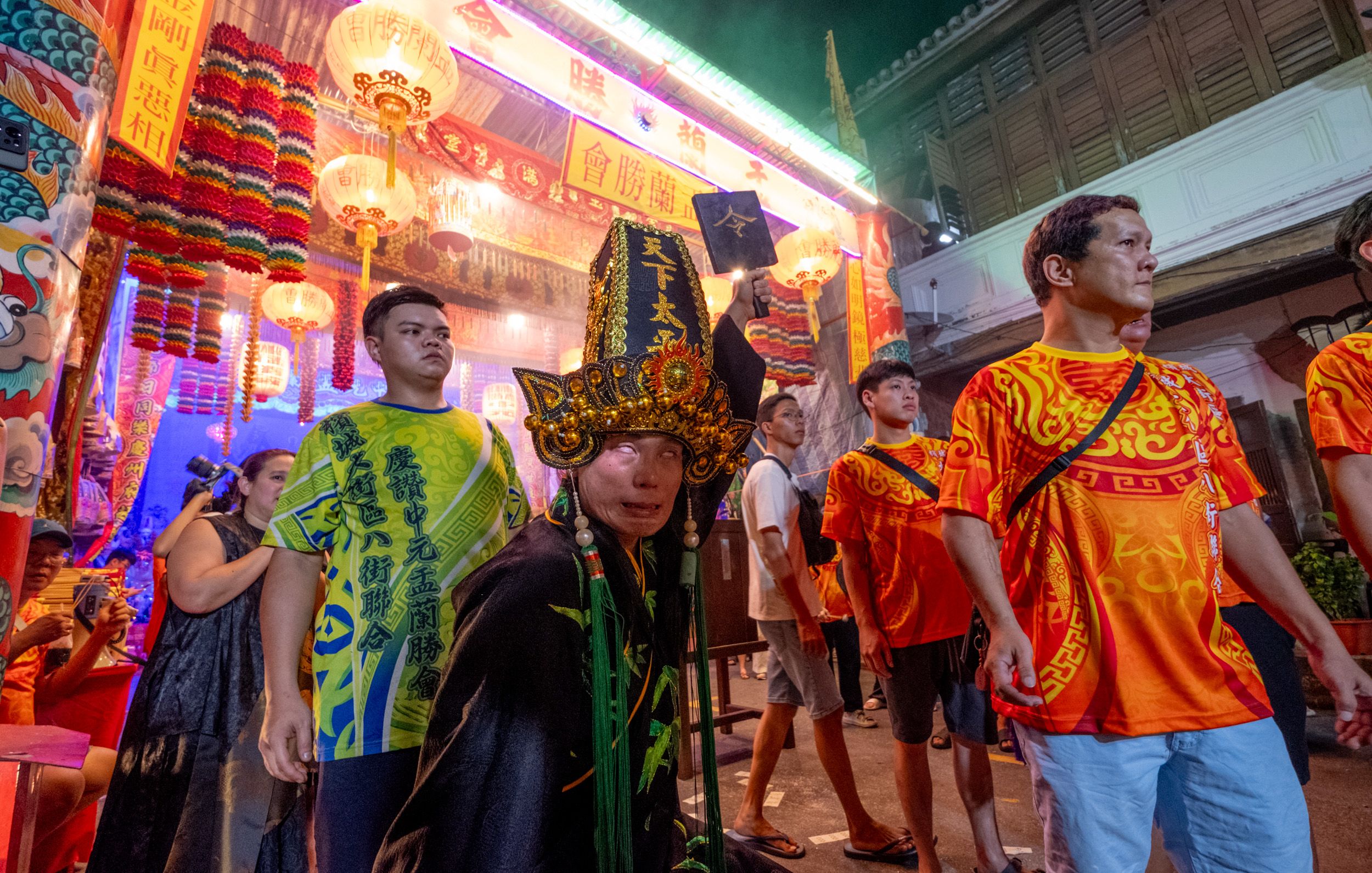
A spirit medium falls into trance at George Town’s Queen Street shrine. Known as tongji or jitong, these mediums are believed to channel folk deities, speaking in tongues and answering devotees’ questions about the future in a ritual process called tiao dang.
A spirit medium falls into trance at George Town’s Queen Street shrine. Known as tongji or jitong, these mediums are believed to channel folk deities, speaking in tongues and answering devotees’ questions about the future in a ritual process called tiao dang.
A dramatic dragon dance is performed before two possessed mediums at the Queen Street shrine in George Town on Aug. 28.
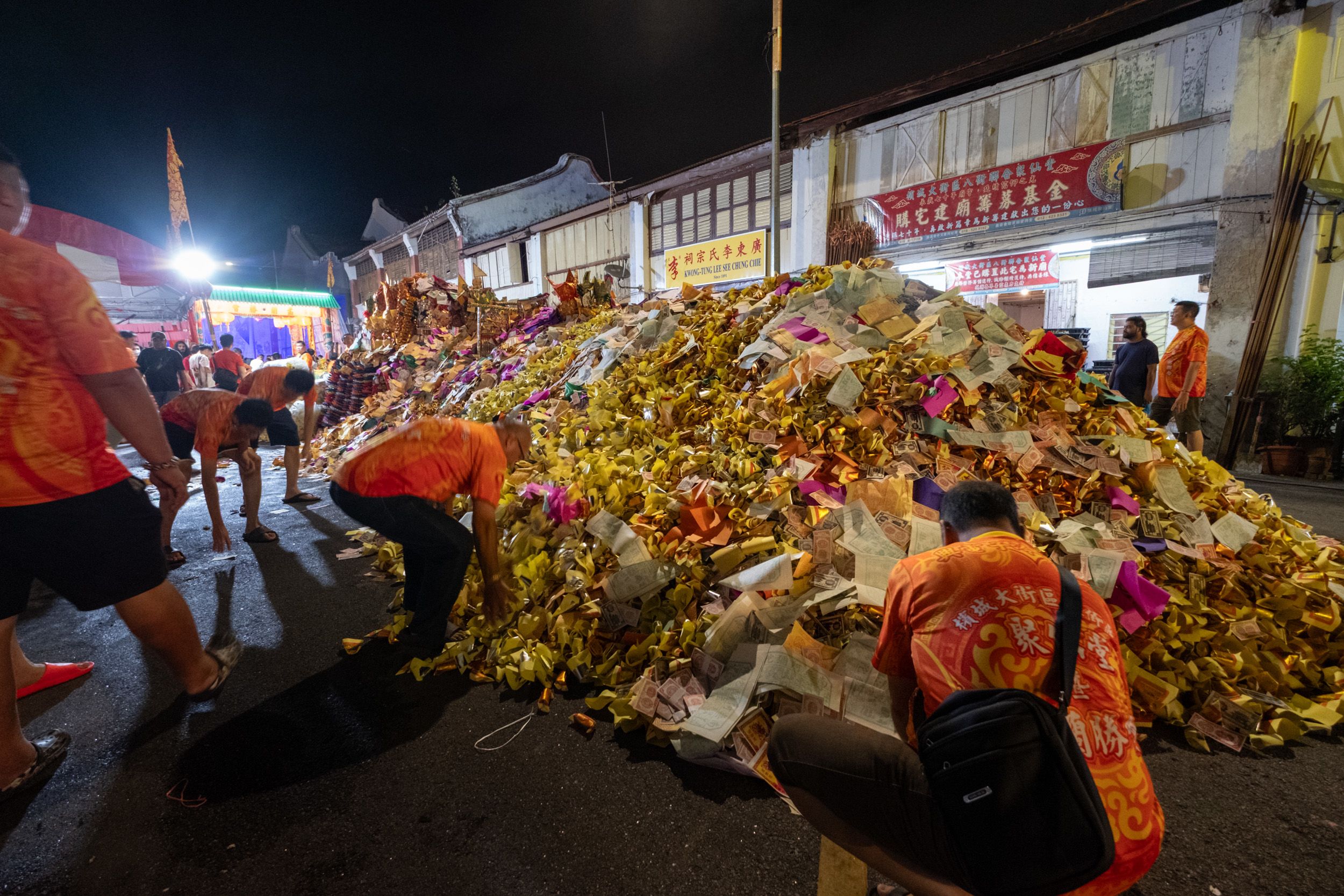
On Queen Street, shrine committee members stack paper effigies of gold ingots and hell notes to prepare the ritual pyre. Statues of deities are placed on top before the fire is lit.
On Queen Street, shrine committee members stack paper effigies of gold ingots and hell notes to prepare the ritual pyre. Statues of deities are placed on top before the fire is lit.
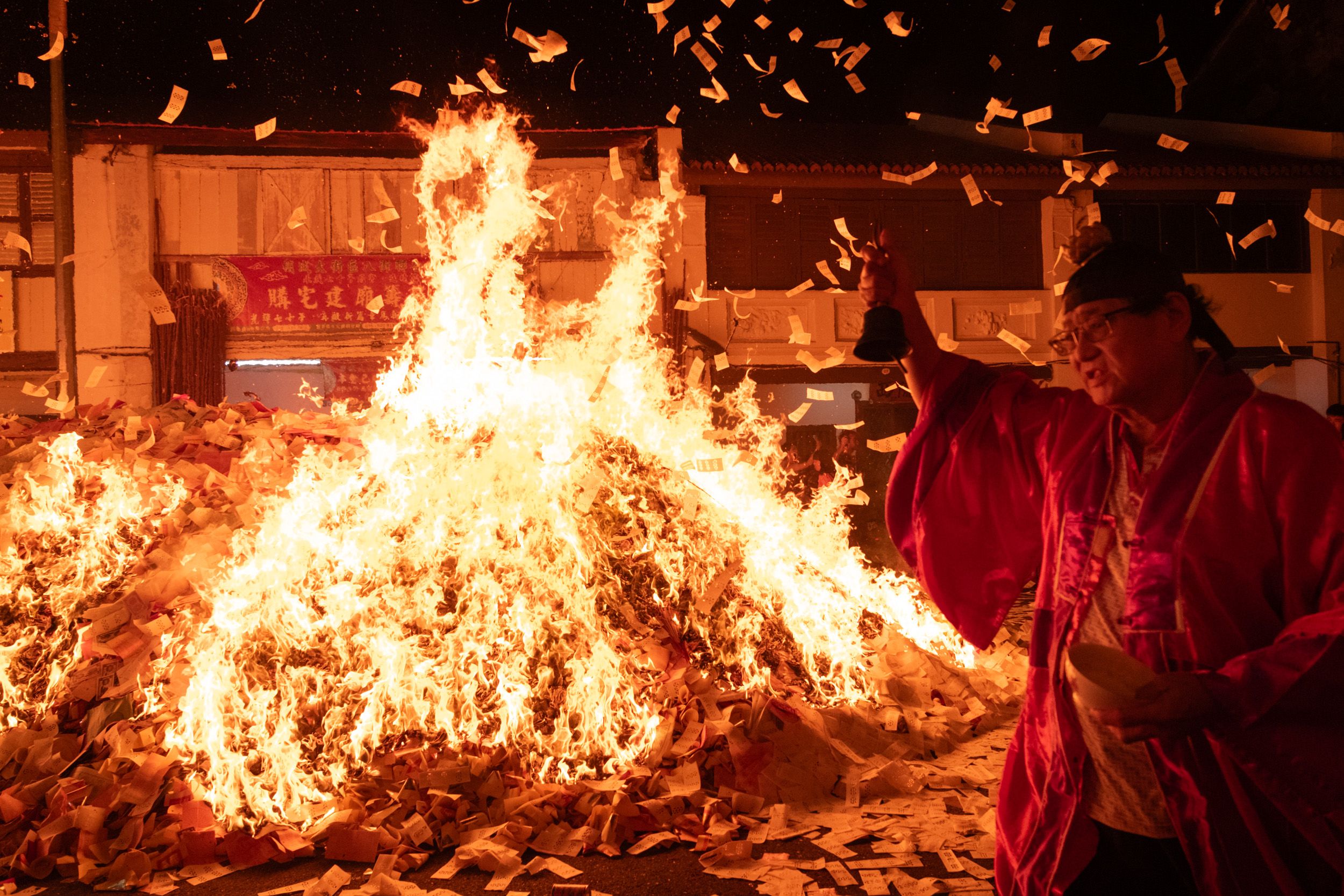
As the Tai Su Yeah effigy burns, heat forces the crowd to retreat. Only the fashi (mage in Mandarin), or ritual leader, remains, tolling a bell to complete the final rites.
As the Tai Su Yeah effigy burns, heat forces the crowd to retreat. Only the fashi (mage in Mandarin), or ritual leader, remains, tolling a bell to complete the final rites.

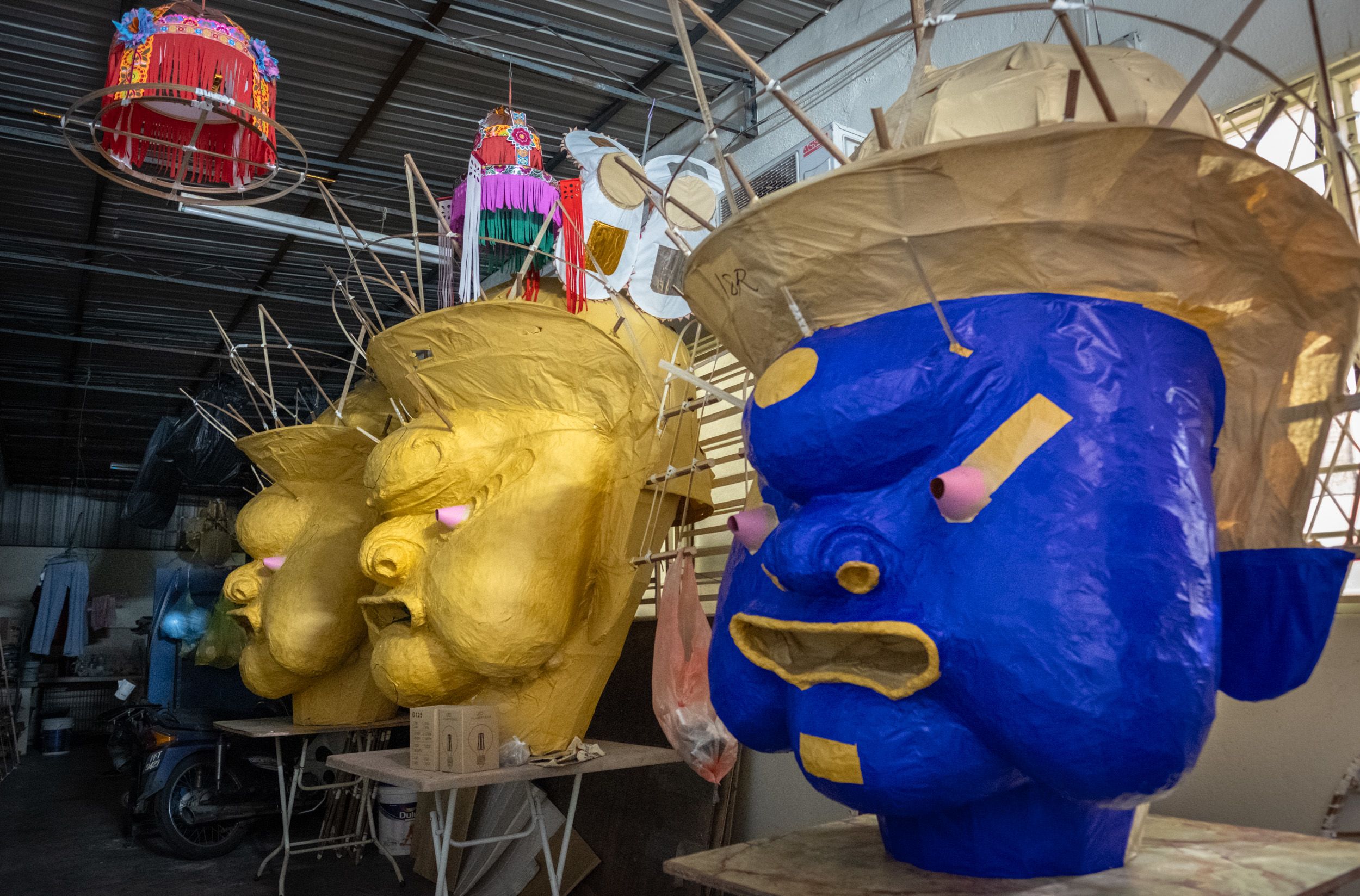
Unfinished Tai Su Yeah effigies sit in master craftsman Ng Chi Wang's workshop in Berapit, a suburb of Bukit Mertajam. The process takes his team weeks, layering paper over rattan frames before painting and decorating the finished figure.
Unfinished Tai Su Yeah effigies sit in master craftsman Ng Chi Wang's workshop in Berapit, a suburb of Bukit Mertajam. The process takes his team weeks, layering paper over rattan frames before painting and decorating the finished figure.
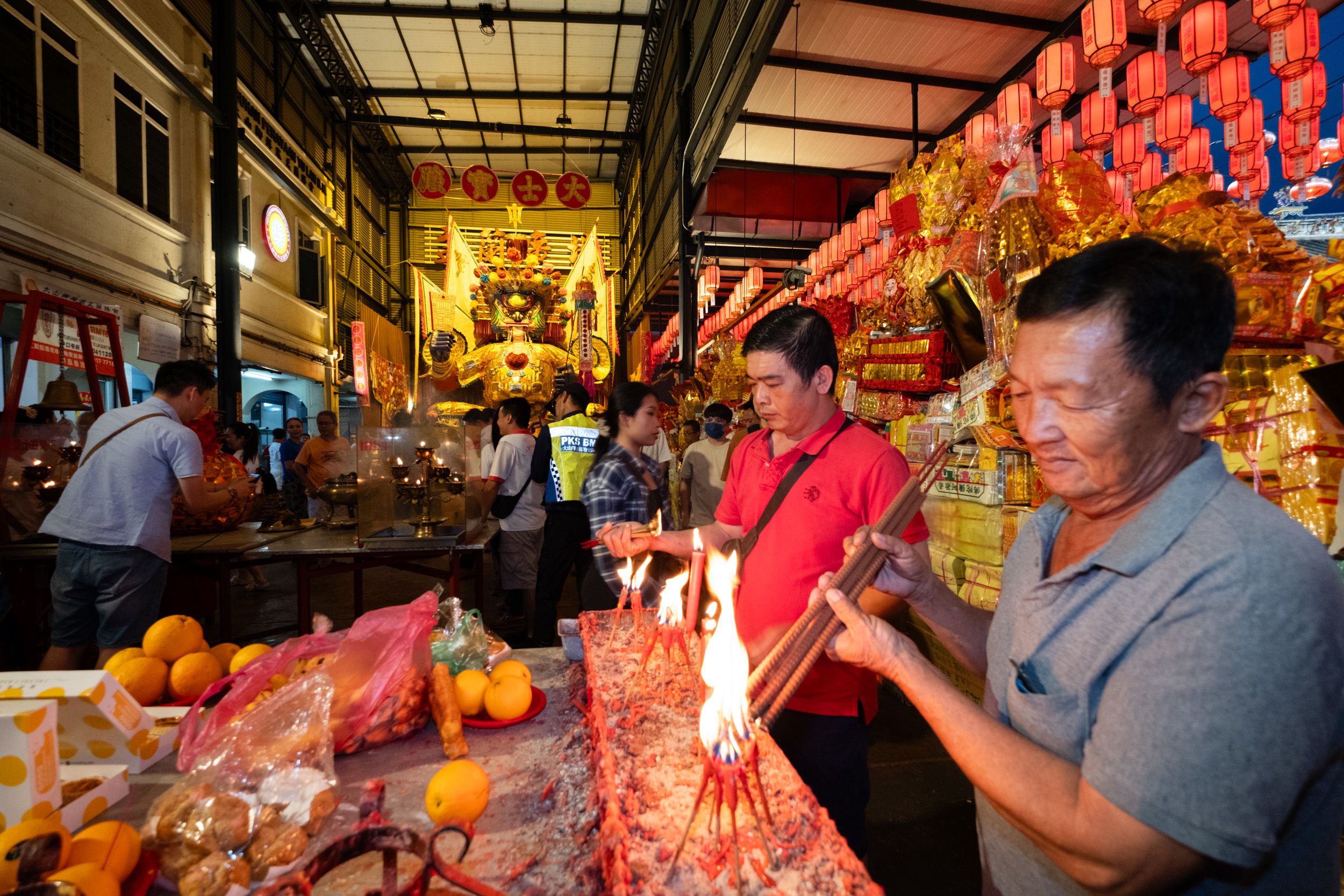
Devotees burn joss sticks and pray before the Tai Su Yeah statue beside Bukit Mertajam’s Tua Pek Kong Temple. The effigy receives offerings for about a week before being reduced to ashes.
Devotees burn joss sticks and pray before the Tai Su Yeah statue beside Bukit Mertajam’s Tua Pek Kong Temple. The effigy receives offerings for about a week before being reduced to ashes.
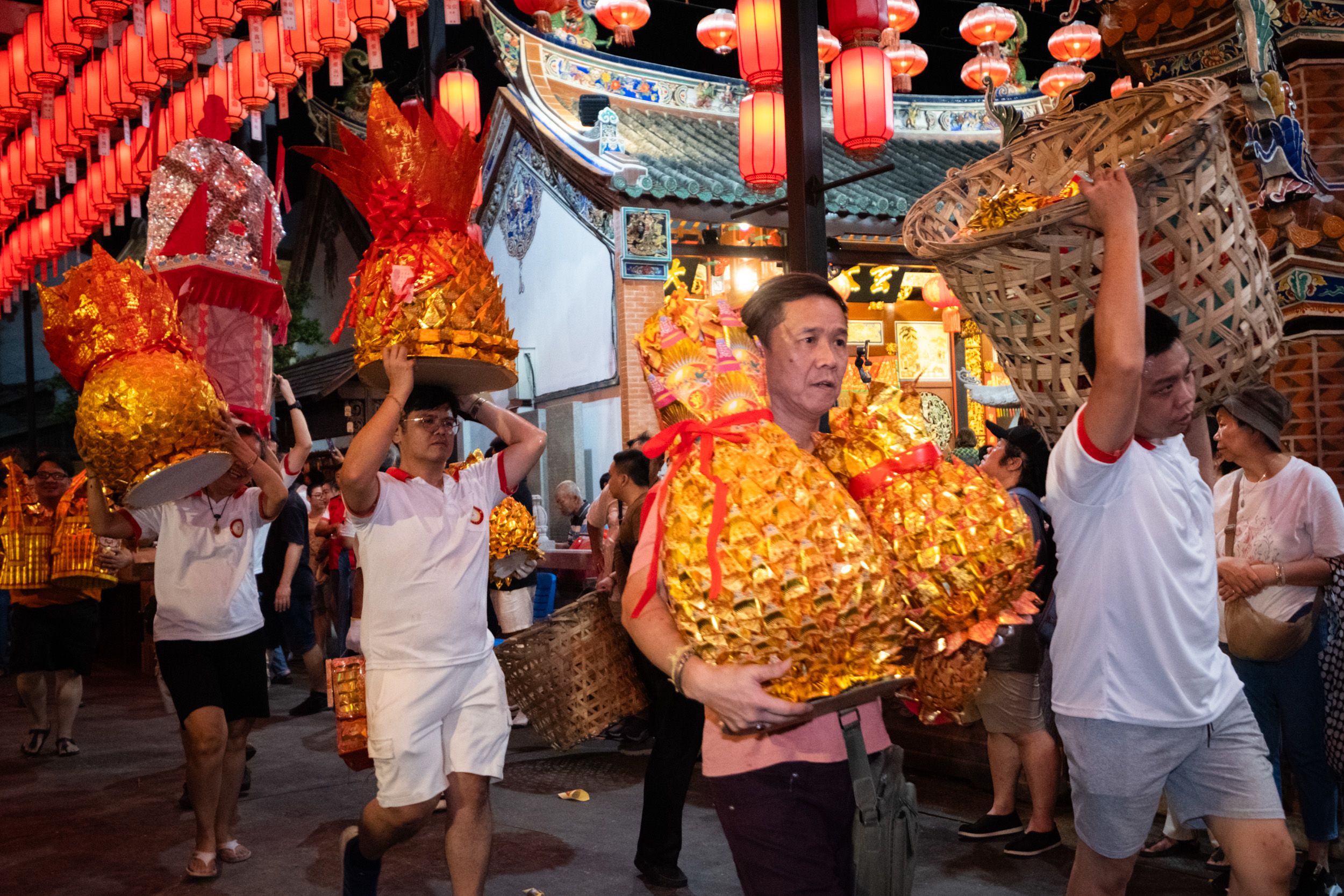
In Bukit Mertajam, worshippers proudly carry paper effigies to the pyre, believing the act brings blessings. Among the offerings are paper pineapples, their Hokkien name “ong lai” sounding like the phrase “prosperity will come.”
In Bukit Mertajam, worshippers proudly carry paper effigies to the pyre, believing the act brings blessings. Among the offerings are paper pineapples, their Hokkien name “ong lai” sounding like the phrase “prosperity will come.”

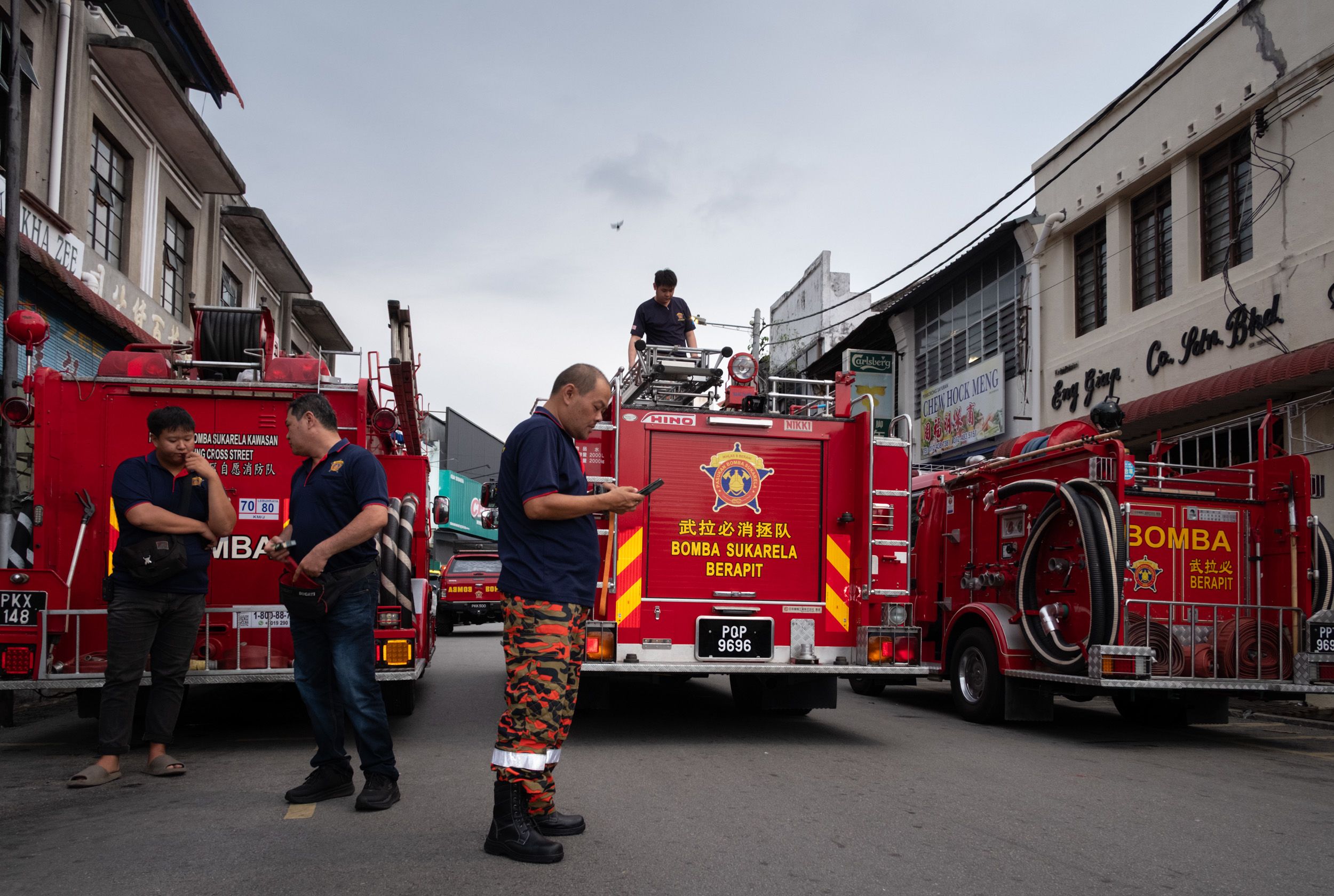
Firefighters from Berapit stand ready on Jalan Pasar in Bukit Mertajam, close to the 9-meter Tai Su Yeah effigy. As soon as the paper idol starts burning, they open their water hoses to contain the flames and keep the crowd safe.
Firefighters from Berapit stand ready on Jalan Pasar in Bukit Mertajam, close to the 9-meter Tai Su Yeah effigy. As soon as the paper idol starts burning, they open their water hoses to contain the flames and keep the crowd safe.

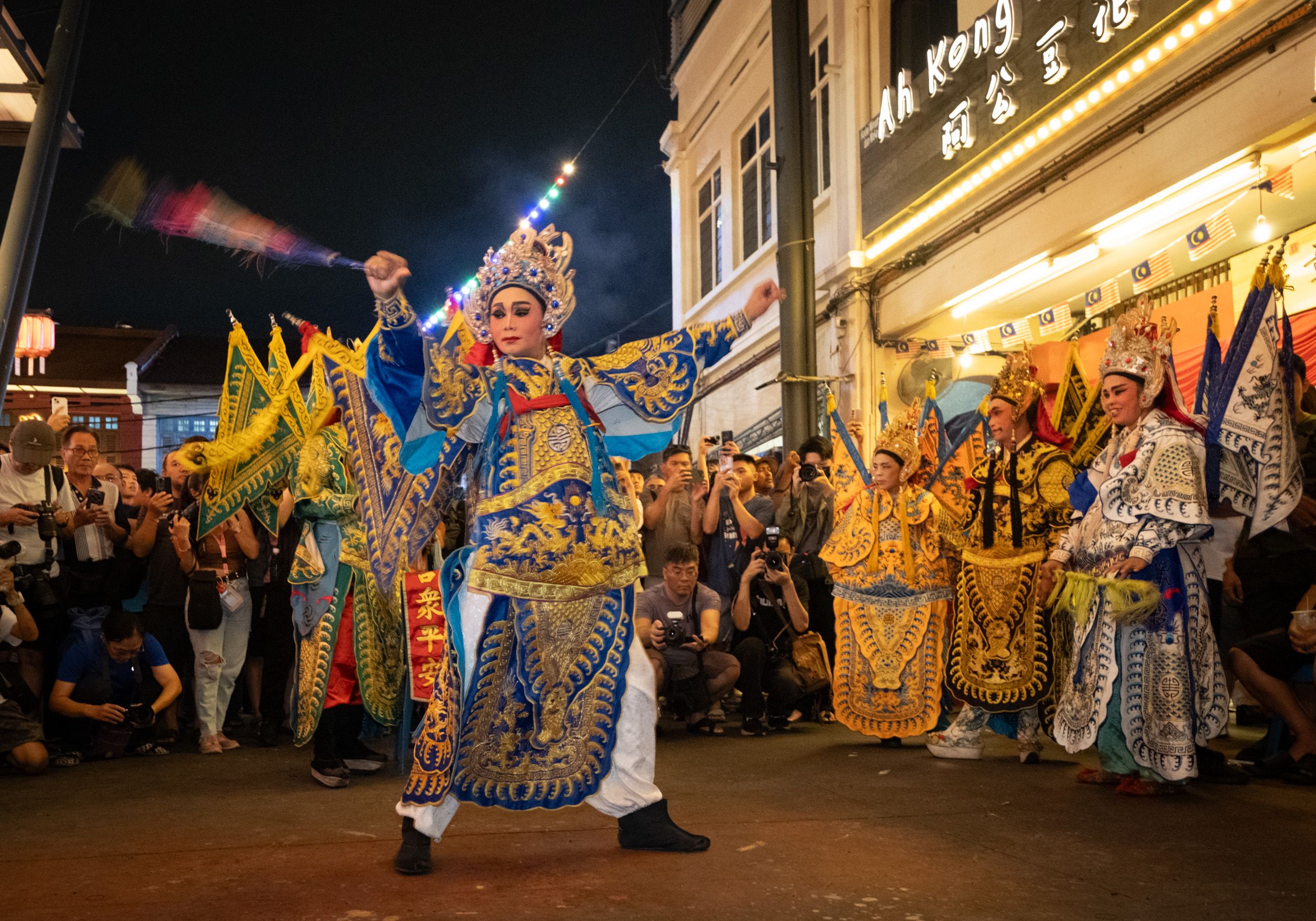
On Sept. 8, a Chinese opera troupe gives a final performance before Tai Su Yeah’s effigy near Bukit Mertajam’s Tua Pek Kong Temple, just hours before the statue is set ablaze.
On Sept. 8, a Chinese opera troupe gives a final performance before Tai Su Yeah’s effigy near Bukit Mertajam’s Tua Pek Kong Temple, just hours before the statue is set ablaze.

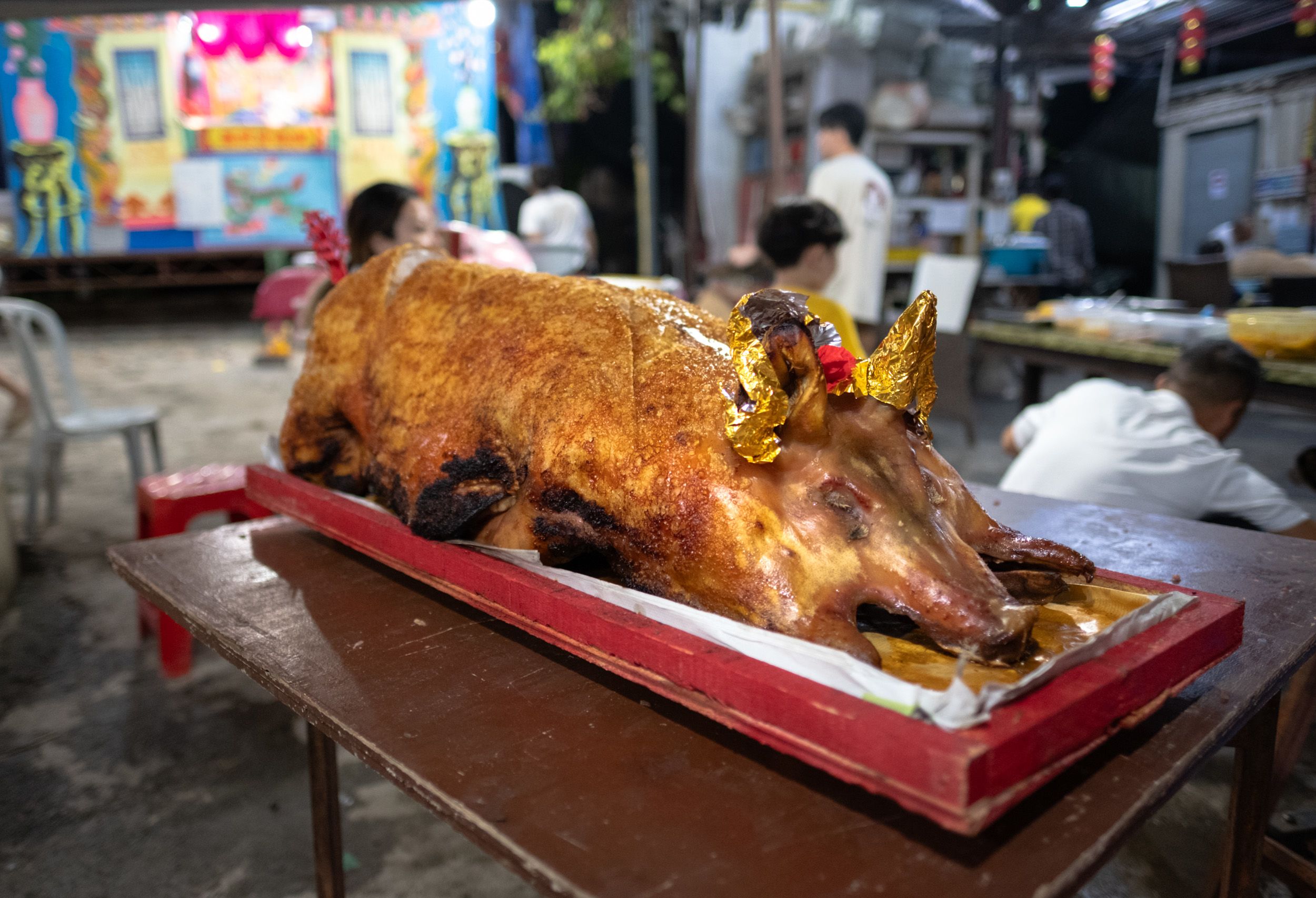
Crispy barbecued pork, soon to be sliced and served, is among the dishes offered at community dinners during the festival. These meals, provided free of charge, are shared by all who gather at the shrines.
Crispy barbecued pork, soon to be sliced and served, is among the dishes offered at community dinners during the festival. These meals, provided free of charge, are shared by all who gather at the shrines.

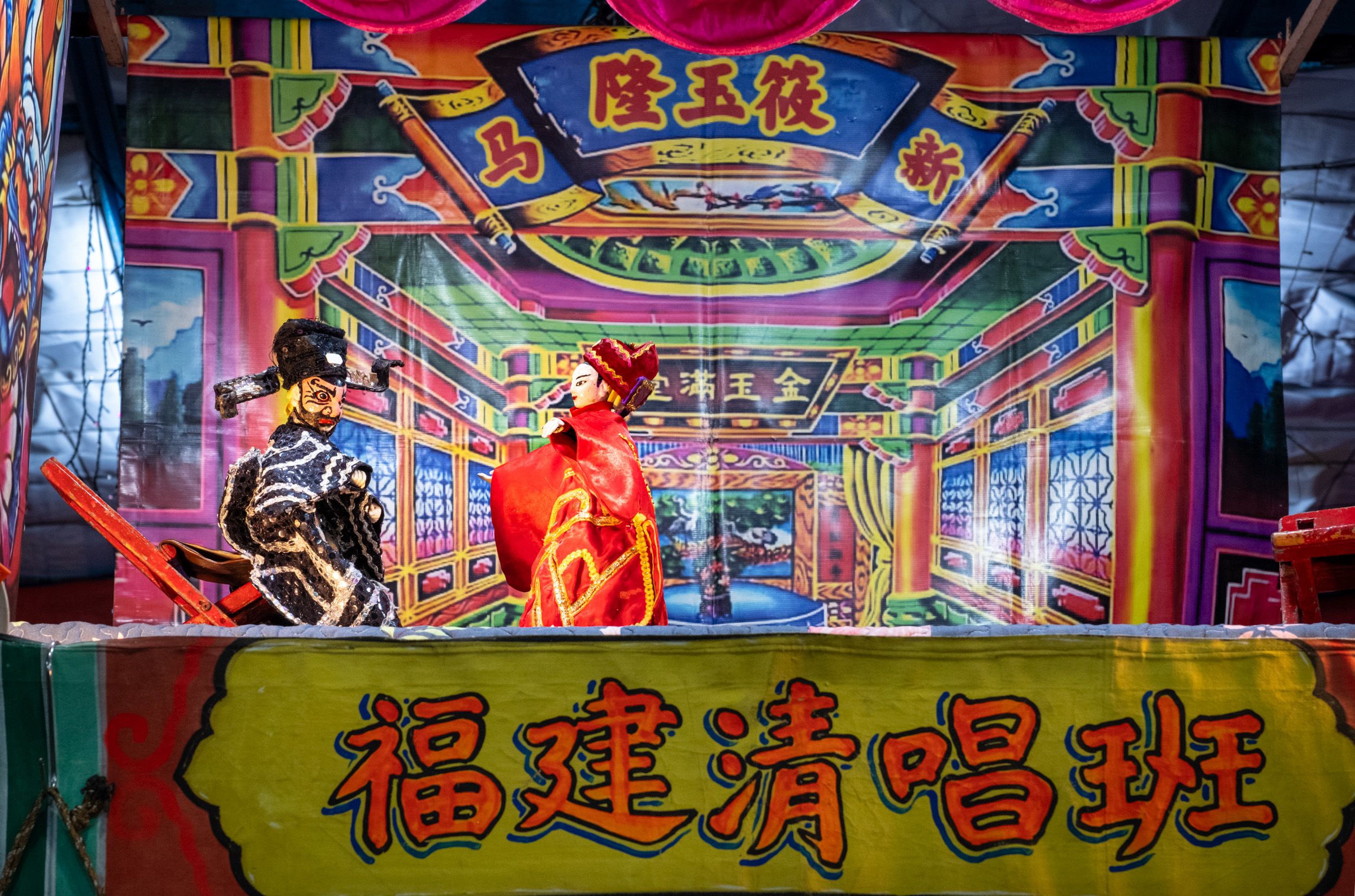
At the Zhen Shan Kok Lau Hut Temple in Berapit, a rare potehi glove puppet show entertains both spirits and the living. Once a common temple art, the fading tradition now survives thanks to a handful of elderly troupes.
At the Zhen Shan Kok Lau Hut Temple in Berapit, a rare potehi glove puppet show entertains both spirits and the living. Once a common temple art, the fading tradition now survives thanks to a handful of elderly troupes.
The roaming hungry ghosts are entertained with traditional Teochew steel-rod puppetry, while the living enjoy free slices of roasted pork distributed to the crowd.

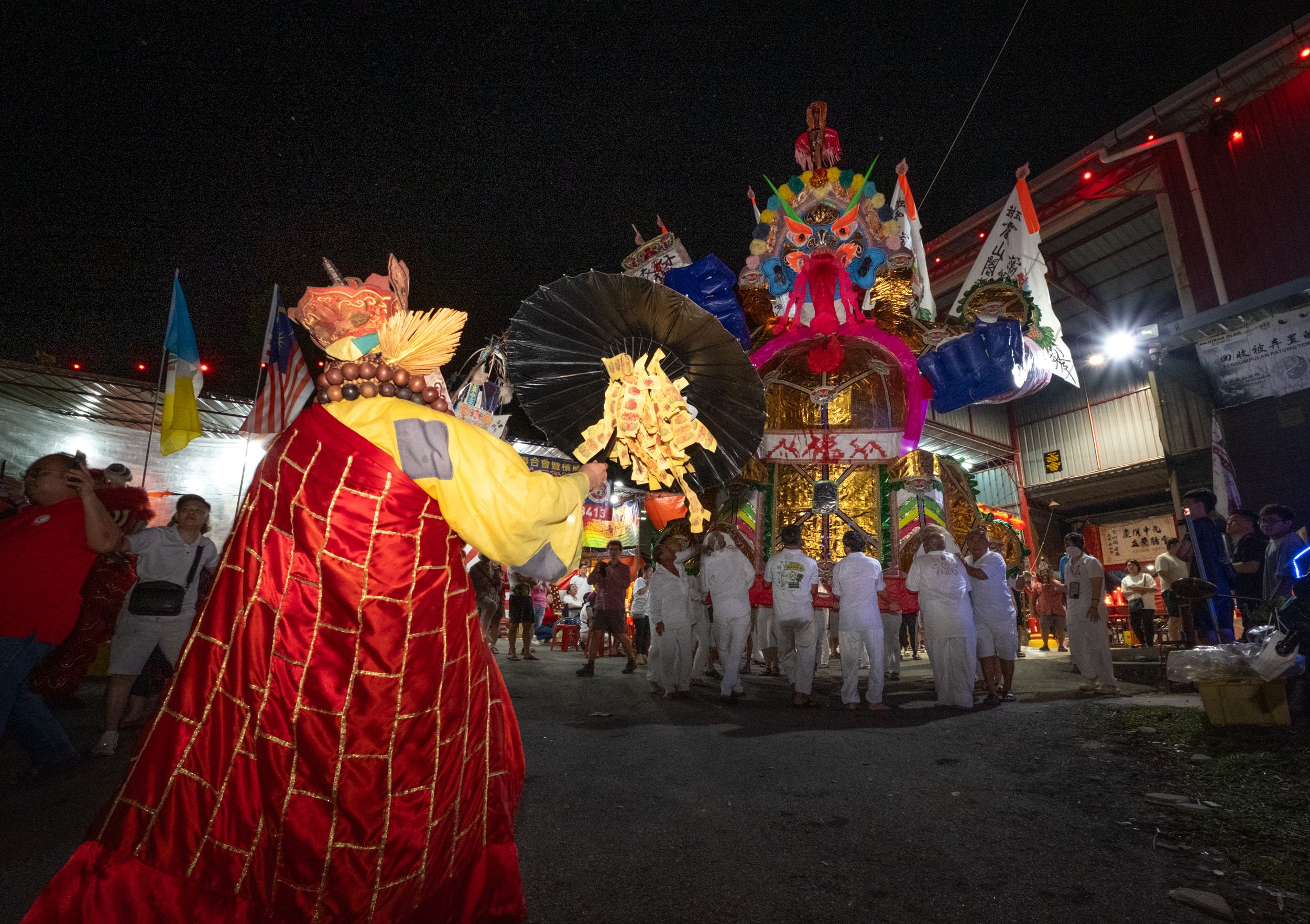
During the final night of Berapit’s Zhen Shan Kok Lau Hut Temple festivities, a spirit medium in trance leads devotees in escorting Tai Su Yeah’s effigy to the pyre, where it is set alight to return to the underworld.
During the final night of Berapit’s Zhen Shan Kok Lau Hut Temple festivities, a spirit medium in trance leads devotees in escorting Tai Su Yeah’s effigy to the pyre, where it is set alight to return to the underworld.

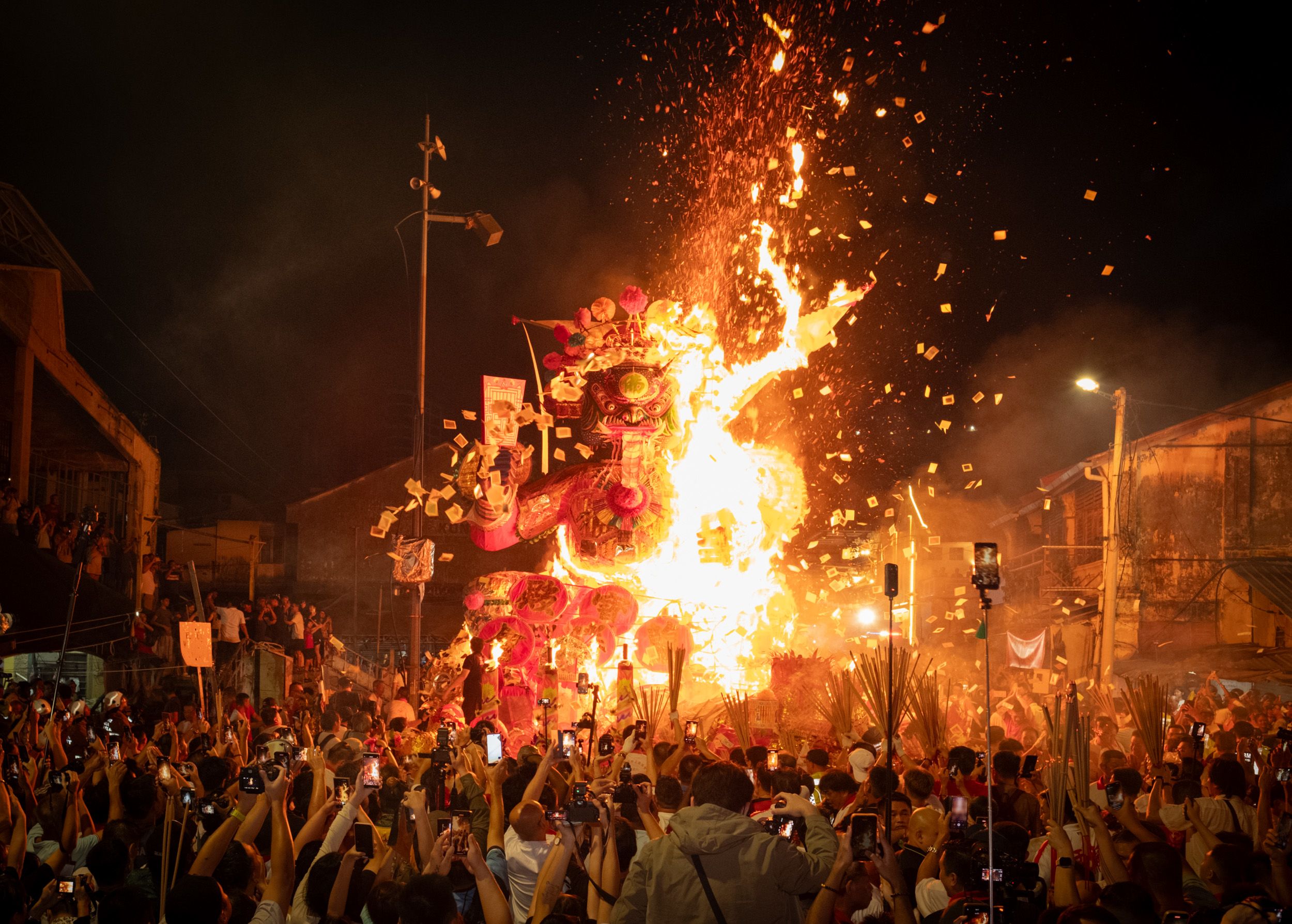
The climax of the festival in Bukit Mertajam unfolds on Sept. 8, as devotees -- unfazed by the drizzling rain -- parade the Tai Su Yeah effigy through the town’s market square before setting it ablaze in a fiery farewell in front of hundreds of fellow devotees wielding joss sticks and smartphones.
The climax of the festival in Bukit Mertajam unfolds on Sept. 8, as devotees -- unfazed by the drizzling rain -- parade the Tai Su Yeah effigy through the town’s market square before setting it ablaze in a fiery farewell in front of hundreds of fellow devotees wielding joss sticks and smartphones.
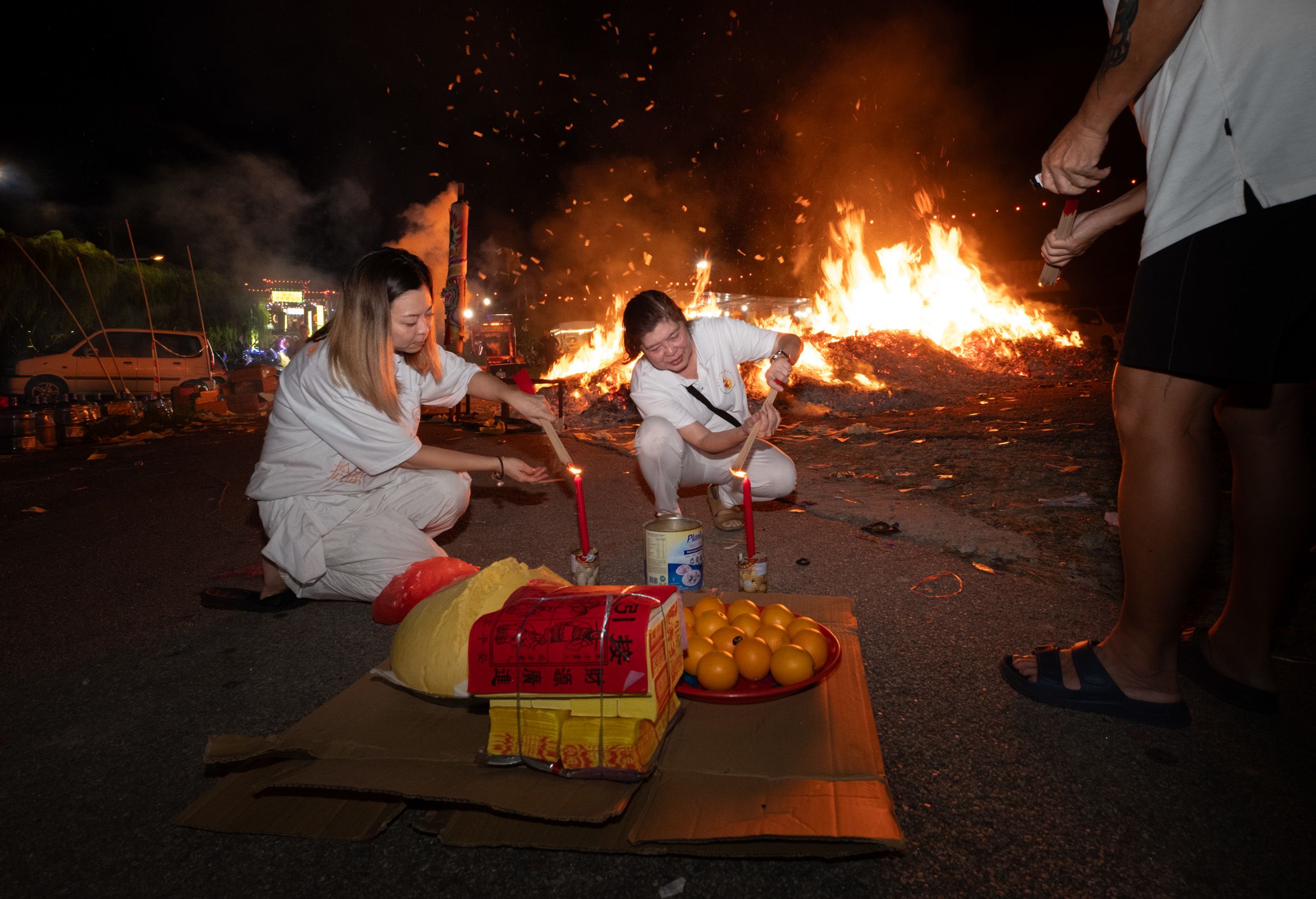
Outside Berapit’s Zhen Shan Kok Lau Hut Temple, women light candles and joss sticks as offerings to wandering spirits.
Outside Berapit’s Zhen Shan Kok Lau Hut Temple, women light candles and joss sticks as offerings to wandering spirits.