
In Focus: Tottori signposts new avenues for Japanese tourism
As Chinese visitors stay away, revitalized western prefecture attracts other nationalities
JANUARY 25, 2026


A way from the bustle of Japan’s major cities, the western prefecture of Tottori is tapping a new trend of foreign tourists seeking peace and calm in the Land of the Rising Sun.
On a trip this month, South Korean traveler Yumin Kang, who had already visited the likes of Tokyo and Osaka, said he was seeking a “do-nothing” luxury experience in the countryside. Park Hyeseon, a tour conductor shepherding 30 tourists nearby from Japan’s neighbor, added, “For South Koreans, quiet little towns are the hottest trend”.
Tottori would argue it has much more to offer, including great seafood, hot springs and cultural attractions. The statistics support its appeal – its two main cities ranked first and second in the country for growth in the number of foreign visitors last summer, according to travel information service Navitime.
Improving transport connections and shorter travel times have led to a significant influx from South Korea, helping insulate Tottori from the effects of Beijing’s strong advisory that Chinese citizens avoid Japan, following Japanese Prime Minister Sanae Takaichi’s controversial comments on Taiwan in November.
Japan welcomed a record 42.7 million foreign visitors in 2025, but Chinese tourist arrivals were down 45% in December, and overall overseas visitor numbers are expected to decline this year.
Tottori is showing the way for the industry to diversify and thrive, although on a visit by Nikkei Asia this month, it also provided examples of shortcomings that can hinder growth.

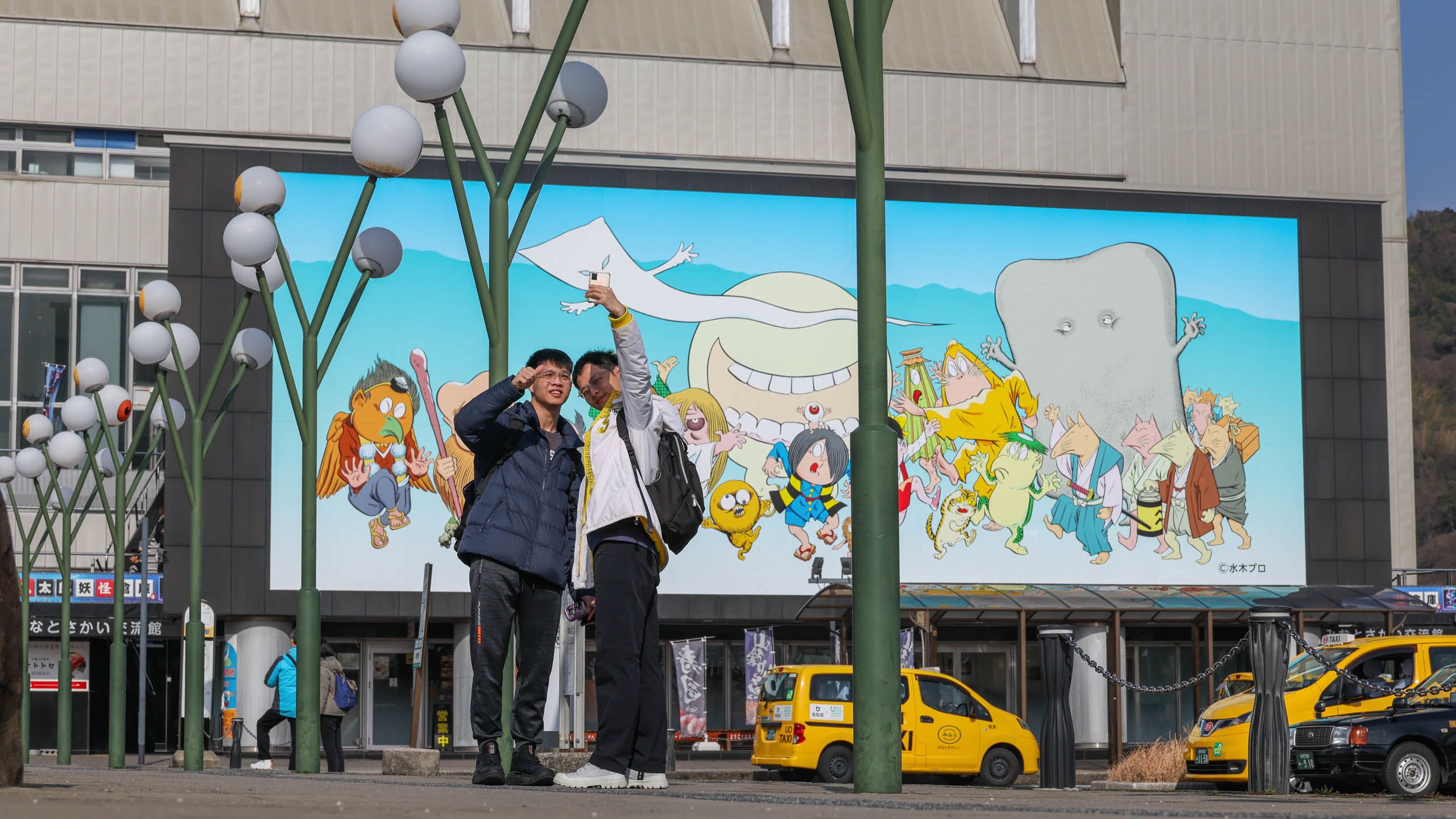
Taiwanese tourists pose for photos in front of a mural depicting manga character Kitaro and his family, in Sakaiminato, Tottori prefecture. Their creator, Mizuki Shigeru, a renowned manga artist who died in 2015 at the age of 93, grew up in Sakaiminato. ⓒMizuki Productions (Photo by Yuki Kohara)
Taiwanese tourists pose for photos in front of a mural depicting manga character Kitaro and his family, in Sakaiminato, Tottori prefecture. Their creator, Mizuki Shigeru, a renowned manga artist who died in 2015 at the age of 93, grew up in Sakaiminato. ⓒMizuki Productions (Photo by Yuki Kohara)
Tottori by plane, boat, bus and train
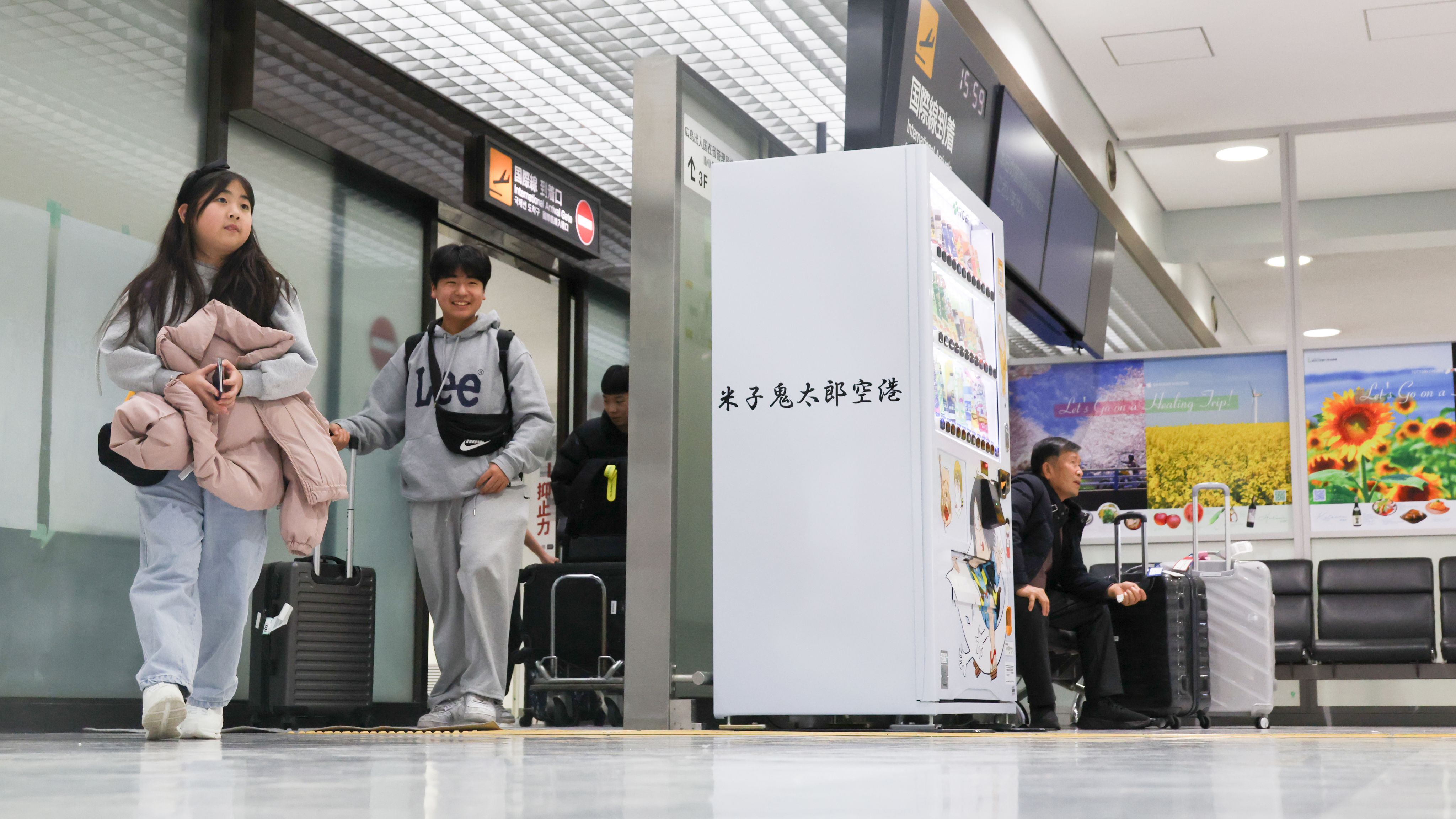
Yonago Kitaro Airport is the gateway by air to the region, while 47 cruise ships docked at the port of Sakaiminato last year, with around 60 expected this year, carrying passengers willing to spend on luxury items.
“A shop owner told me that an affluent traveler arriving by cruise [ship] purchased an expensive kimono,” said Masayuki Yonemura, Sakaiminato’s chief of tourism promotion, citing one recent example.
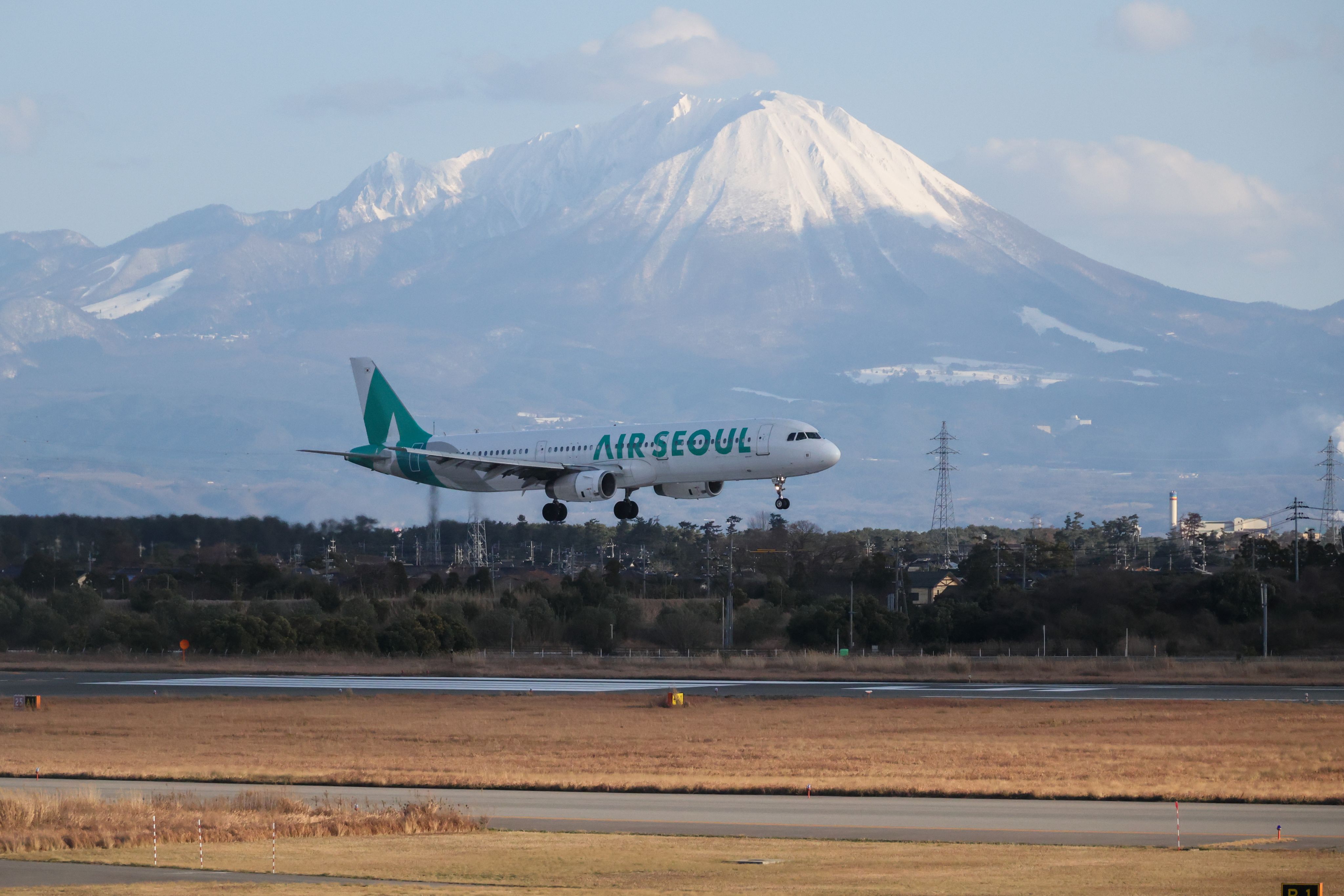
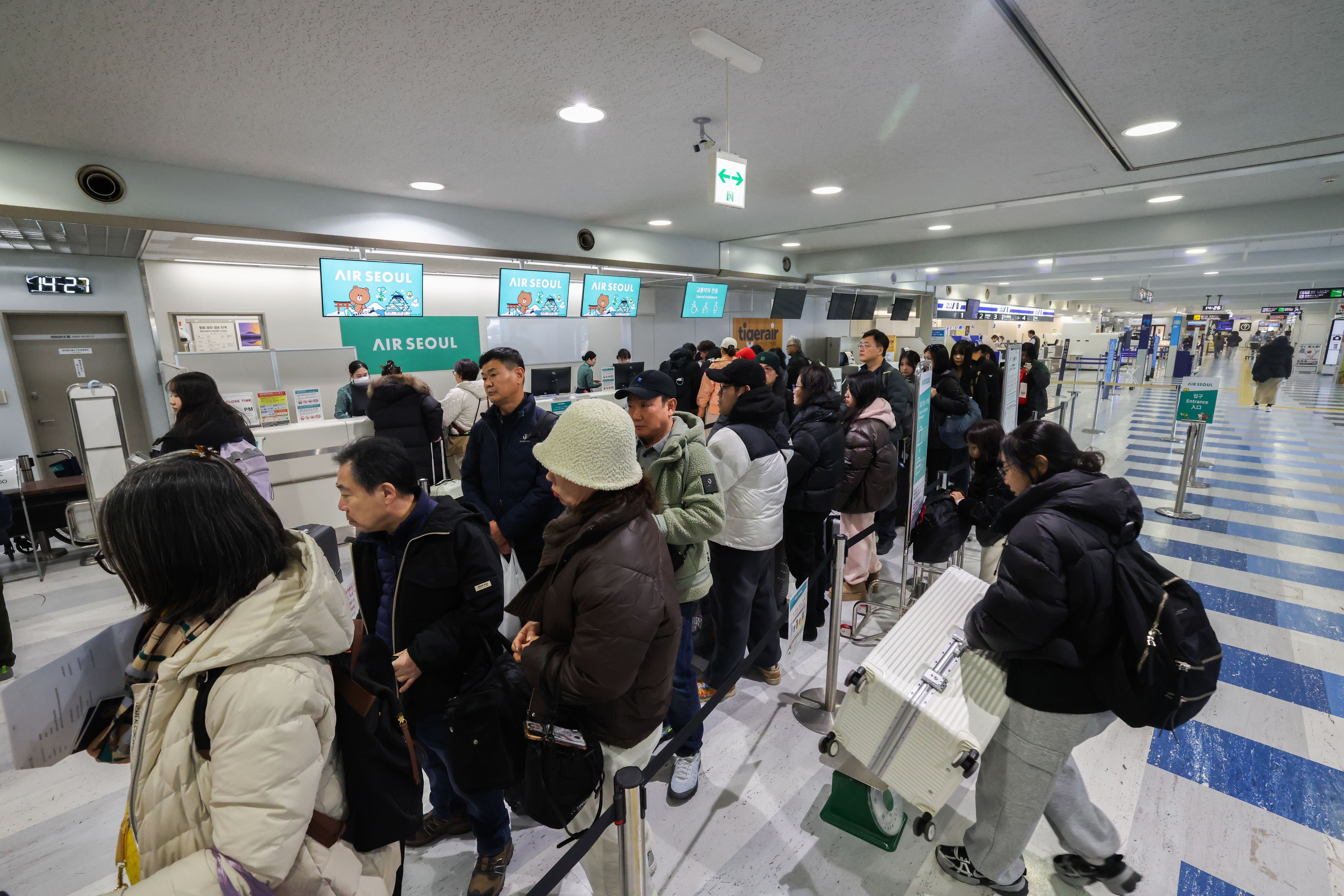
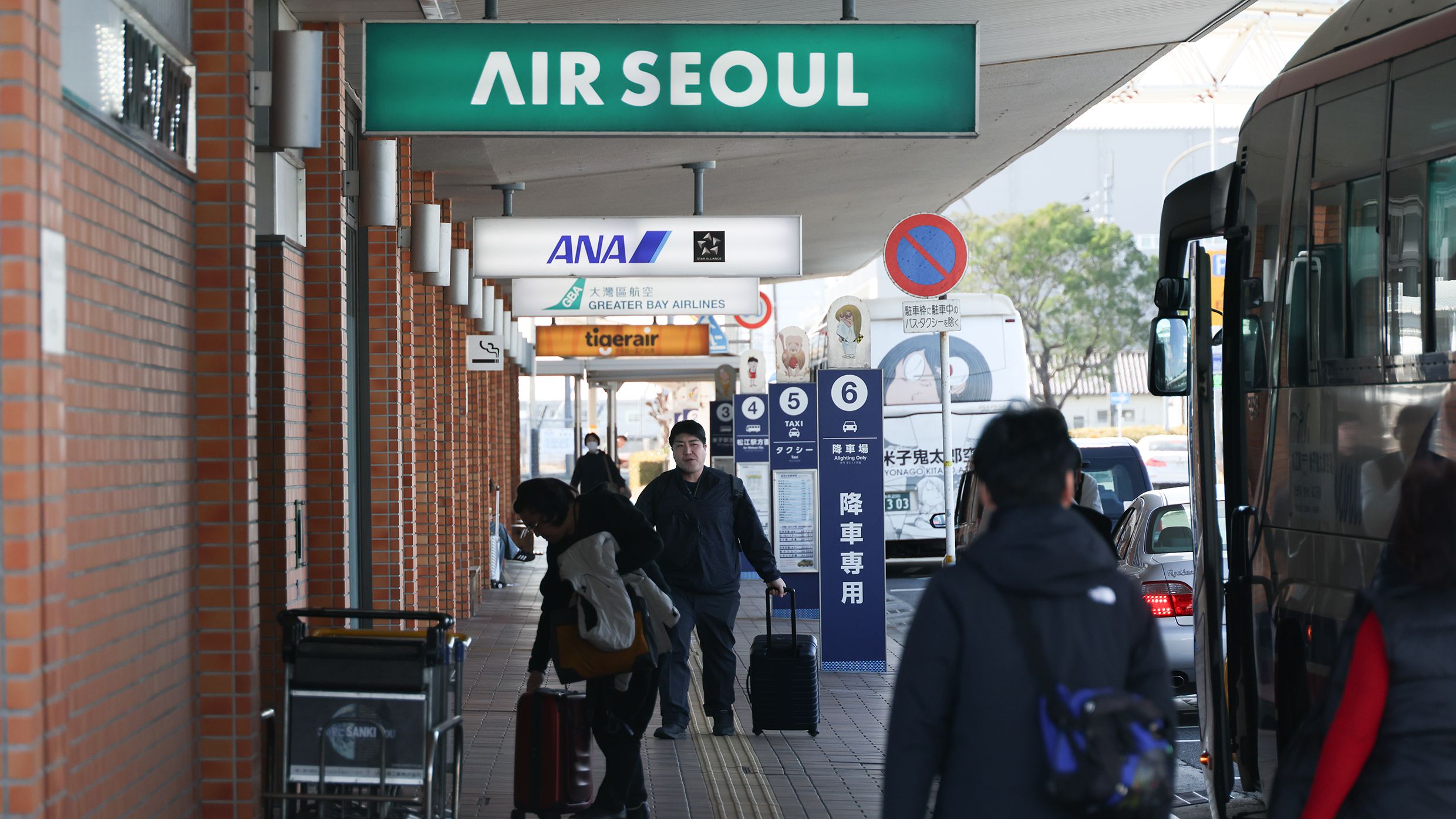
Yonago Kitaro is the only airport in the region with scheduled international flights, including daily flights from Seoul via Air Seoul and twice-weekly flights from Taipei with Tigerair. Flights from Hong Kong have been suspended since September. Demand shrank amid fears of possible earthquakes after unfounded predictions spread on social media.


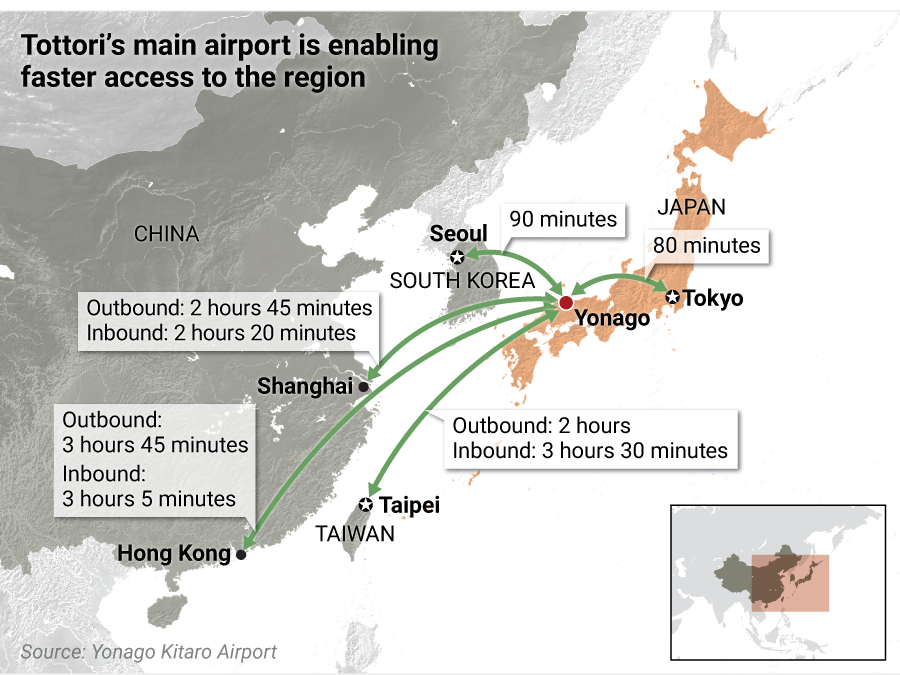
“Yonago Kitaro Airport is set to see record international passenger traffic for the fiscal year ending March 2026,” said Seiji Kadowaki, executive director at its operator, Yonago Airport Building. The hub handled around 93,800 passengers from April to December, approaching its previous full-year peak of 103,908 in 2018.
Sales at airport retailers, including convenience stores, restaurants, and duty-free shops, are strong, and the operator’s net revenue rose to 516 million yen ($3.25 million) for the fiscal year ending March 2025, up 33% from the previous year. Operating profit reached 80 million yen, nearly three times the previous year.
Yonemura noted that Japanese tourists often avoid Tottori during the winter due to its heavy snowfall, but overseas visitors come year round for local cuisine and hot springs, helping offset the seasonal domestic decline.
Tourists typically take a bus from the airport to Yonago train station for connections all the way to Matsue, in the neighboring, sparsely populated prefecture of Shimane. Shuichi Tokuo, director of the airport’s general affairs division, said, “The [airport] facility’s capacity is somewhat limited. Visitors may find it cramped, and while we have expanded the building in the past, usage exceeded our projections. We need to consider how to handle further increases.”

“Tottori’s transportation felt inconvenient. Compared with major cities, options are limited, and I think it would be nice to have a sightseeing bus that takes visitors around tourist spots,” said Kim Yeoungdeok, 38, a recent arrival from Cheonan, South Korea.
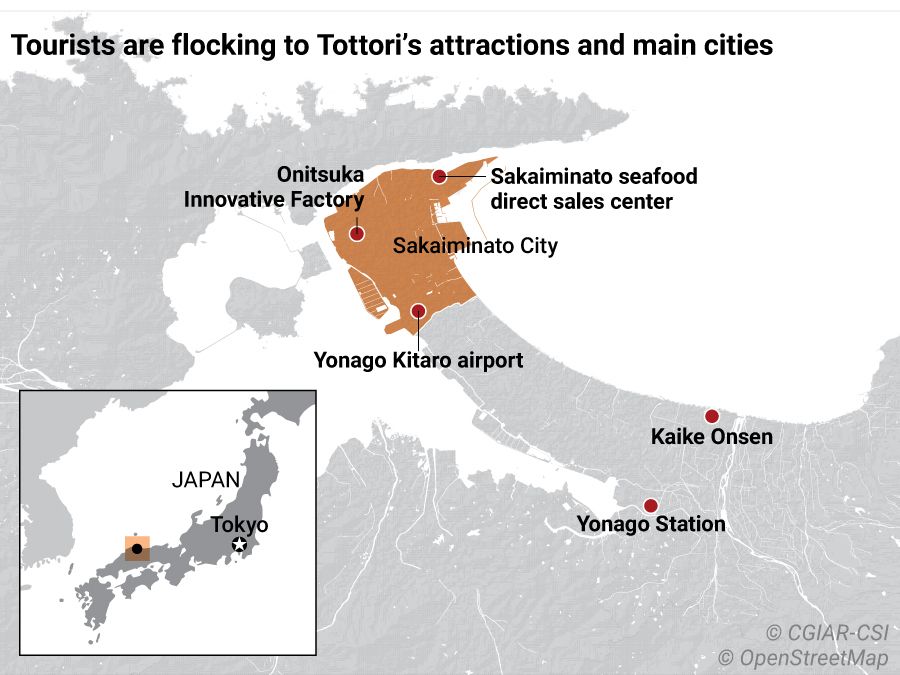
While popular destinations such as Yonago, Sakaiminato and Kaike Onsen hot springs are only about 30 minutes apart by car, public transport services remain disjointed. Trains often run only once an hour, making it difficult for independent travelers to get around without a rental car or tour bus. A shortage of taxis is another problem.




Walking down a manga memory lane
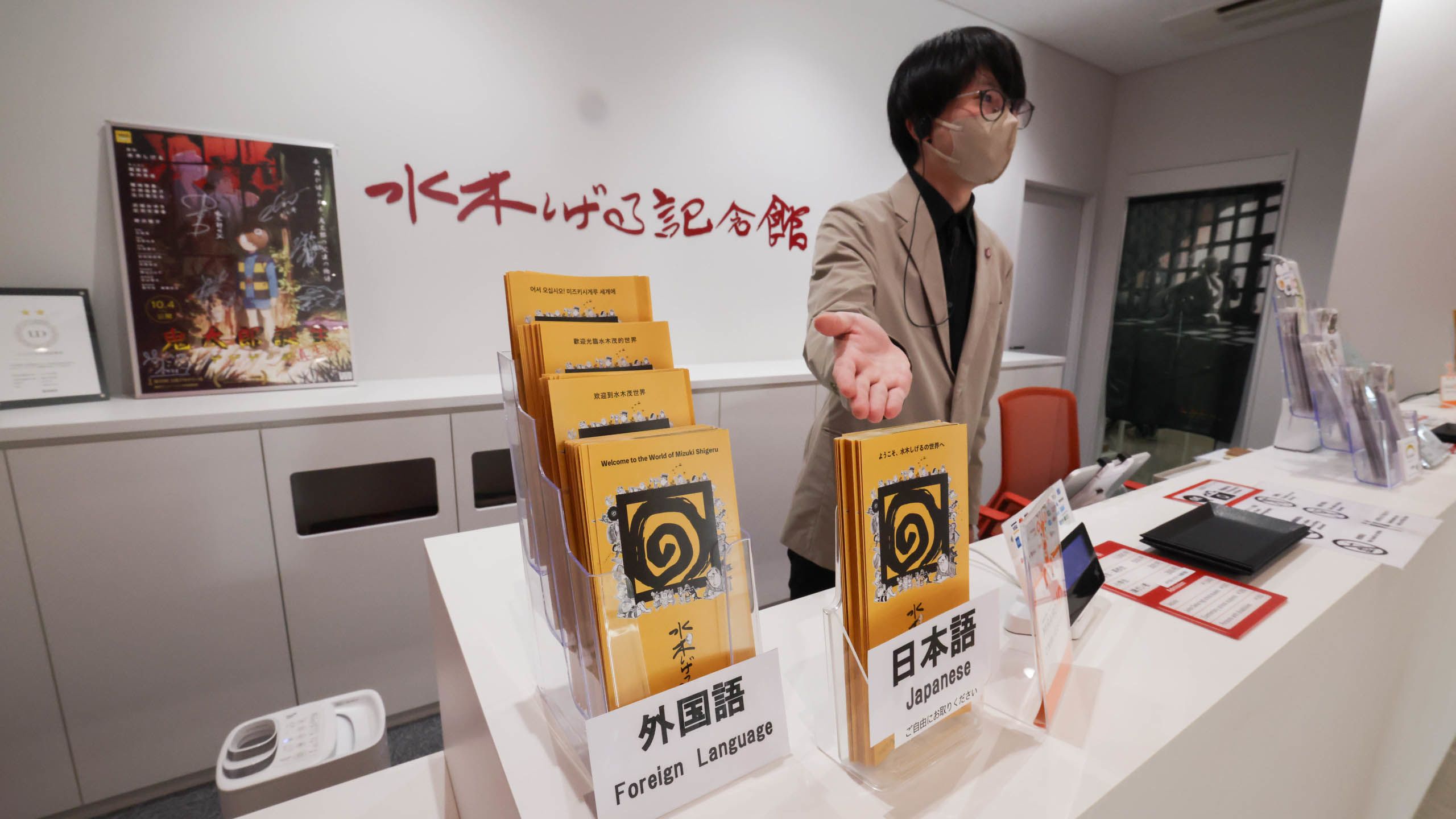
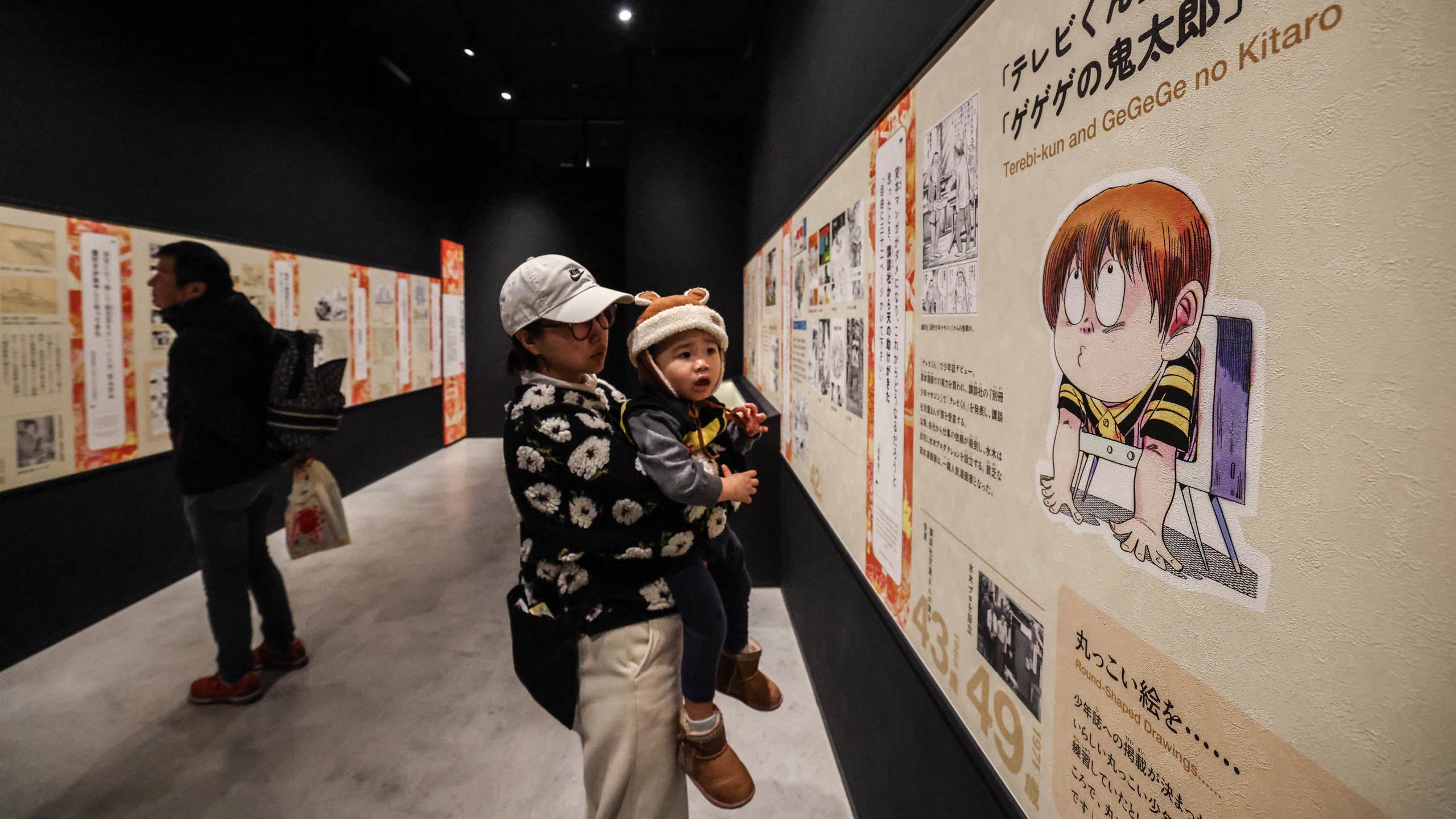
Shigeru Mizuki, a renowned manga artist who died in 2015 at the age of 93, grew up in Sakaiminato. He is memorialised with a series of bronze statues of his characters along a road named after him in the city and a museum dedicated to his work.
Tour buses drop visitors to take photos with the statues. Men and Yuen, a couple from Hong Kong, said they had watched the 2023 movie “Birth of Kitaro: The Mystery of GeGeGe,” based on his manga series, and this had inspired their visit to the road and the Mizuki Shigeru Museum, where they had bought Kitaro-themed items.
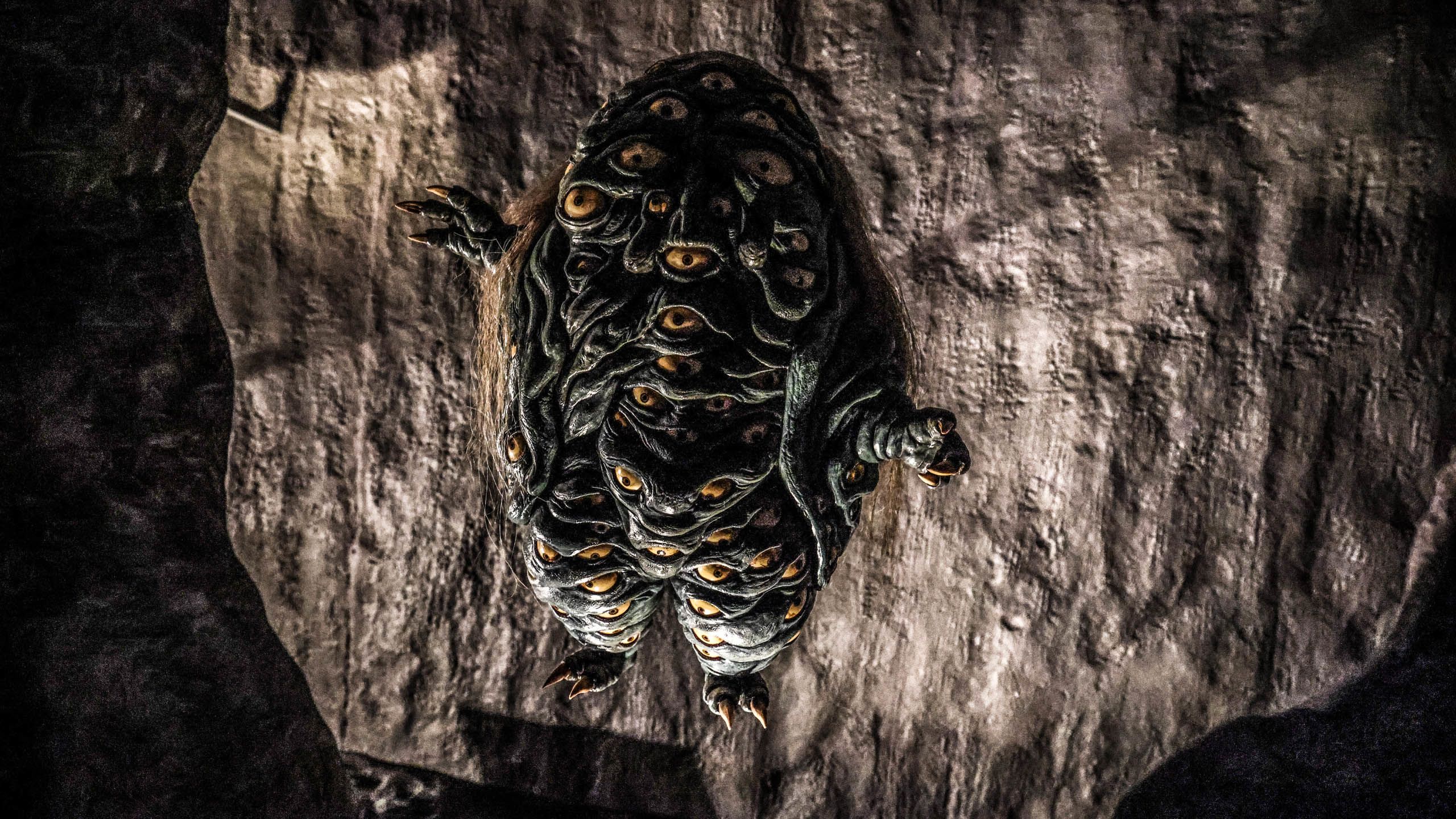
Jan Borchardt from Germany and Regina Sipos, a Hungarian, were visiting the museum at the same time. They said they were big fans of his yokai supernatural creatures and the GeGeGe no Kitaro video games.

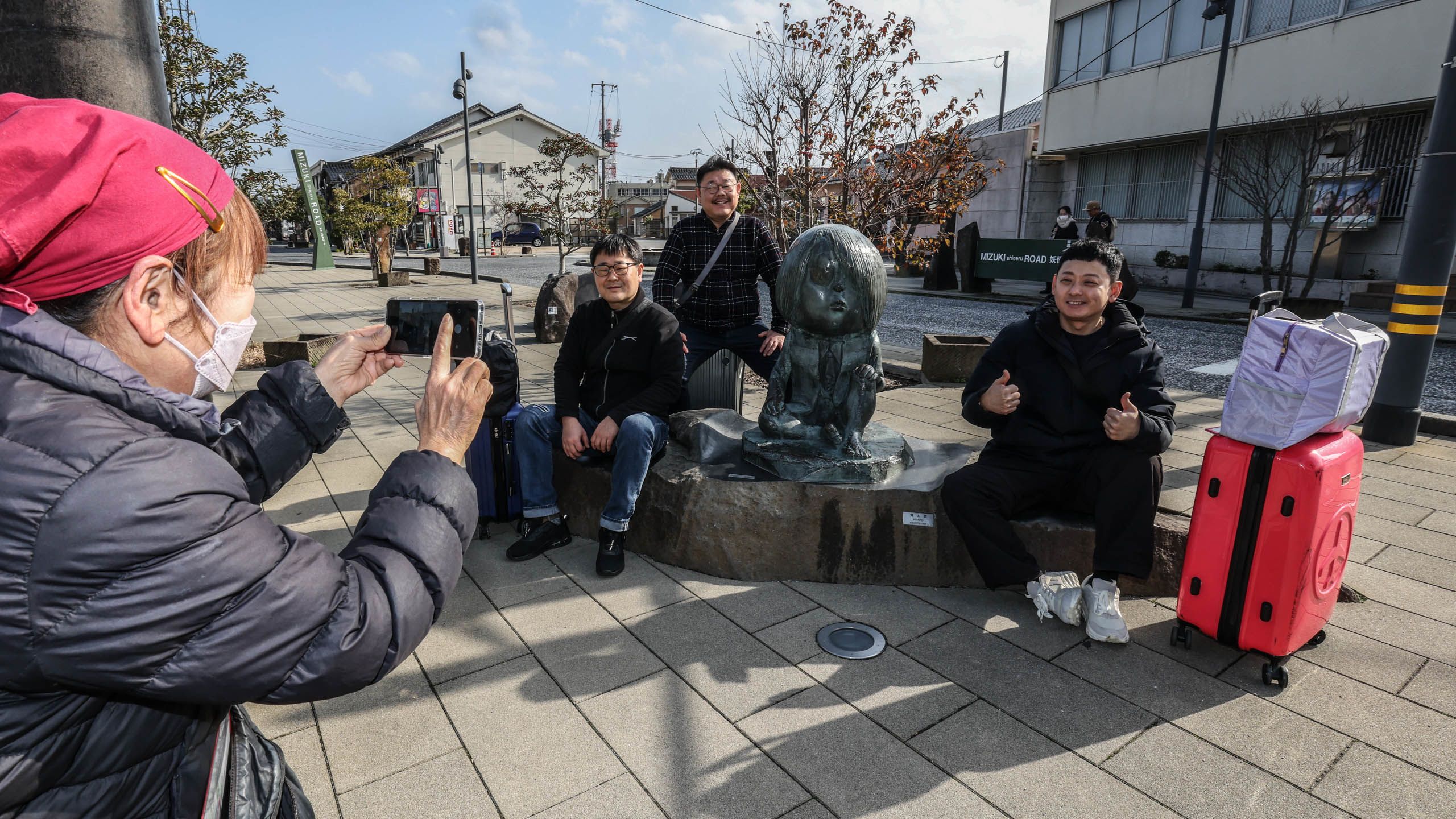

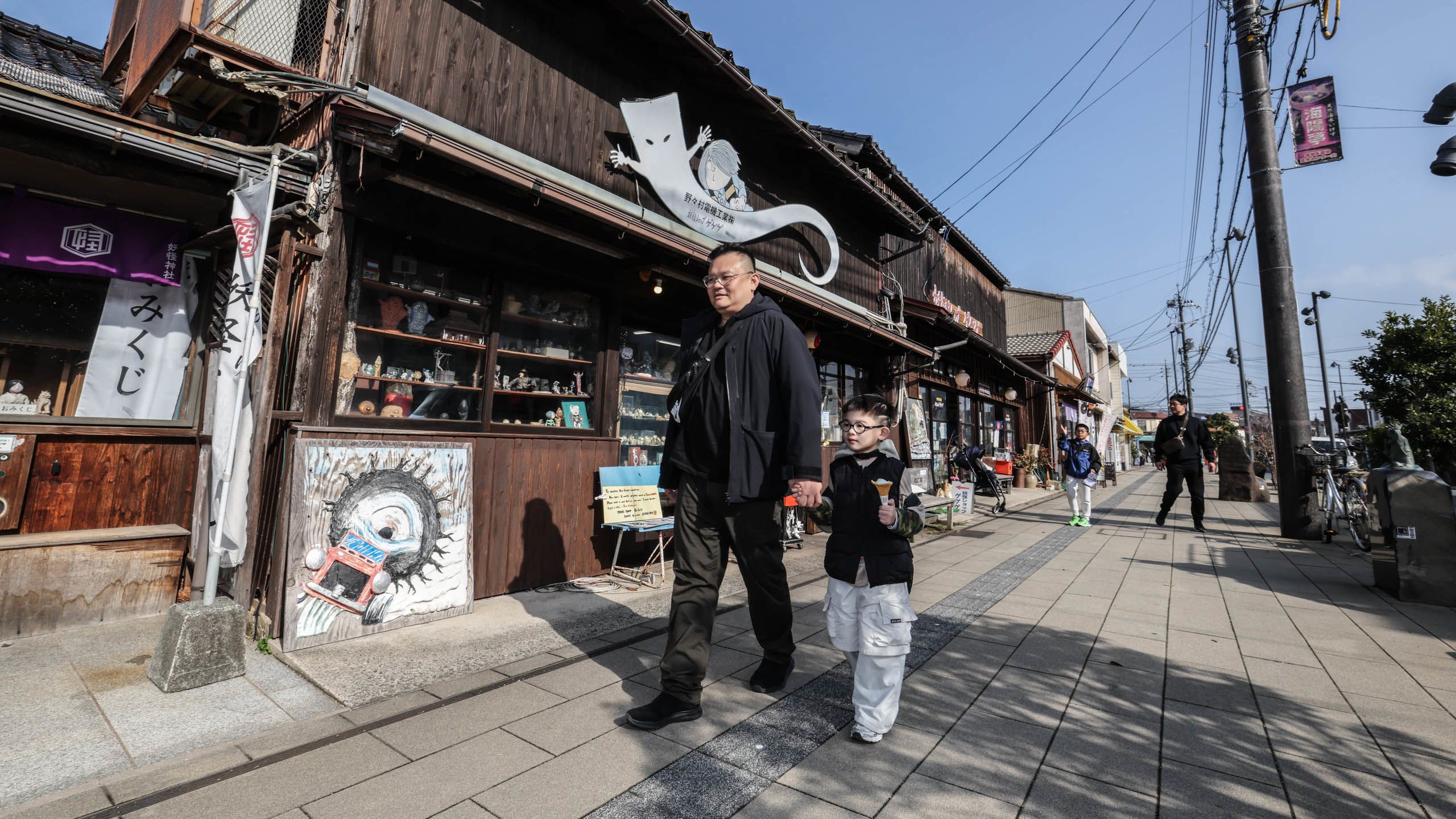

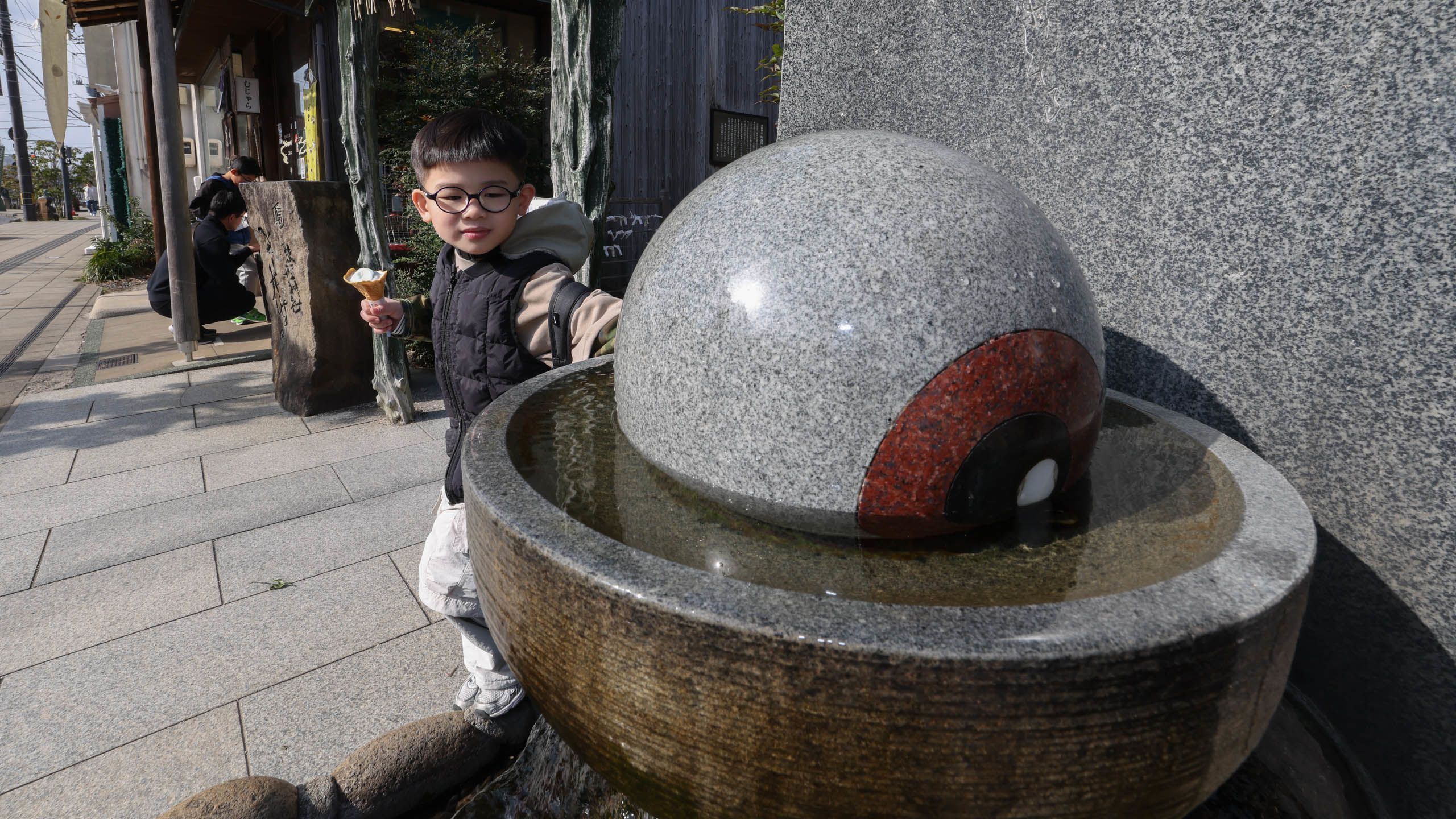

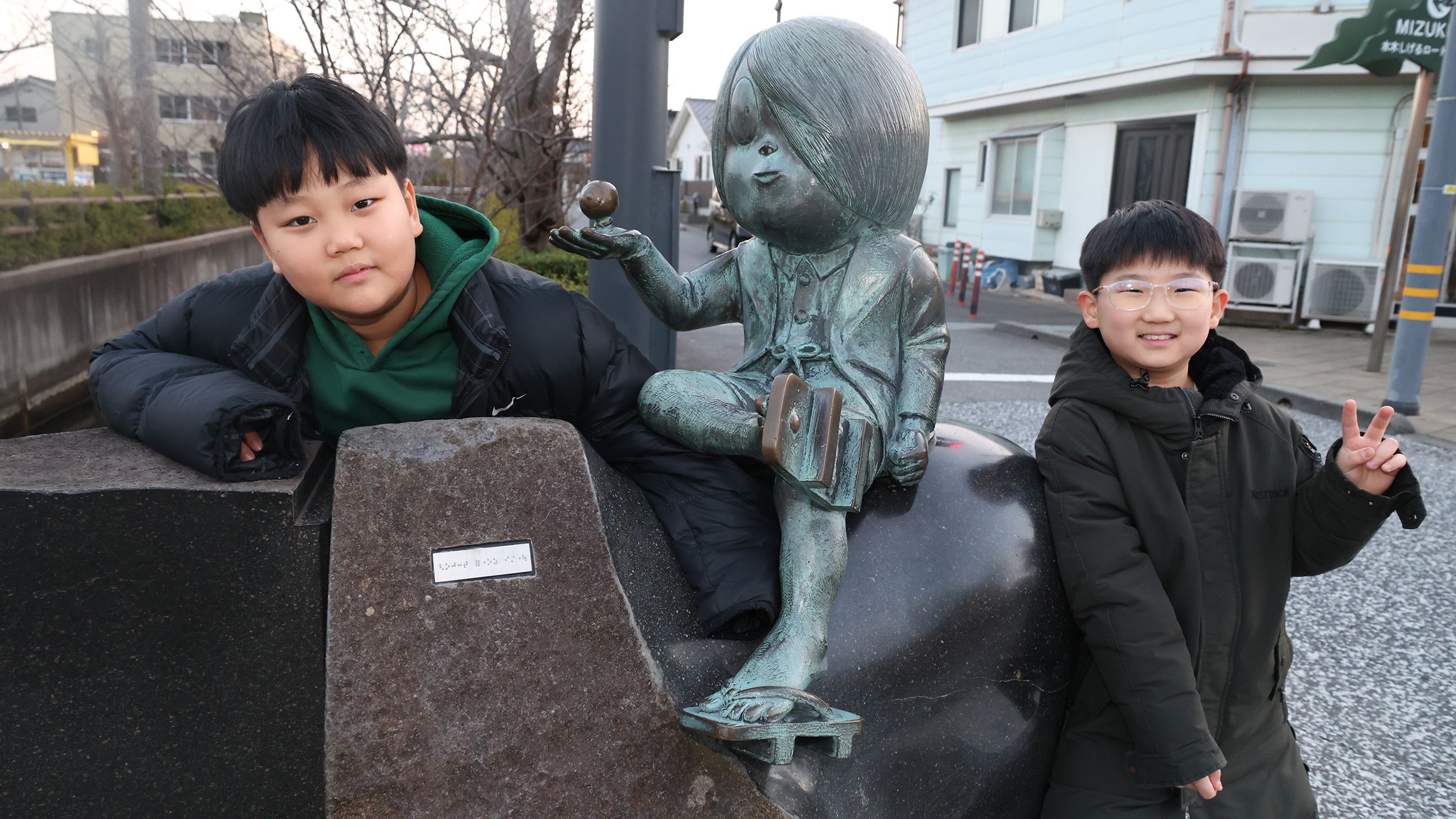

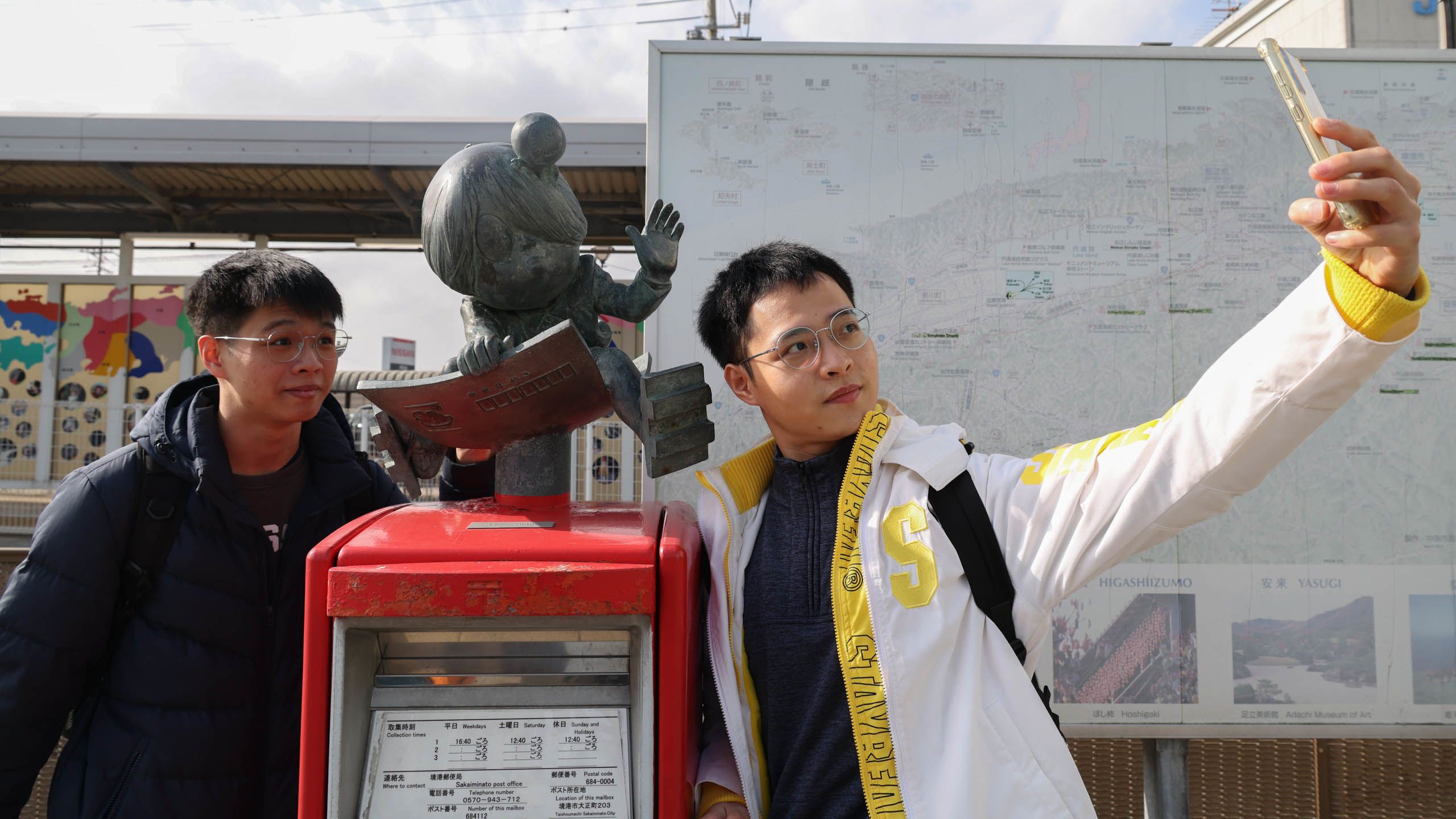

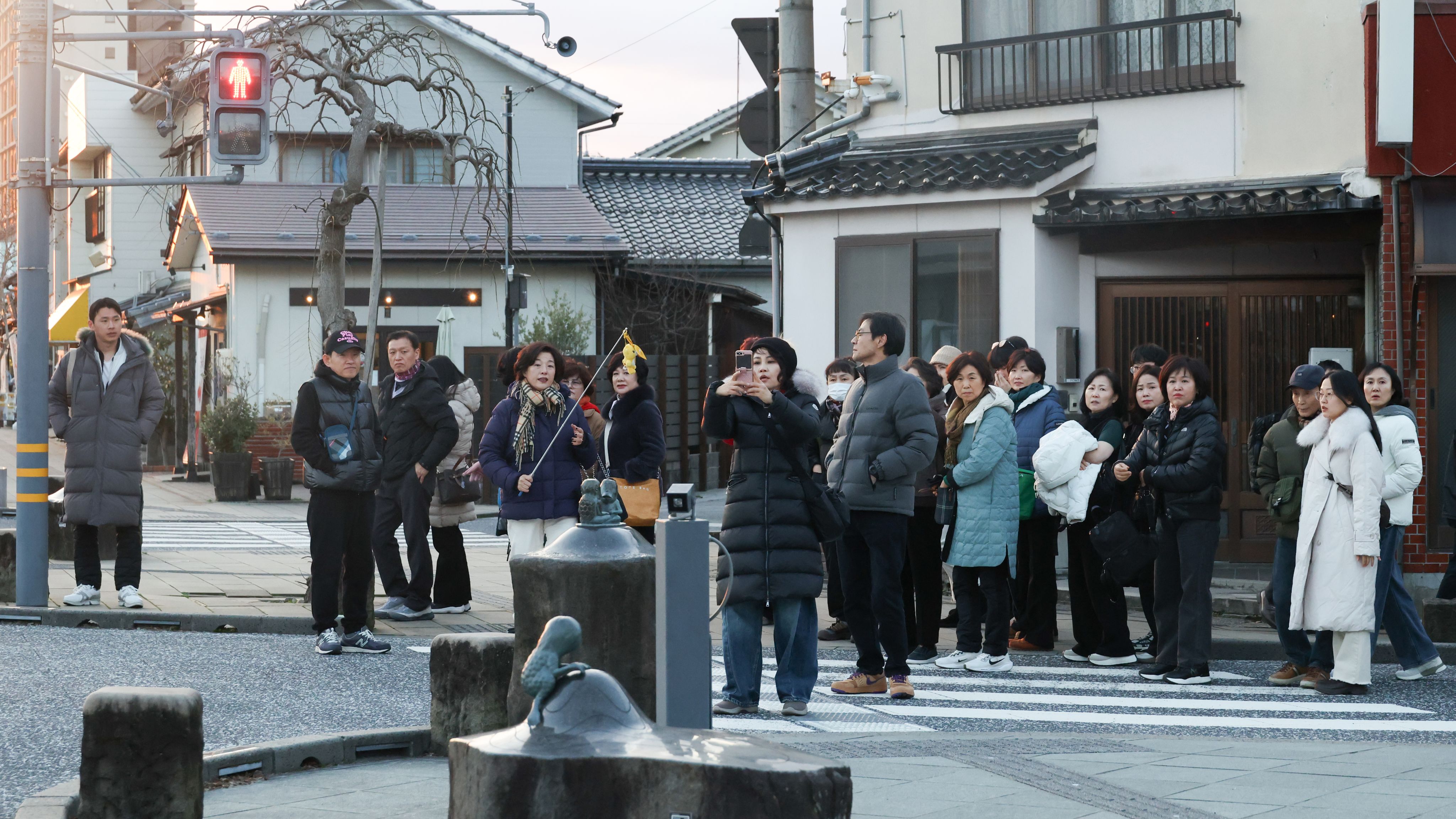
The city reported that nearly 2 million tourists, domestic and international, visited Mizuki Shigeru Road in 2025, nearly twice as many as three years earlier. Visitors to the museum from Hong Kong and Taiwan, where the author is particularly popular, accounted for 23.8% and 23.6% of all international visitors respectively over the past year, followed by South Korea (11.5%) and the U.S. (10%).
However, foreign tourists account for only about 5% of museum visitors. “There is room to grow the city’s inbound tourism,” said Masayuki Yonemura, head of tourism promotion for the city of Sakaiminato.




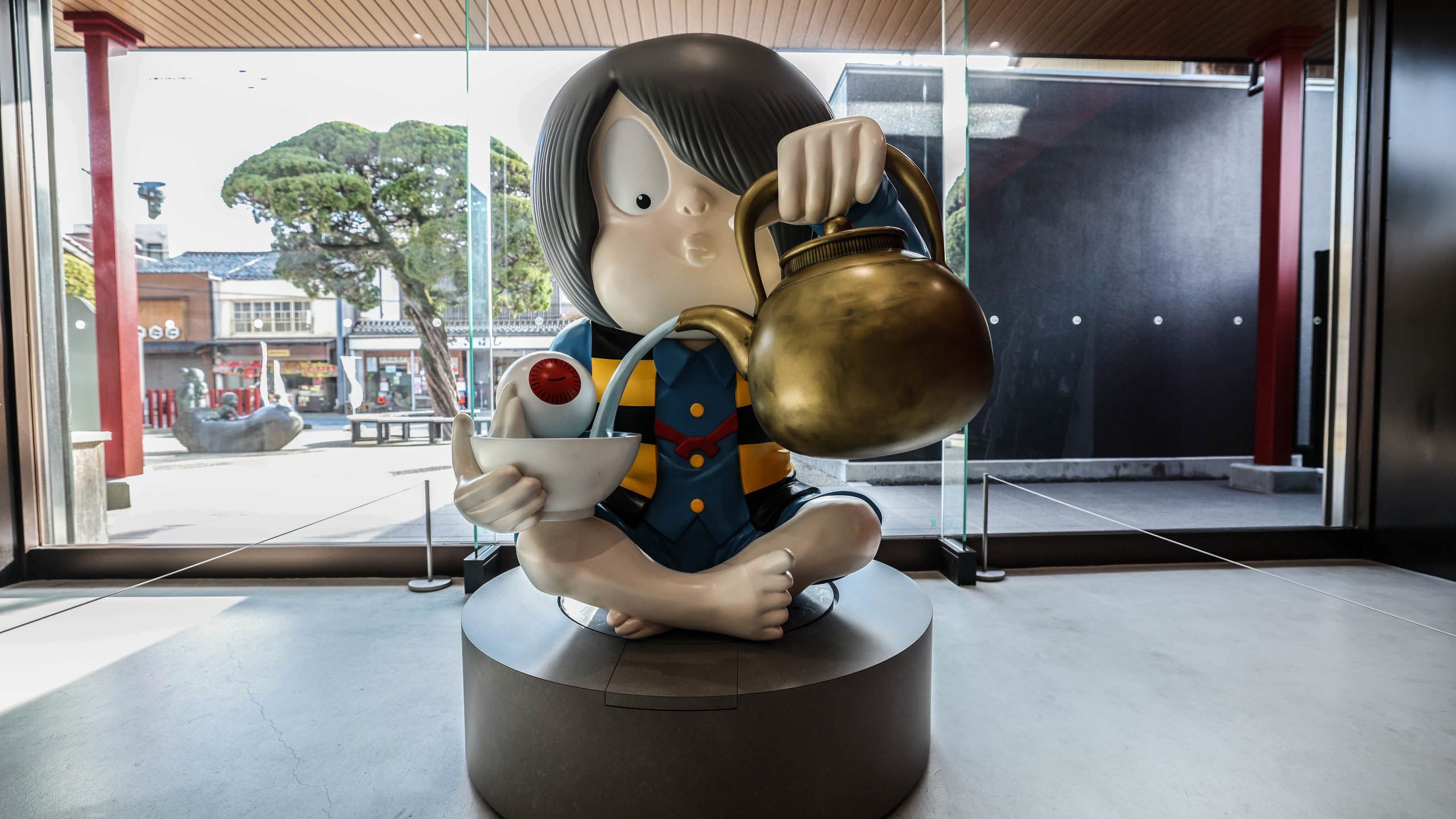

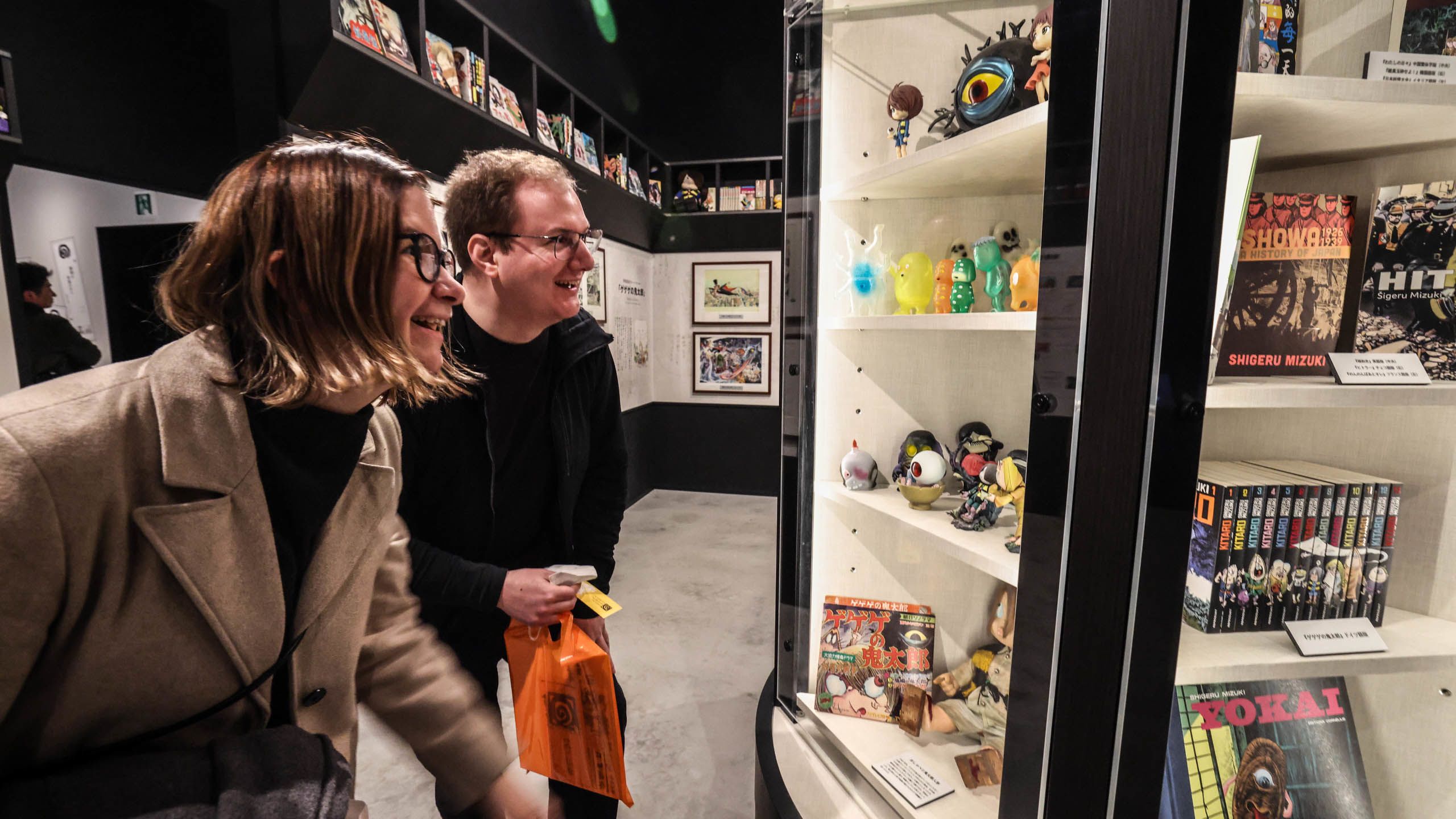

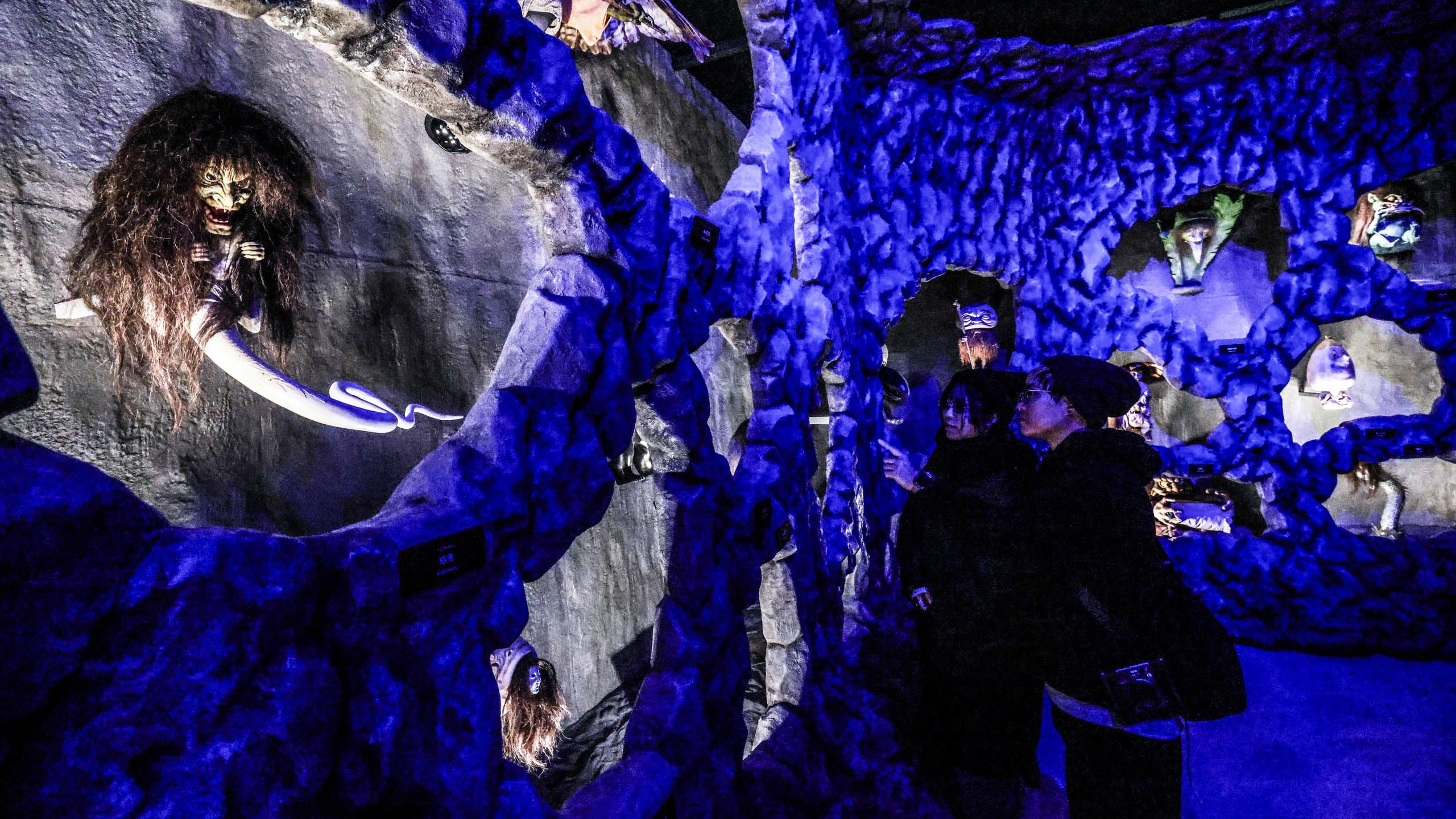
Sakaiminato’s seafood delights
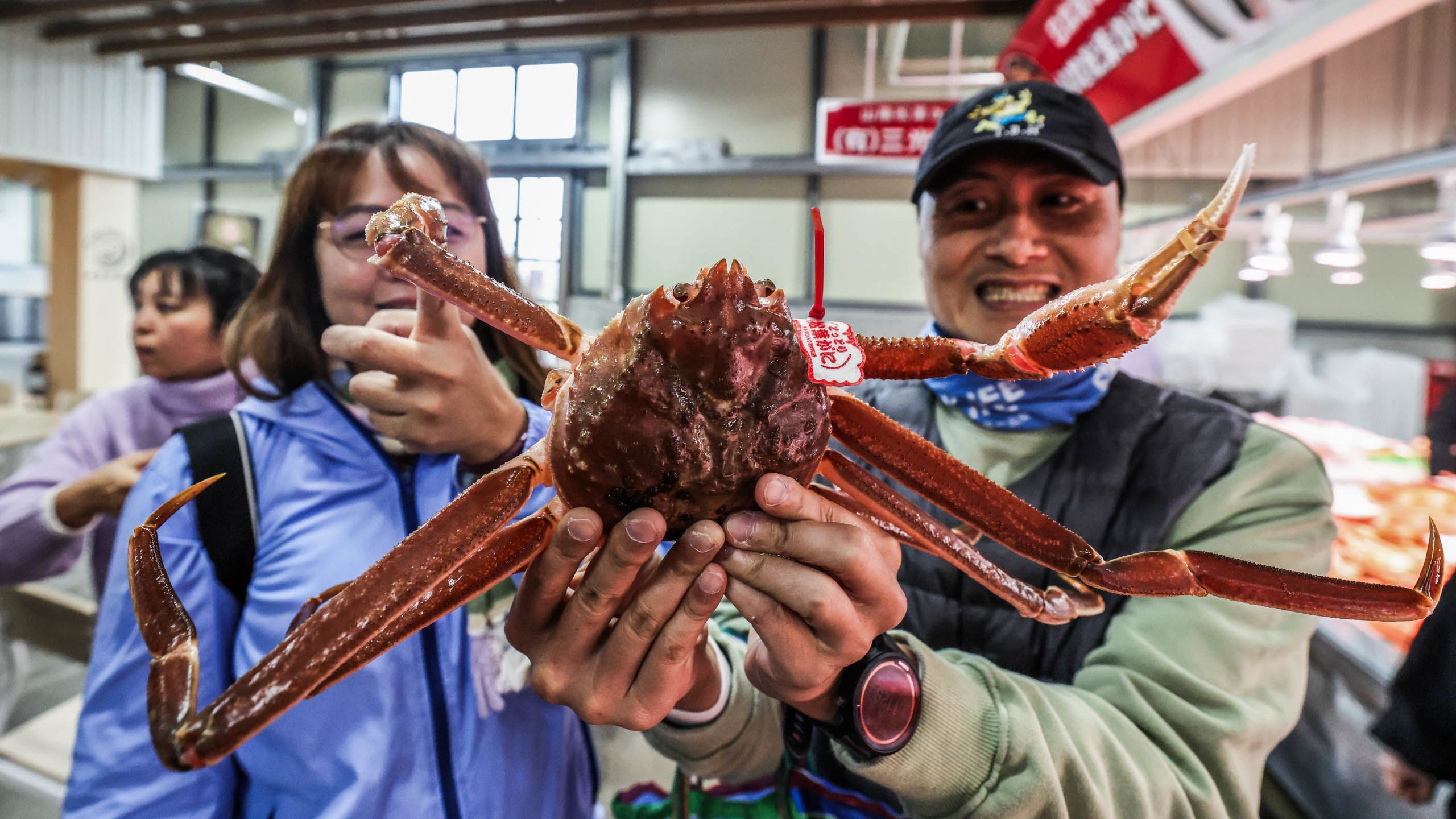
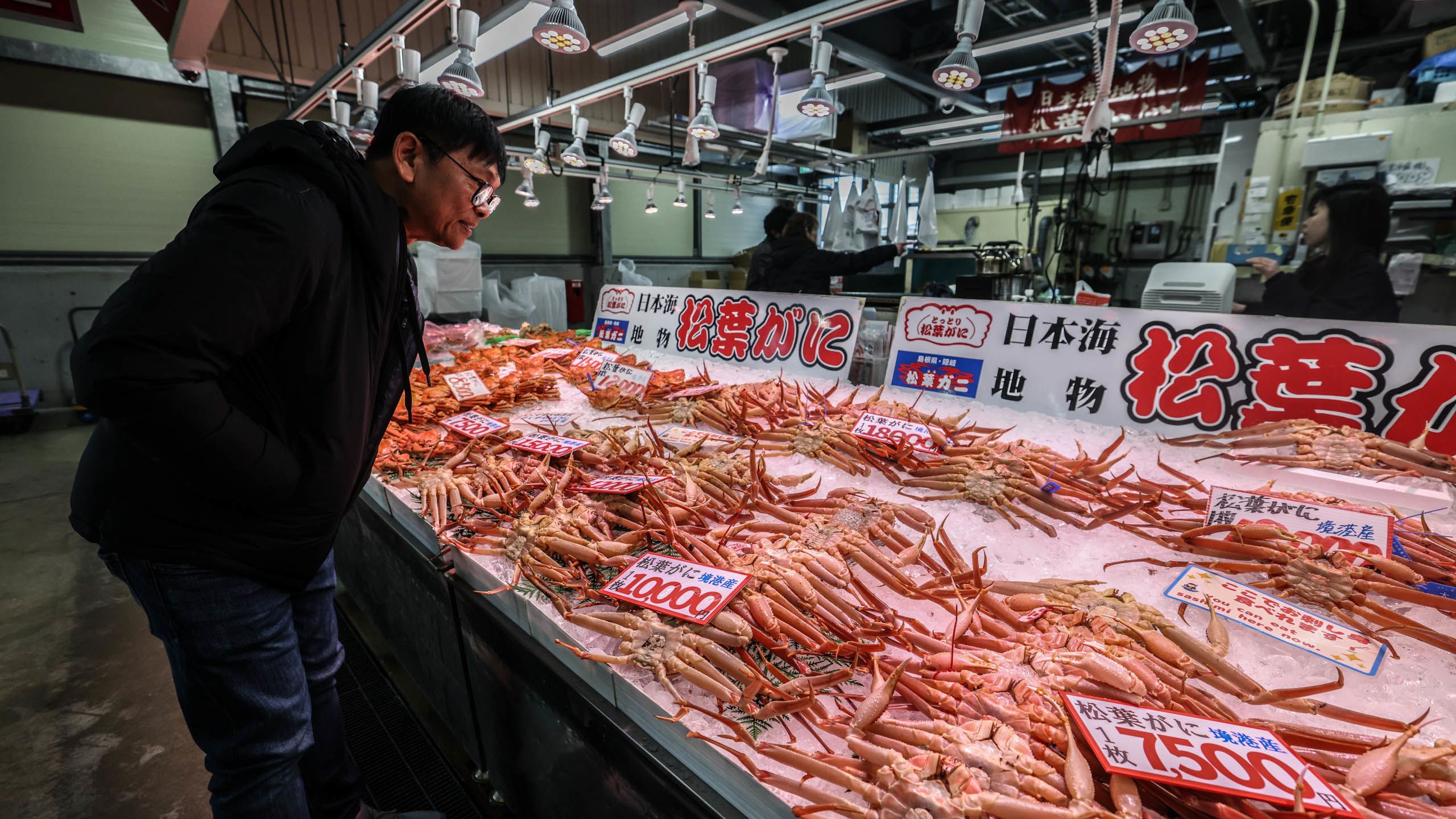
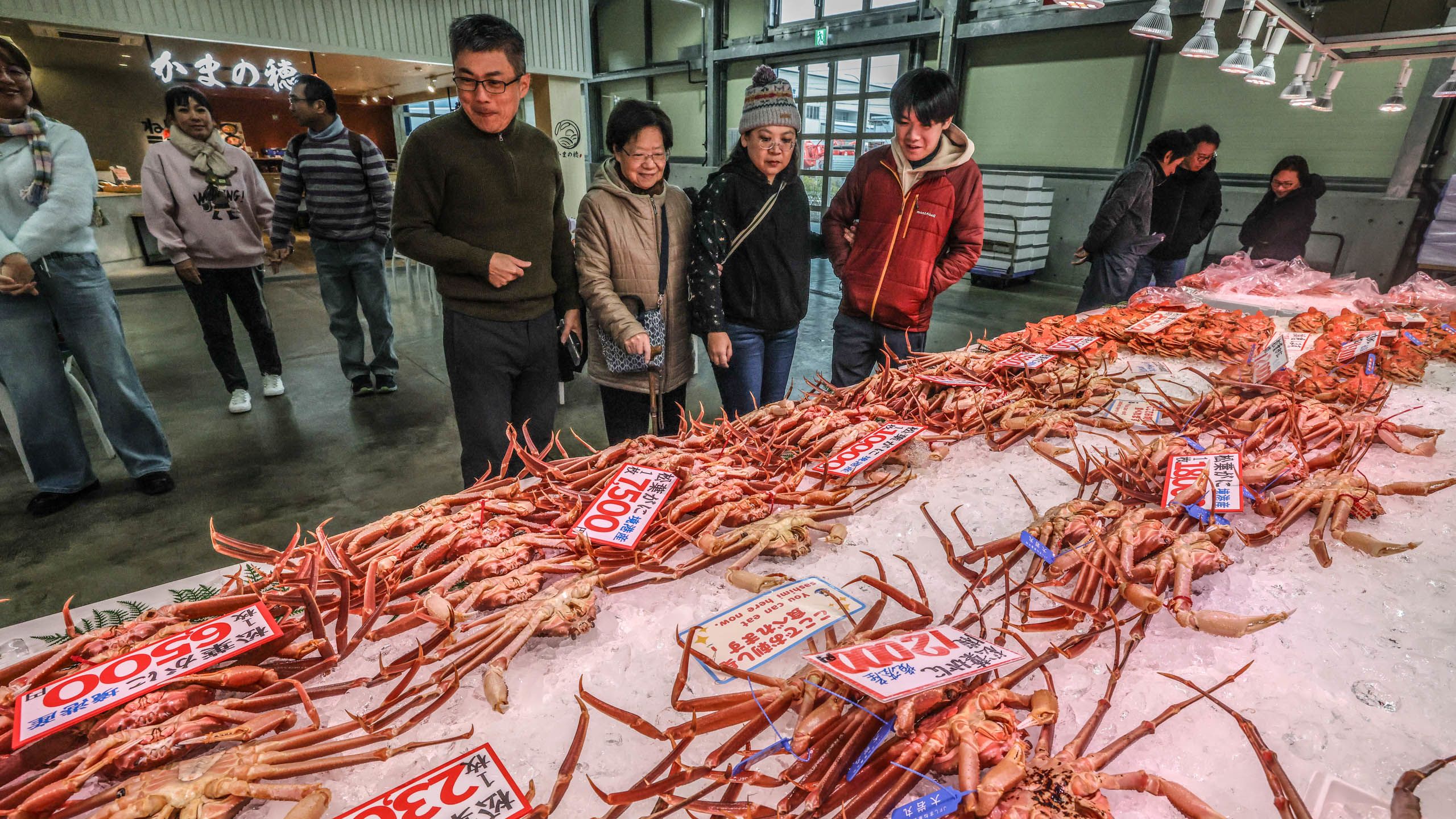
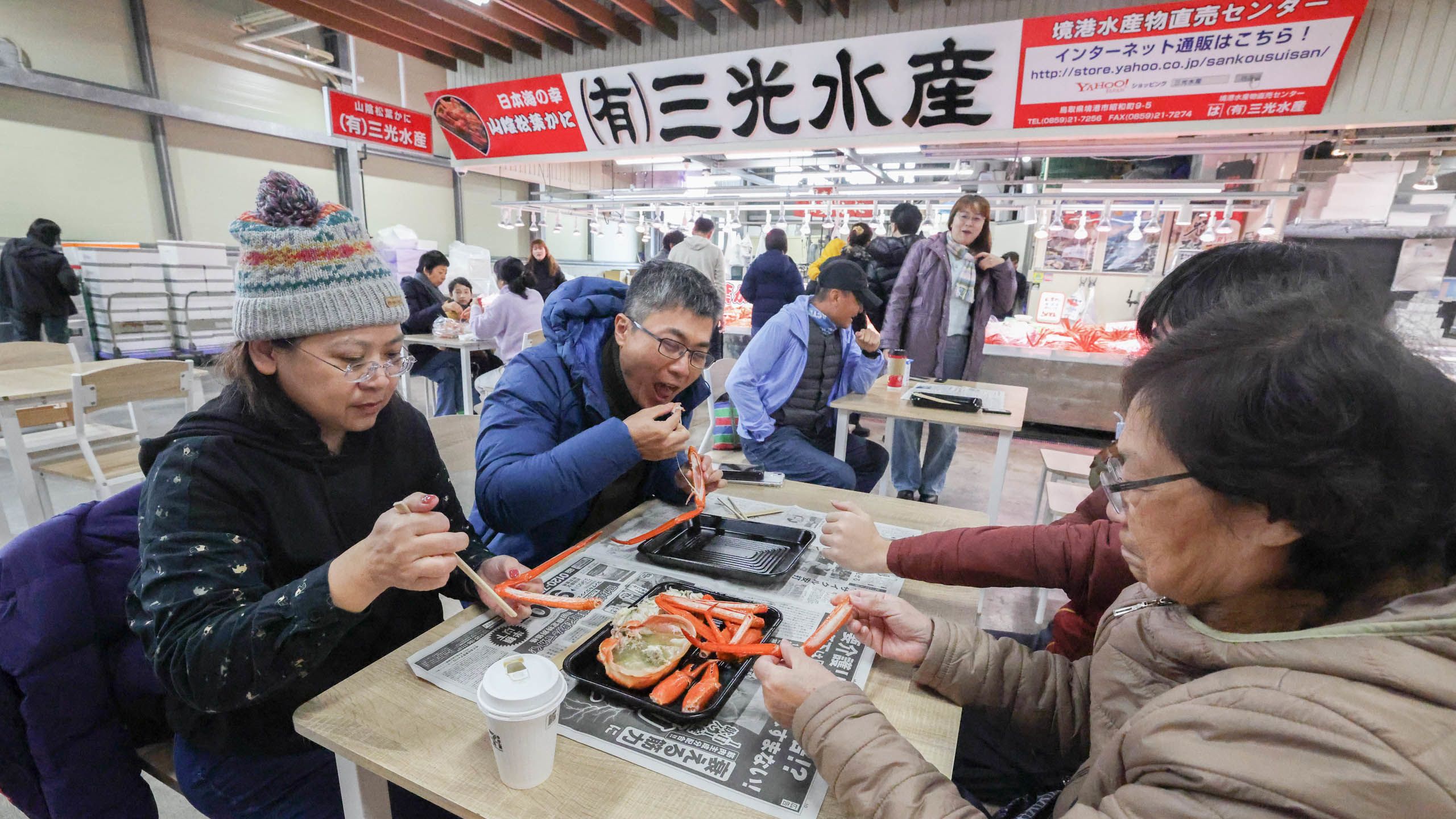
Haochi! Umai! Oishi!, words meaning “delicious” in Japanese and Chinese, are displayed at the Sakaiminato seafood direct sales center, where Tsai Ray and his family and friends from Taiwan were enjoying a whole crab caught locally.
A frequent visitor to Japan, Tsai chose a rural area over a city this time. While the crab, boiled alive and served, cost 10,000 yen ($63), he said this was cheaper than in Taiwan.
The local fisheries cooperative says overseas tourists do not look at the price tag when they order fresh crab, seafood and sushi, due to the weak yen. It can be hard work satisfying tourists’ appetites. Around 4,500 Chinese arrived on a cruise ship and visited the center in November, leaving workers completely exhausted and the place littered with crab shells.




Hotfooting it to Onitsuka Tiger
Sakaiminato earned itself a reputation as a new tourist destination in January with the opening of factory and showroom for ASICS’ premium casual footwear label, Onitsuka Tiger, with Tottori being the birthplace of the brand’s founder, Kihachiro Onitsuka.
An existing plant has become the Onitsuka Innovative Factory for the Japanese sportswear maker, with added features to attract Japanese and foreign visitors who want to experience a brand that has become the height of fashion, especially in Asia. The factory will mainly manufacture high-end shoes such as Nippon Made and The Onitsuka.
With a yellow and black exterior in keeping with famous brand colors, the facility has a public gallery that displays vintage shoes and relates the company’s history. Customized orders can be placed and limited-edition items are sold, such as the Mexico 66 shoe designed by Japanese artist Tomohisa Yamashita.

At the factory and showroom for ASICS’ premium casual footwear label, Onitsuka Tiger, in Samaiminato, visitors can order custom-made shoes, crafted right there in the factory. (Photo by Yuki Kohara)
At the factory and showroom for ASICS’ premium casual footwear label, Onitsuka Tiger, in Samaiminato, visitors can order custom-made shoes, crafted right there in the factory. (Photo by Yuki Kohara)

Premium shoes made at the Onitsuka Innovative Factory in Samaiminato. Tottori is the birthplace of the brand’s founder, Kihachiro Onitsuka. (Photo by Yuki Kohara)
Premium shoes made at the Onitsuka Innovative Factory in Samaiminato. Tottori is the birthplace of the brand’s founder, Kihachiro Onitsuka. (Photo by Yuki Kohara)
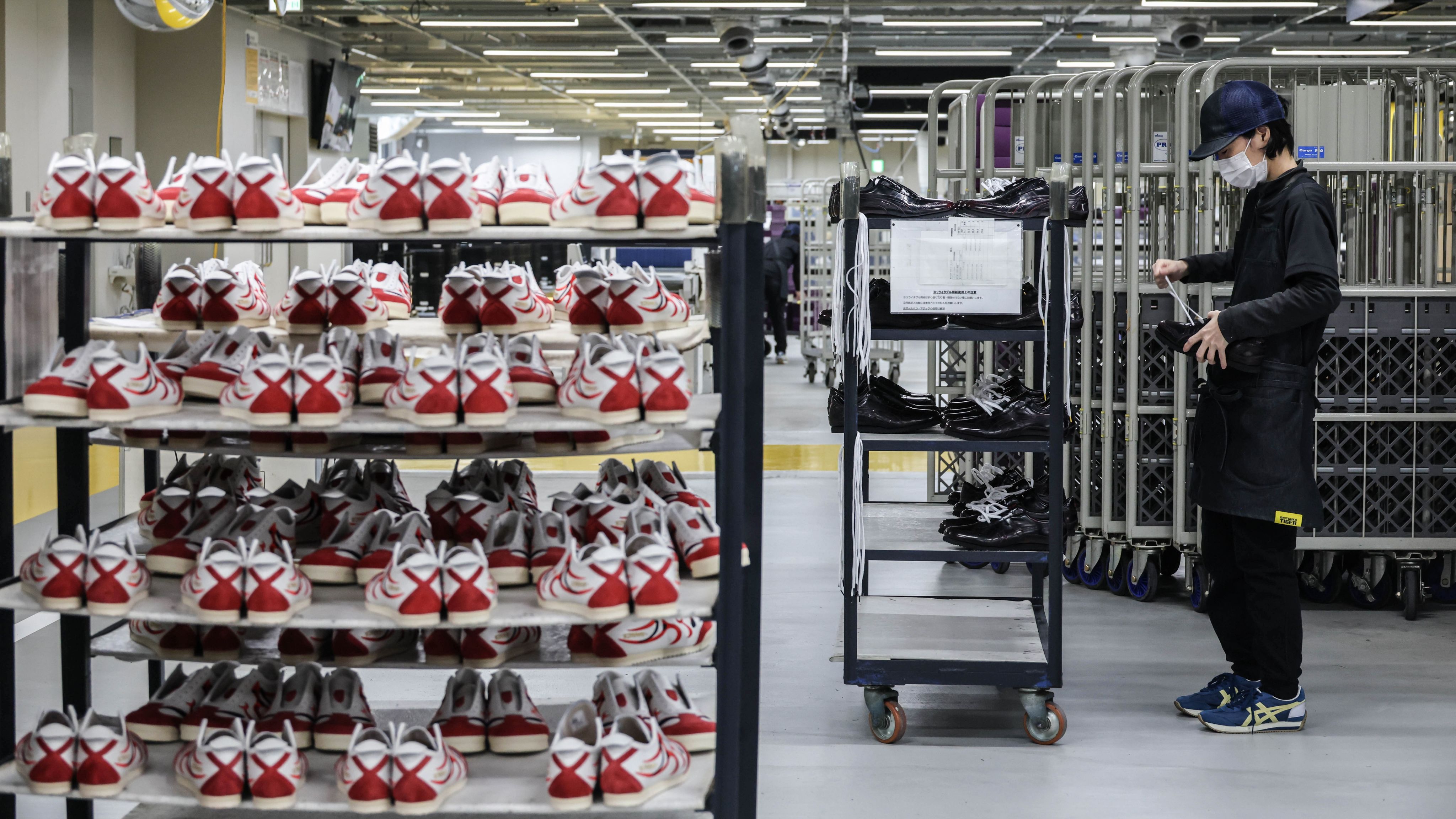
A female employee unties shoelaces at the Onitsuka Innovative Factory. (Photo by Yuki Kohara)
A female employee unties shoelaces at the Onitsuka Innovative Factory. (Photo by Yuki Kohara)
Kaike Onsen hot springs ryokan tests water for new promotions
Kaike Onsen, famous for hot springs that bubble up from beneath the sea, has been putting a toe in the water to test new inbound tourism strategies. Fuyo Bekkan, a traditional ryokan in Kaike Onsen, partnered with Air Seoul to invite Korean influencers to stay at the inn on three occasions, and they conducted live-streamed promotions on social media.
Before sales officially began, the livestreams generated around 30,000 comments and overwhelming demand. The number of available packages had to be reduced, but the inn received around 10,000 inquiries from the promotion. Fuyo Bekkan also launched a new promotion in collaboration with Air Seoul and Suntory this month, offering a free glass of gin at local restaurants.
Before the COVID-19 pandemic, foreign guests accounted for only 5% to 7% of total stays, but with the region’s promotions and increased flights from South Korea and Taiwan, the proportion has risen to more than 10%. By country, about 70% of overseas guests are from South Korea, followed by Taiwan at around 10%, Europe and North America at 10% and China at roughly 10%. The ryokan aims to raise the proportion of inbound guests to 20% this year.
Manager Keichi Taguchi said the inn also has plans to tackle Tottori’s transportation problems with its own solutions, launching day-trip and overnight tour buses by April. Initially, two routes are planned, one to Izumo Oyashiro Shrine and the other to the Tottori Sand Dunes area. Ultimately, the goal is to operate a bus route connecting Yonago, Sakaiminato and Kaike Onsen.
Better connections would complete Tottori’s appeal, as the prefecture is already popular with elderly Korean tourists for the compactness of its sites. Unlike Kyoto’s famous Kiyomizu-dera temple complex, which requires a long walk from the bus stop, Tottori’s attractions are located right at the drop-off points, making them highly accessible.
Kim Yihyun, a Korean guide, noted that some tourists book trips to Tottori after being inspired by the videos of Sunwoo Yong-nyeo, a famous octogenarian actress and Korean YouTuber who visits the prefecture and lends it the same star quality.
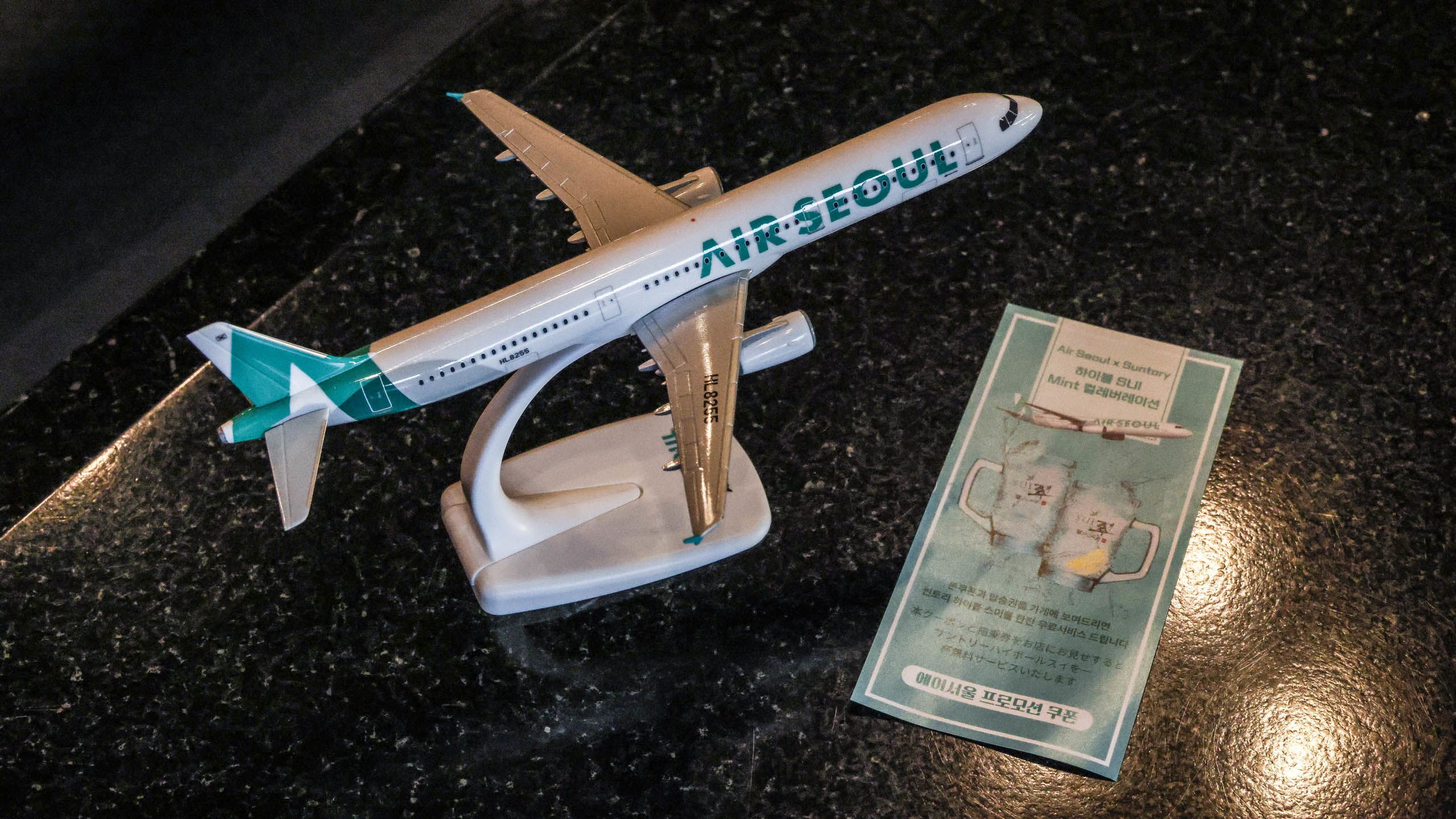
As part of a new promotion, visitors are being offered a free glass of Suntory’s “Sui” gin at participating local restaurants in Tottori prefecture. Sui's light blue color matches the branding of Air Seoul. (Photo by Yuki Kohara)
As part of a new promotion, visitors are being offered a free glass of Suntory’s “Sui” gin at participating local restaurants in Tottori prefecture. Sui's light blue color matches the branding of Air Seoul. (Photo by Yuki Kohara)
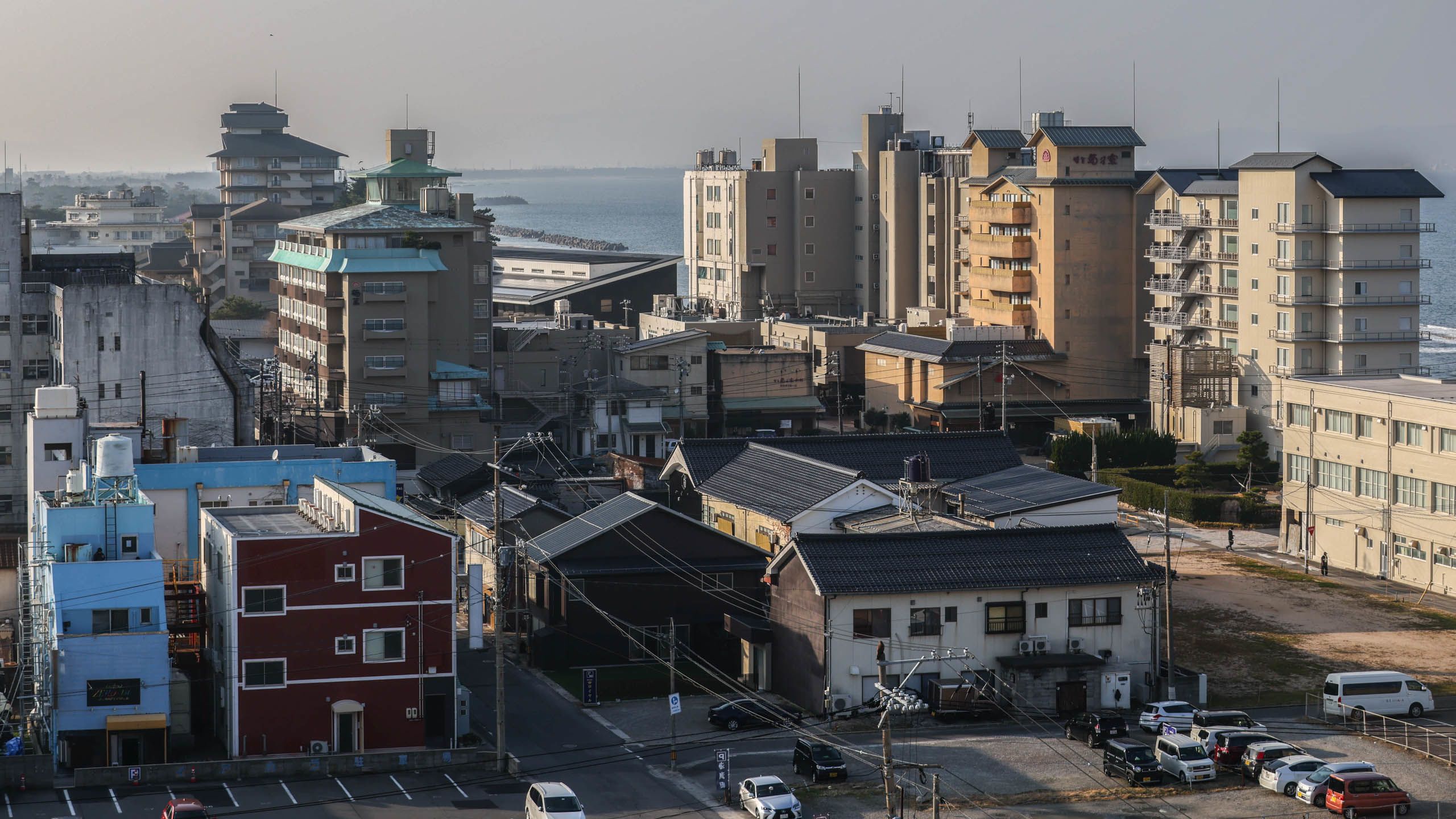
The hot springs of Kaike Onsen are a major local tourist attraction. (Photo by Yuki Kohara)
The hot springs of Kaike Onsen are a major local tourist attraction. (Photo by Yuki Kohara)
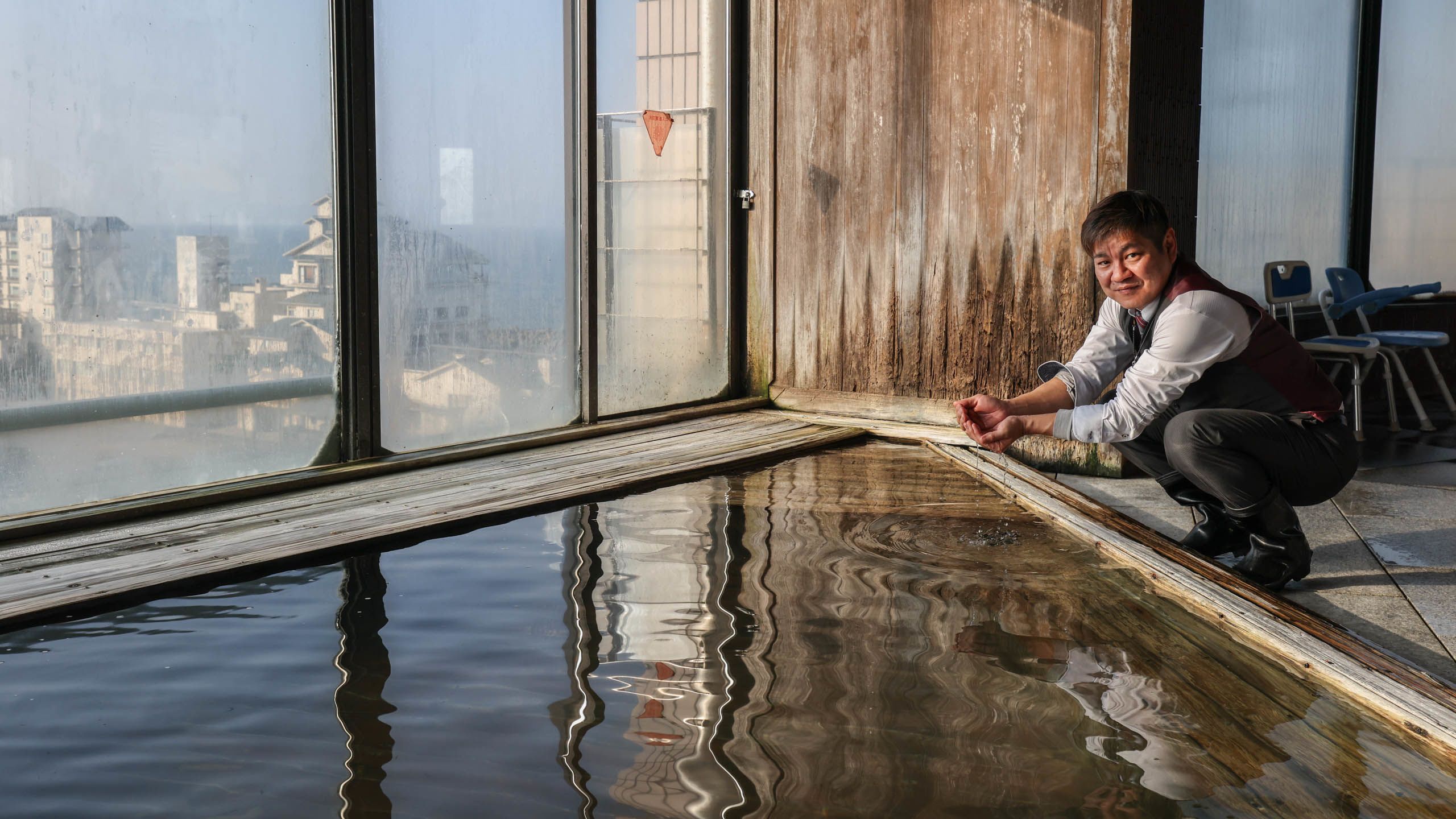
Kenichi Taguchi, the manager of Fuyo Bekkan at Kaike Onsen, scoops up hot spring water that rises up from the sea. (Photo by Yuki Kohara)
Kenichi Taguchi, the manager of Fuyo Bekkan at Kaike Onsen, scoops up hot spring water that rises up from the sea. (Photo by Yuki Kohara)